Blog
APEC's Global Bay Area Co-operation Initiative: a New Focus for Hong Kong's Development
For all that was achieved, what may stay longest in the minds of people around the world is the sight of the leaders of China, Russia and the United States meeting together for the first time in history. That the leaders of three countries so influential in matters of peace and development sat at the same table and spoke face to face was a historic moment in itself. The choices major countries make shape international relations, the global economy, trade and financial markets. They also matter to people everywhere who look to the future in the hope of peace and development. Each step they take towards one another makes the world a little more stable; each step they take together opens up new possibilities for development. As President Xi Jinping said, "sound interactions among major countries are not an option but a must".
Another encouraging development came at the APEC CEO Summit, where President Xi said "China supports the establishment of a world association for bay areas economic cooperation, so as to deepen exchanges and interactions among bay areas from across the world and explore new ways for stronger Asia-Pacific economic cooperation". Bay area economies are open and interconnected by nature, and the benefits of their growth extend well beyond their boundaries. The Asia-Pacific is home to some of the world's most important bay areas. By bringing them together, the proposed association could build on these strengths and open up new avenues for regional economic co-operation. With our close connections to both the Mainland and the rest of the world, Hong Kong is well placed to play a greater role.
|
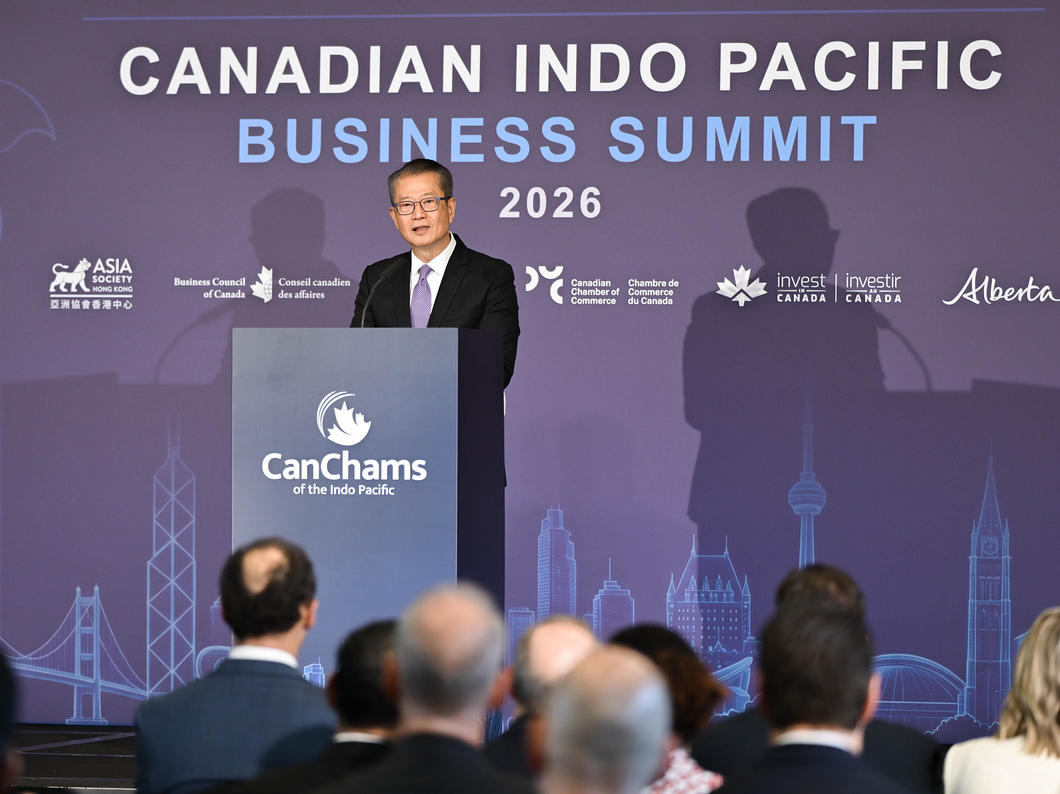
| Speaking at the Canadian Indo Pacific Business Summit last week. |
Hong Kong is a key part of the Guangdong-Hong Kong-Macao Greater Bay Area (GBA). We also participate in APEC as "Hong Kong, China", and have long enjoyed extensive economic, trade and people-to-people ties with other member economies. We know how international markets operate and understand their business cultures. Within the GBA, we have gained considerable experience in cross-boundary co-operation in trade, finance, innovation and technology (I&T), and professional services. Under the "one country, two systems" framework, Hong Kong brings distinctive strengths to this work: our common law system, our international outlook and connections, and our world-class professional services. These strengths help us build trust across cultures, bridge differences in rules and standards, and bring parties together to conclude transactions across systems, currencies and markets. This is what Hong Kong can offer the global bay areas as they work more closely together.
APEC economies differ in their economic structures, stages of development and resources. Those differences give them ample scope to complement one another. To turn their individual strengths into lasting growth, they need closer links with a wider range of markets. The broader those links, the deeper the markets and the greater the scope for growth. APEC economies want to strengthen their domestic capital markets and make greater use of their own currencies in trade and investment. As they develop those markets, they also want to attract companies, investors and financial institutions from further afield. The proposed association could create new opportunities for trade, investment, financing and settlement, helping direct capital, technology and talent to where they are needed. The more closely economies work together across borders and sectors, the better each can realise its own growth potential.
Hong Kong's contribution goes beyond helping individual companies or supporting particular projects. We can connect markets, build ties between institutions and develop the networks that sustain long-term co-operation among bay areas. By connecting capital markets and financial institutions, we can facilitate cross-border investment and financing, encourage the use of local currencies and help businesses manage risk. Drawing on our common law system and professional expertise, we can help businesses navigate differences in rules and standards. By bringing universities and research institutes together with I&T companies and their industry partners, we can help turn research into commercial applications and foster collaboration across industries. Our international business and professional networks can also connect companies with the talent they need and the markets they want to reach. Together, these capabilities can help the global bay areas move beyond exchanging ideas to building lasting partnerships.
|
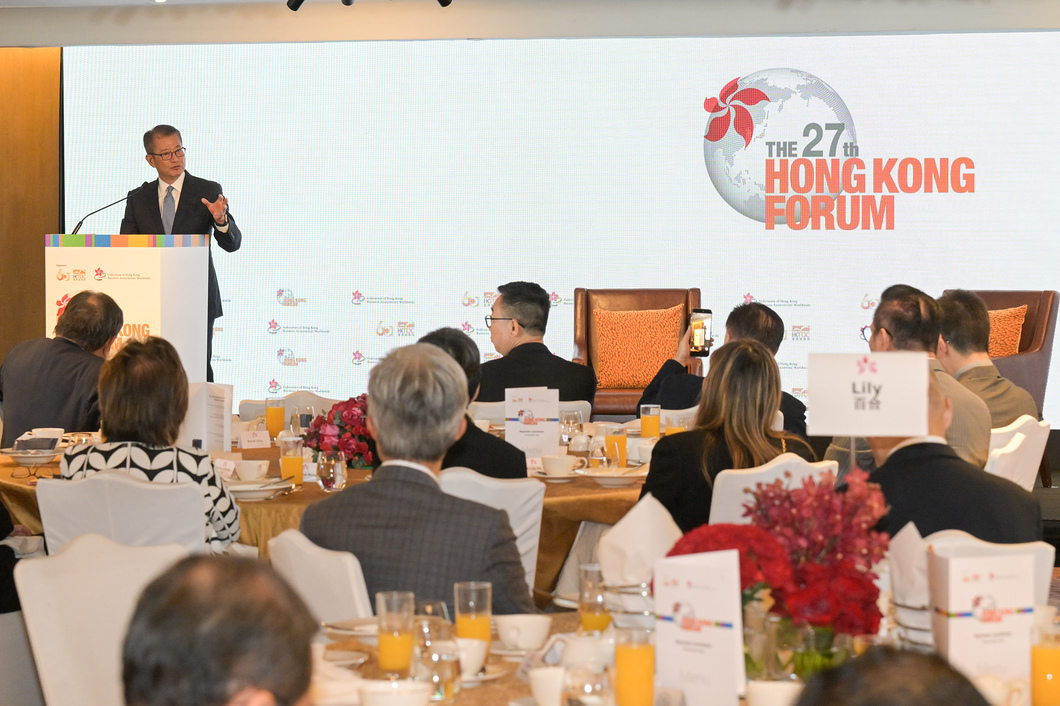
| Addressing the luncheon of the 27th Hong Kong Forum, jointly organised by the Hong Kong Trade Development Council and the Federation of Hong Kong Business Associations Worldwide. |
Hong Kong's understanding of bay area development, cross-boundary co-operation and the demands of different systems comes from hands-on experience. The Shenzhen-Hong Kong-Guangzhou innovation cluster again ranks first in the world in the World Intellectual Property Organization's latest ranking. Technology companies in the Hetao Shenzhen-Hong Kong Science and Technology Innovation Co-operation Zone took part in the country's first cross-boundary intellectual property securitisation product. This enabled them to raise financing across the boundary against intellectual property protected in Hong Kong and put that capital to work in industry. Last year, the number of companies in Hong Kong with parent companies on the Mainland or overseas reached a record high of more than 11,000. These examples show how Hong Kong can bring together research, intellectual property, capital and manufacturing to take ideas to market. They also illustrate our role as a trusted base for international companies entering the GBA and for companies in the region expanding into other Asia-Pacific markets.
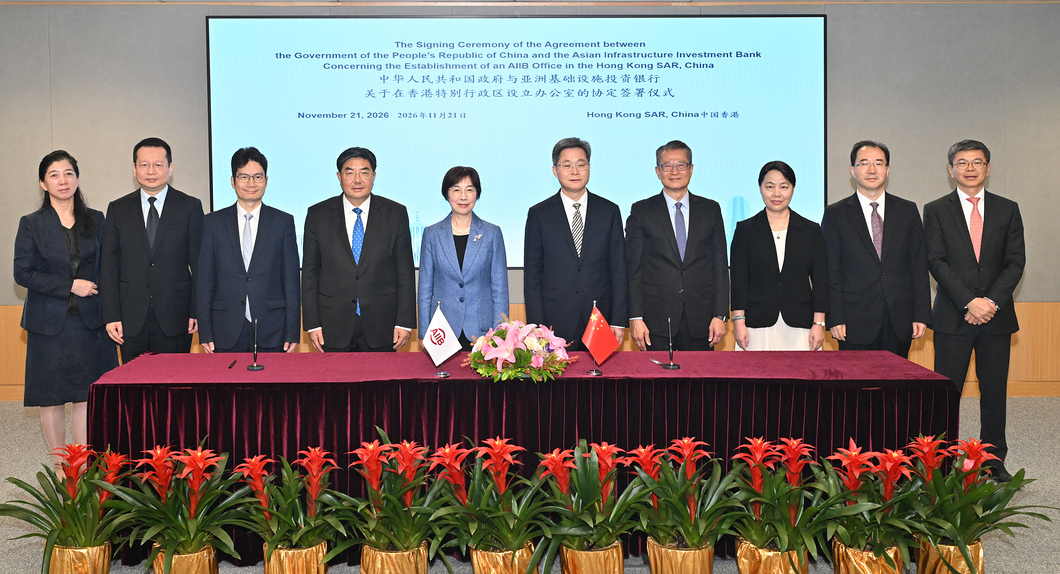
The Asian Infrastructure Investment Bank (AIIB)'s decision to establish an office in Hong Kong will give us further scope to put these strengths to work on international projects. Over the past decade, the AIIB has approved more than US$79 billion in financing for over 400 projects. Hong Kong's capital markets can provide funding, while our professionals can offer legal, accounting, risk management and project management services. We can support infrastructure projects at different stages, whether by arranging project finance, raising capital through listings or bond issues, securitising loans, or helping manage risks and secure protection against disasters. This can help projects with real development benefits get under way sooner and deliver those benefits to the communities they serve.
|
| Attending the signing ceremony for co-operation agreements with the AIIB. |
We continue to broaden Hong Kong's international ties. Late last night, I left for the United Kingdom and the Netherlands with a delegation of more than 20 representatives from the business and professional services sectors. We will meet members of the innovation communities in Cambridge and the Netherlands and speak with local business and financial leaders to identify new partners in research, investment, finance and I&T. We want to give our European counterparts a fuller picture of what the GBA has to offer and bring home fresh opportunities for collaboration. In doing so, we aim to strengthen ties in I&T and finance between Europe and the GBA as a whole, with Hong Kong playing an active role.
November 22, 2026