Blog
Attracting Enterprises and Powering Innovation
This week, the Office for Attracting Strategic Enterprises welcomed its seventh batch of 18 strategic enterprises, half of them come from outside the Chinese Mainland. Several have a market capitalisation or valuation exceeding HK$100 billion. Together with the previous six batches, a total of 142 strategic enterprises have now established or expanded their operations in Hong Kong. They are expected to bring in around HK$84 billion in investment and create some 27,000 jobs over the next few years. More importantly, these corporate investments are steadily materialising. As at the end of September this year, enterprises from the first six batches had invested HK$28.3 billion and employed more than 10,300 people—exceeding their original interim targets by 30% and 34% respectively. Their confidence in Hong Kong is translating into tangible economic benefits.
Beyond the figures, talent was a recurring theme in my conversations with enterprise representatives at the signing ceremony. As these companies bring capital and technology to Hong Kong, their ability to take root and thrive depends on attracting the right talent, building strong teams, sustaining research and development (R&D), and expanding their businesses. They require not just specialists in individual fields, but multidisciplinary teams capable of bridging research, engineering, commercialisation and business management. Notably, among the first six batches of enterprises, around 70% have established global or regional headquarters in Hong Kong, while nearly 90% have set up R&D centres. They bring more than investment and jobs: they also bring decision-making, research and business coordination functions. The clustering of these high-value-added activities is key to translating corporate investment into Hong Kong’s long-term competitiveness.
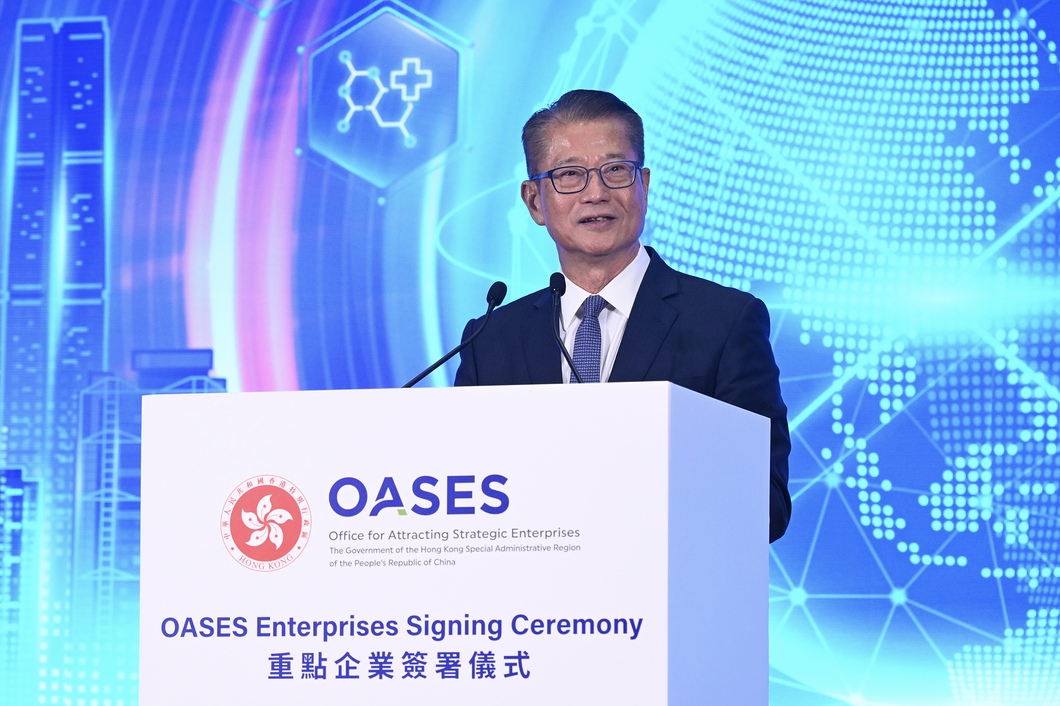
|
| Delivering welcoming remarks at the signing ceremony for strategic enterprises last week. |
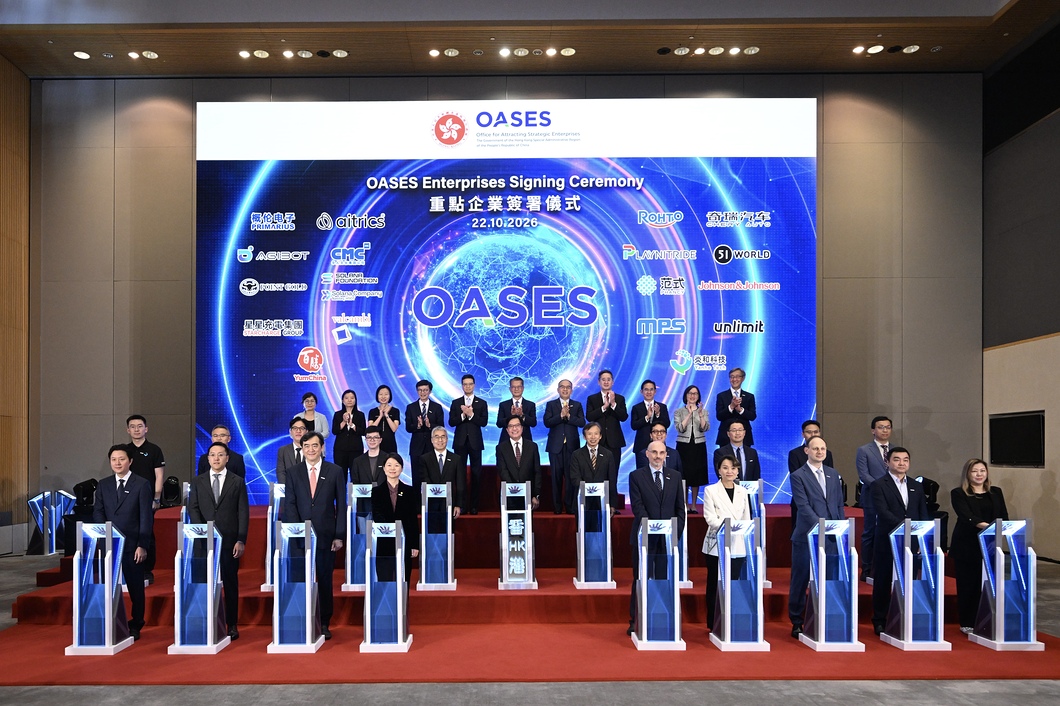
|
| Leading other officials last week to witness the electronic signing ceremony with representatives of the strategic enterprises. |
The development plans of the latest batch also illustrate the tangible benefits of establishing a presence in Hong Kong. One new energy enterprise plans to install more than 10,000 electric vehicle charging spaces across the city within three years, supporting the development of green transport. A medical artificial intelligence company from Korea will work with local universities and hospitals to validate a system capable of warning of a deterioration in a patient’s condition several hours in advance. The contribution of strategic enterprises to Hong Kong’s biomedical development is particularly noteworthy. These companies bring demand for research and practical applications, while universities and hospitals contribute research capabilities, clinical settings and professional expertise. Those involved also gain valuable experience. Such collaboration demonstrates how corporate investment is converted into local capacity for innovation.
The latest batch also includes gold refiners from Switzerland and Shenzhen, which plan to establish gold refining, storage and trading operations in Hong Kong. Their presence will help strengthen the city’s gold industry value chain and foster the development of the related trading ecosystem.
Together with closer industry collaboration, we must provide opportunities and space for enterprises at different stages of development to grow. Enterprises from the first six batches now occupy 2.83 million square feet of commercial and industrial floor space—an increase of more than 50% since March last year. This reflects the real demand for premises generated as investments take shape. The Government recently proposed an initial capital injection of HK$10 billion into San Tin Technopole Company Limited to accelerate site formation and the construction of the first phase of industry facilities, laying the groundwork for more research and industrial projects. Meanwhile, the eight enterprises selected under the inaugural New Industrialisation Elite Enterprises Nurturing Scheme include local businesses, start-ups commercialising university research outcomes, and newcomers seeking to develop their businesses in Hong Kong. This reflects our commitment to attracting enterprises while nurturing home-grown capabilities.
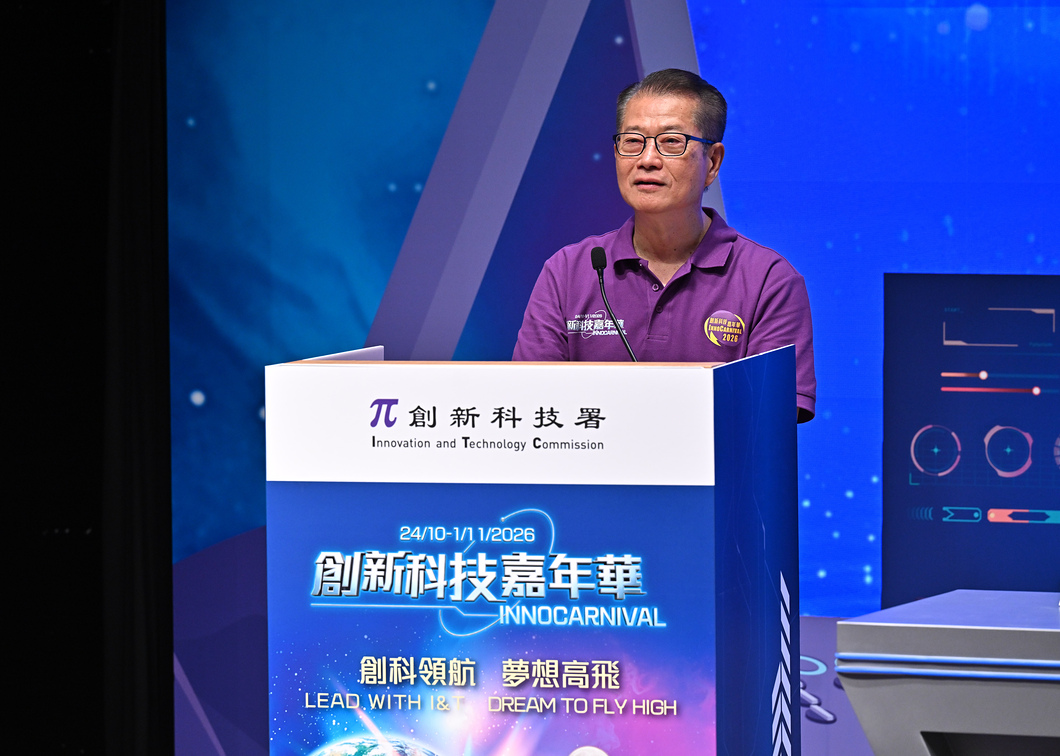
|
| Speaking at the opening ceremony of the InnoCarnival 2026 yesterday. |
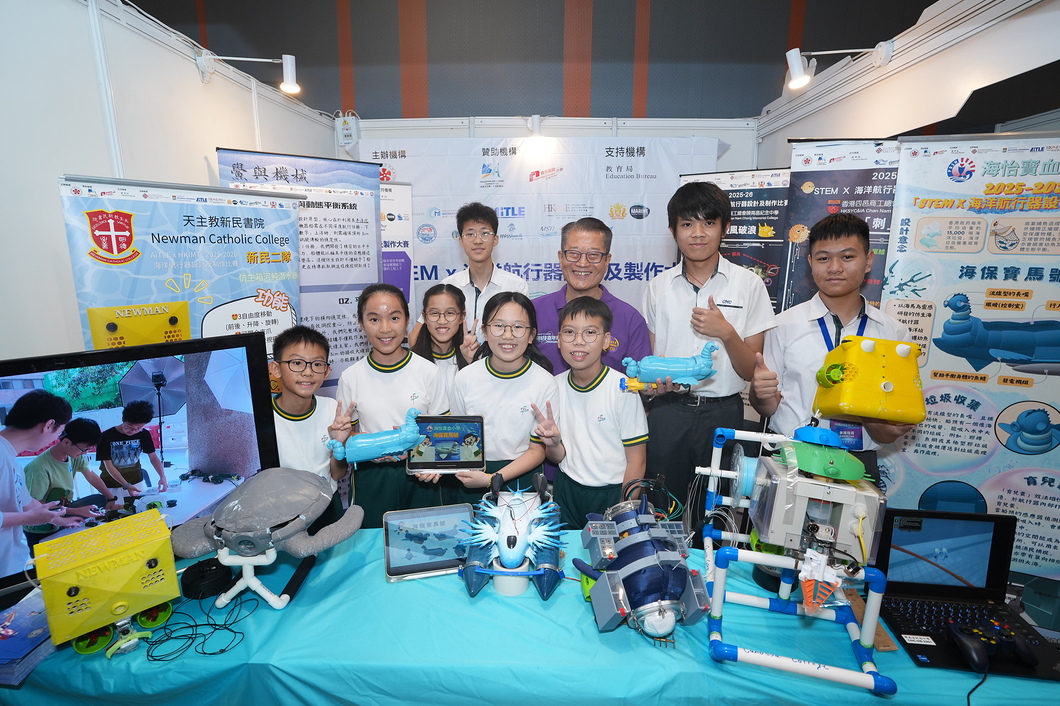
Beyond industry and investment, talent is the foundation of innovation and technology. After attending the opening ceremony of the InnoCarnival 2026 at Science Park yesterday, I visited several exhibition areas. In the workshops, primary and secondary school students were making magnetic levitation train models and animation boxes under the guidance of instructors, while others experimented with hydrogen-powered motors. These hands-on experiences bring scientific principles from textbooks to life. Building a culture of innovation and technology requires sustained efforts to promote science education and foster an environment that gives more young people the interest and opportunity to discover science and explore technology.
This year’s InnoCarnival 2026 features a dedicated aerospace thematic zone for the first time. In May, Dr Lai Ka-ying, Hong Kong’s first payload specialist, travelled into space as part of the country's space mission. The Multi-Spectral Imaging Carbon Observatory (MUSICO), also known as the Tianyun Camera, was developed by a Hong Kong team and delivered to China’s Tiangong space station to monitor greenhouse gases on Earth. At the thematic zone, I learnt about research projects undertaken by local university teams as part of national space missions. It was encouraging to see how they are applying their respective strengths to translate space research into practical applications that address challenges facing our planet and humanity.
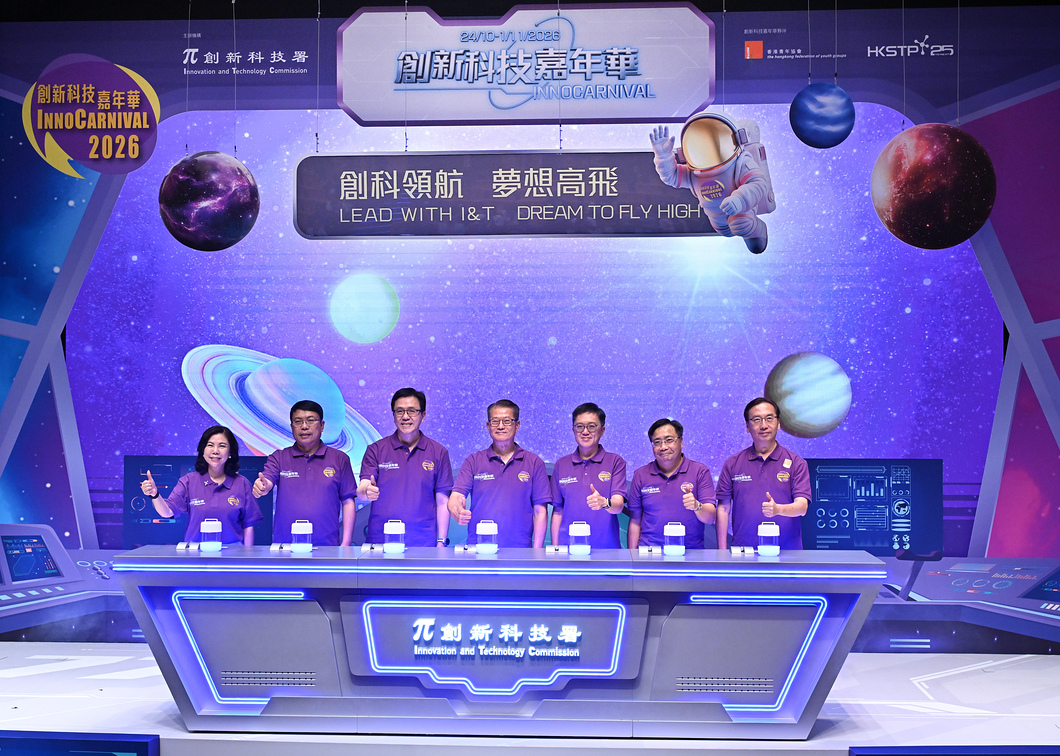
|
| Attending the opening ceremony of the InnoCarnival 2026. |
|
| Touring the InnoCarnival 2026 exhibition and engaging with students. |
Local research continues to achieve success both internationally and in practical applications. At the Silicon Valley International Invention Festival held in August this year, all 14 projects exhibited by Lingnan University won awards, including eight gold medals. For the second consecutive year, it received the highest number of awards and gold medals among Hong Kong’s higher education institutions. Meanwhile, products and technologies developed by local technology start-ups have entered a range of overseas markets. These include electric vehicle charging technologies, cooling coatings for buildings, artificial reef structures for coral restoration, and battery energy storage systems for construction sites. From international recognition for university research to the overseas deployment of start-up technologies, these achievements show how Hong Kong’s research strengths and innovative ideas are steadily translating into practical benefits and commercial opportunities.
Building Hong Kong into an international innovation and technology centre requires us to attract corporate investments while strengthening local research and nurturing scientific talent. We must help enterprises build their teams and create opportunities for researchers and young people to put their knowledge to work. Only then can innovation and technology become a powerful driver of Hong Kong’s long-term development.
October 25, 2026