Blog
Contributing to Shared Success
Last week, I attended the Annual Meetings of the International Monetary Fund (IMF) and the World Bank Group in Bangkok. Discussions on the global economic outlook, both at the meetings and on the sidelines, centred on two powerful forces: the shock of persistently high energy prices driven by war, and the AI wave sweeping the globe. Together, they are reshaping the global economic landscape.
The IMF’s latest forecast projects global economic growth of 3.1% this year, down from 3.5% last year. More fundamentally, growth is becoming increasingly uneven, with a widening divergence in economic prospects. Growth forecasts for economies affected by war have been revised down substantially, while some economies deeply integrated into the AI supply chains have seen their growth forecasts upgraded. Asia as a whole continues to grow considerably faster than the global average. The IMF has also raised its growth forecast for Hong Kong to 3.8% this year, though our own assessment is even more positive.
|
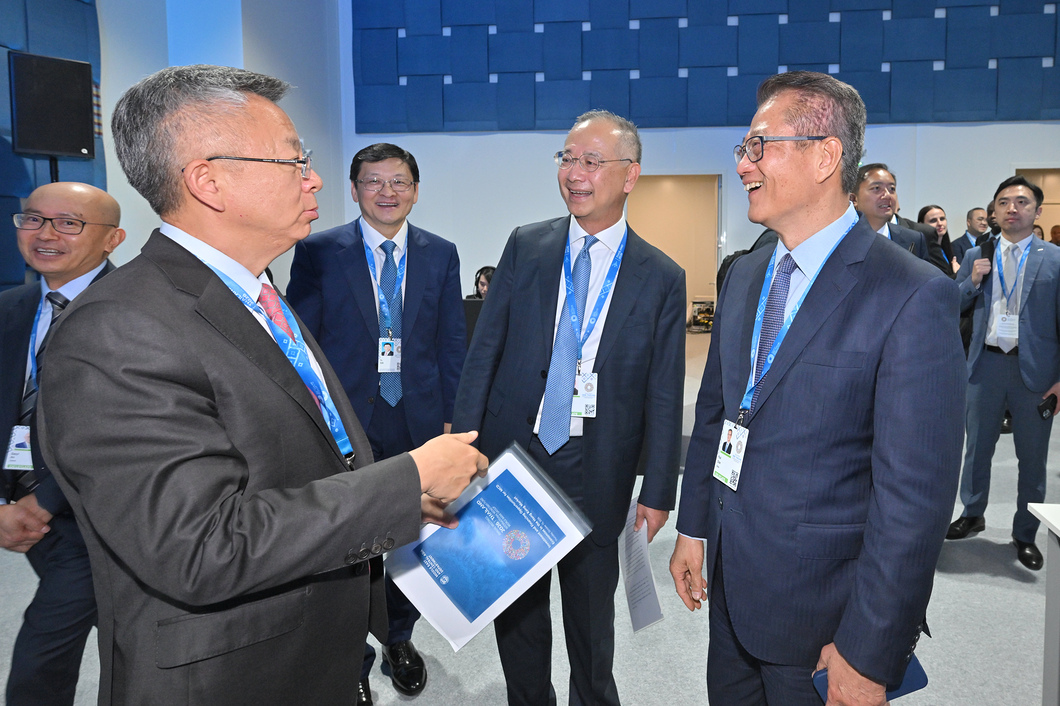
| Attending a roundtable jointly organised by the IMF and the Hong Kong Monetary Authority in Bangkok, and exchanging views with IMF Deputy Managing Director Li Bo (first from left). |
|
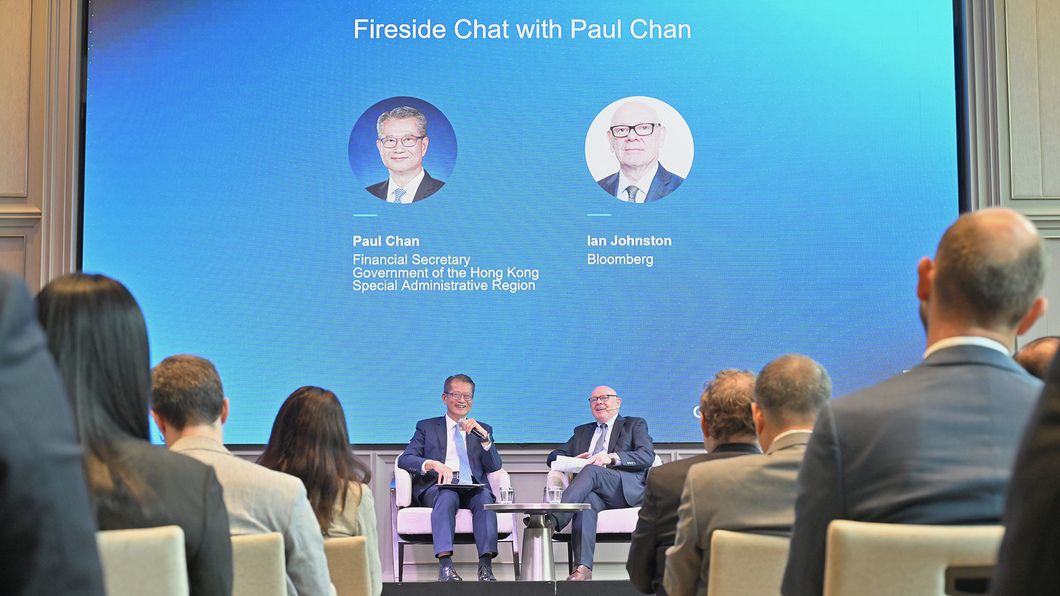
| Participating in a fireside chat hosted by Bloomberg in Bangkok. |
Slower growth is not the only cause for concern. We must also remain alert to the nature of the risks confronting the global economy. Risks such as geopolitical conflicts, energy supply pressures, rising inflation, extreme weather, trade frictions and tight financial conditions are not isolated challenges. They interact and, at times, reinforce one another. The current situation of global public finances illustrates this clearly. Government bond yields in many Western countries have surged to around 20-year highs. Global public debt ratio is approximately 95% of GDP, with debt ratios in some advanced economies considerably higher. Rising debt-servicing costs are steadily eroding the fiscal buffers available to governments to respond to unforeseen shocks.
Two contrasting pictures stood out at this year’s meetings. On the bright side, AI-related goods accounted for nearly 30% of global import growth over the past two years, underscoring the new opportunities that new technology is creating. Yet a more pressing challenge also demands attention. Over the next 10 to 15 years, some 1.2 billion young people will enter the labour markets of developing countries. On current trends, the shortfall in jobs will reach 800 million. The World Bank has therefore placed job creation at the centre of its development agenda. Behind both pictures lies the same multiplier: technology. It can amplify strengths, but it can also compound existing risks.
Whether the objective is to harness technology for economic transformation or to strengthen growth and sustain employment, efficient access to finance is essential. Hong Kong can contribute on several fronts, not least by facilitating the efficient flow of capital. At the high-level roundtable jointly organised by the Hong Kong Monetary Authority and the IMF, I set out three areas in which Hong Kong will focus its efforts: mobilising long-term capital, broadening currency options, and managing and sharing risk. In mobilising long-term capital, our financial markets continue to demonstrate their strengths. Funds raised through initial public offerings in Hong Kong approached US$50 billion in the first nine months of this year—double the amount raised in the same period last year, and already exceeding last year’s full-year total. Green and sustainable debt issuance reached US$77 billion last year, with bond issuance ranking first in Asia. Securitisation of infrastructure financing can also help borrowing countries release capital earlier for investment in new projects. This is closely aligned with the World Bank’s emphasis on capital recycling. These are practical examples of how efficient international financial markets can support investment and development in the real economy.
|
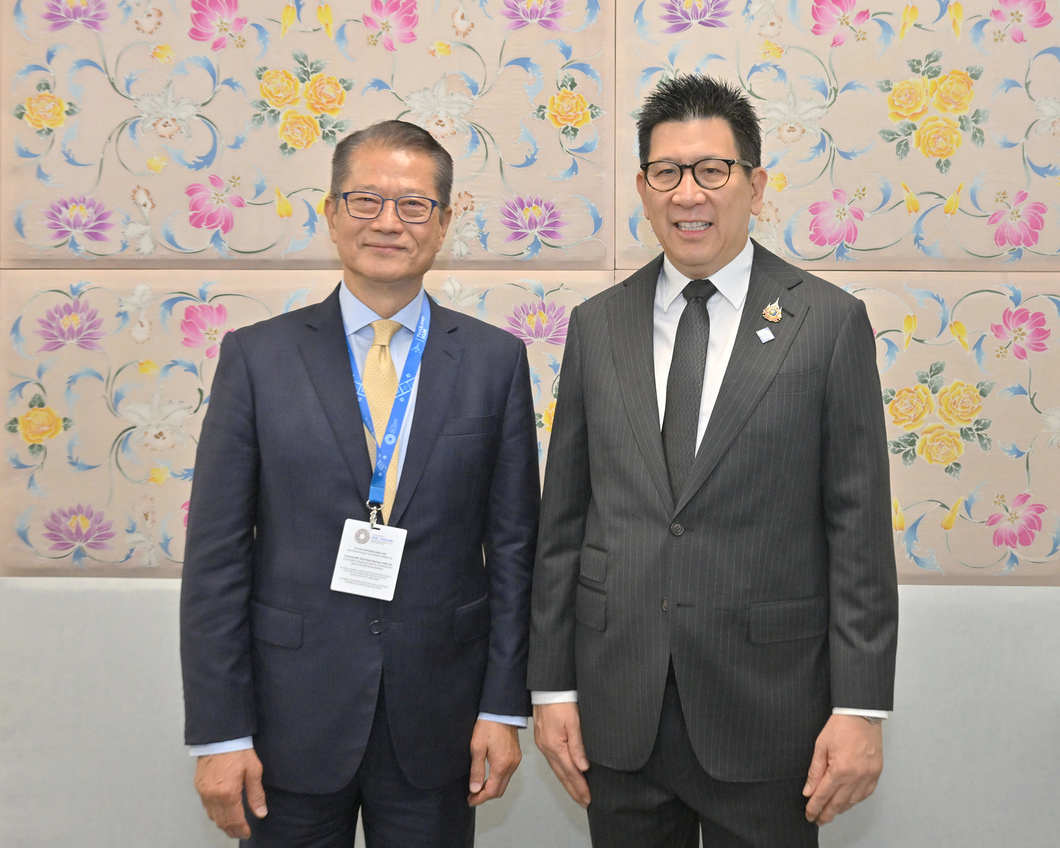
| Meeting Thailand’s Deputy Prime Minister and Minister of Finance, Ekniti Nitithanprapas (right), in Bangkok to exchange views on strengthening bilateral trade, economic and financial co-operation. |
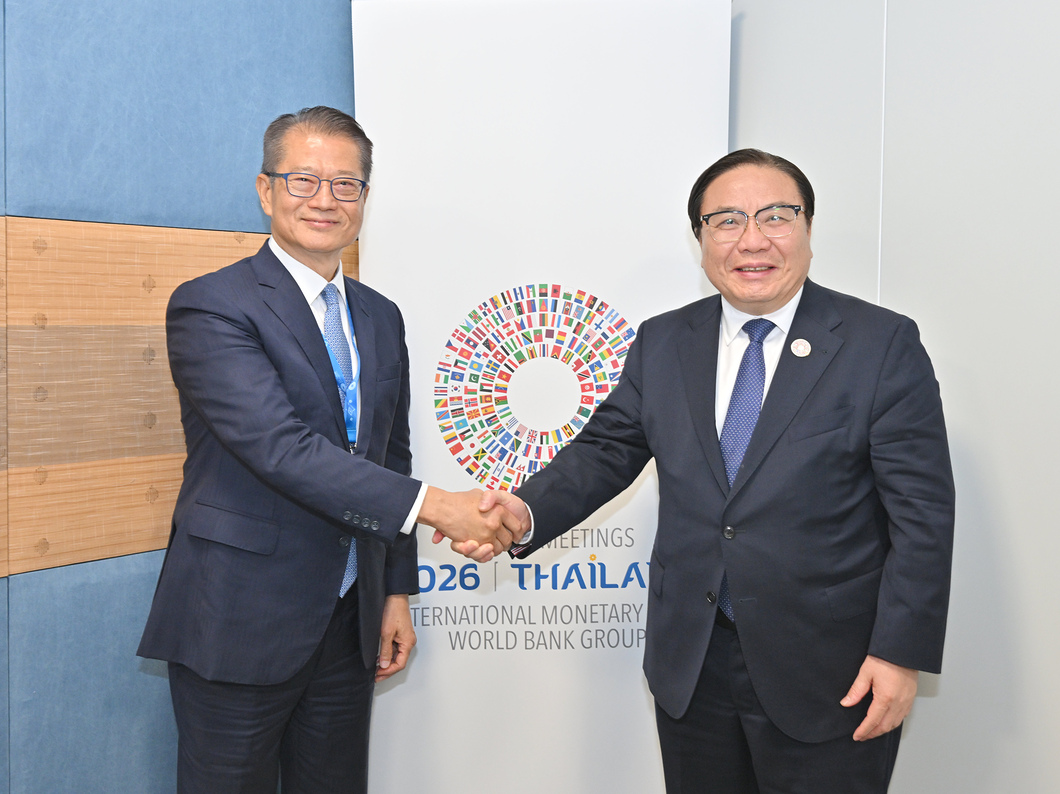
|
| Meeting World Bank Managing Director and Chief Administrative Officer Zhang Wencai (right) in Bangkok. |
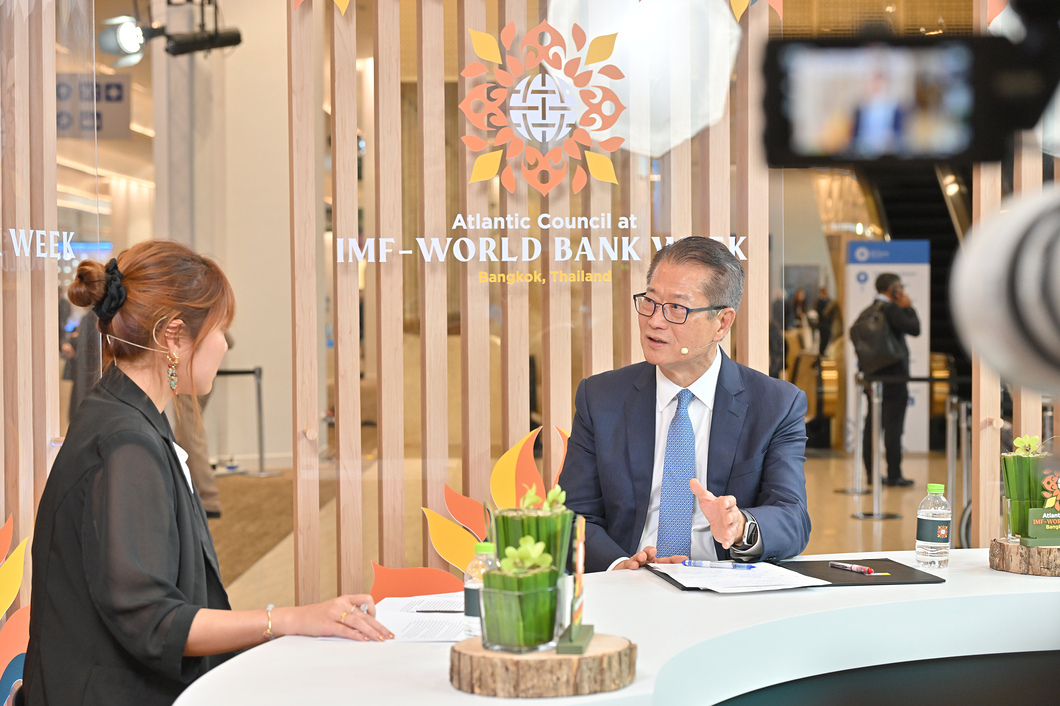
|
| Participating in an Atlantic Council fireside chat broadcast in Bangkok. |
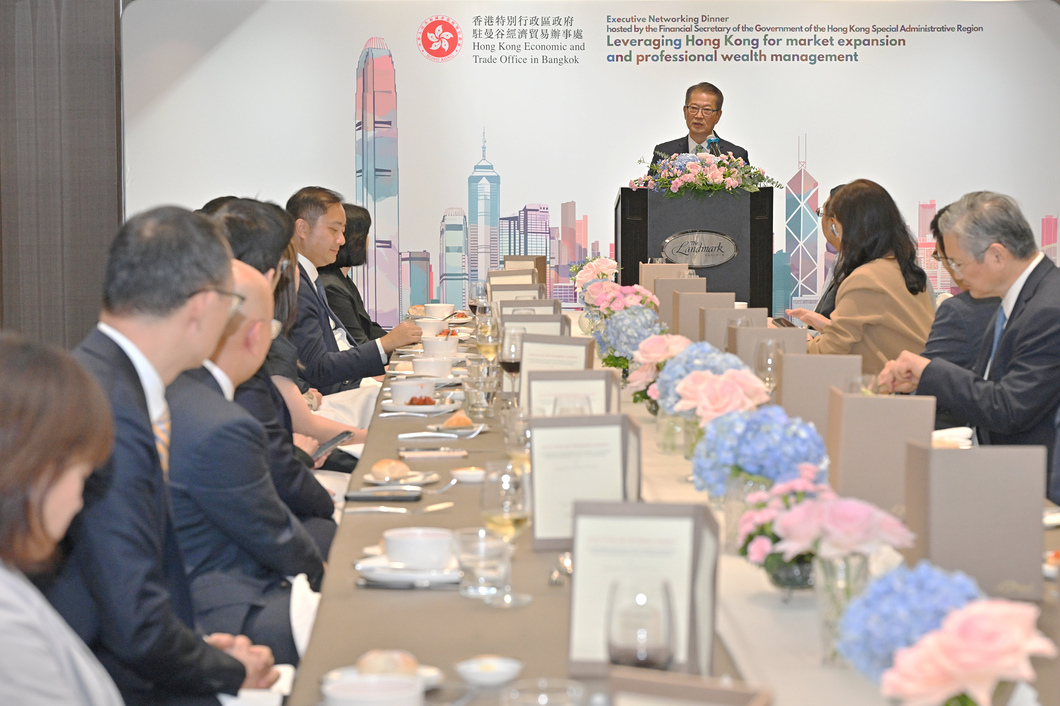
|
| Addressing a networking dinner hosted by the Hong Kong Economic and Trade Office in Bangkok, attended by senior representatives of major Thai banks and financial institutions. |
Hong Kong is also uniquely placed to broaden currency options for international borrowers and investors. A growing number of countries in the Global South are settling trade with the Mainland in renminbi, accumulating substantial renminbi holdings in the process. Hong Kong can provide a wider range of investment products, risk-management instruments and liquidity arrangements to meet their needs. At the same time, more developing economies are turning to Hong Kong to issue renminbi bonds, seeking both to diversify risk and to benefit from relatively low renminbi interest rates. In August this year, for example, Kazakhstan’s state-owned oil and gas company issued RMB3.5 billion in bonds in Hong Kong. The offering was nearly seven times oversubscribed. Its state-owned railway company is also exploring a Hong Kong listing to raise capital. The outstanding volume of dim sum bonds in Hong Kong now stands at close to RMB1.9 trillion—the largest in the world. Annual issuance has exceeded RMB1 trillion in each of the past two years.
The global economy needs technological progress to sustain growth. Mainland enterprises, meanwhile, are seeking to expand their global footprint with technological innovations. Capturing this dynamic requires a platform with strong Mainland links and a thorough understanding of international rules and market practices. Co-operation between Jiangsu and Hong Kong illustrates how this can work. Last week, I led a delegation to Nanjing. The partnership between our two economies already rests on firm foundations. Hong Kong is Jiangsu’s largest source of foreign investment and its largest destination for outward investment. There are 129 Jiangsu enterprises listed in Hong Kong, with a combined market capitalisation exceeding HK$1.4 trillion. During the visit, we explored how to build on our financial and investment ties by extending co-operation into research and development, the alignment of standards, industrial collaboration and joint expansion into overseas markets.
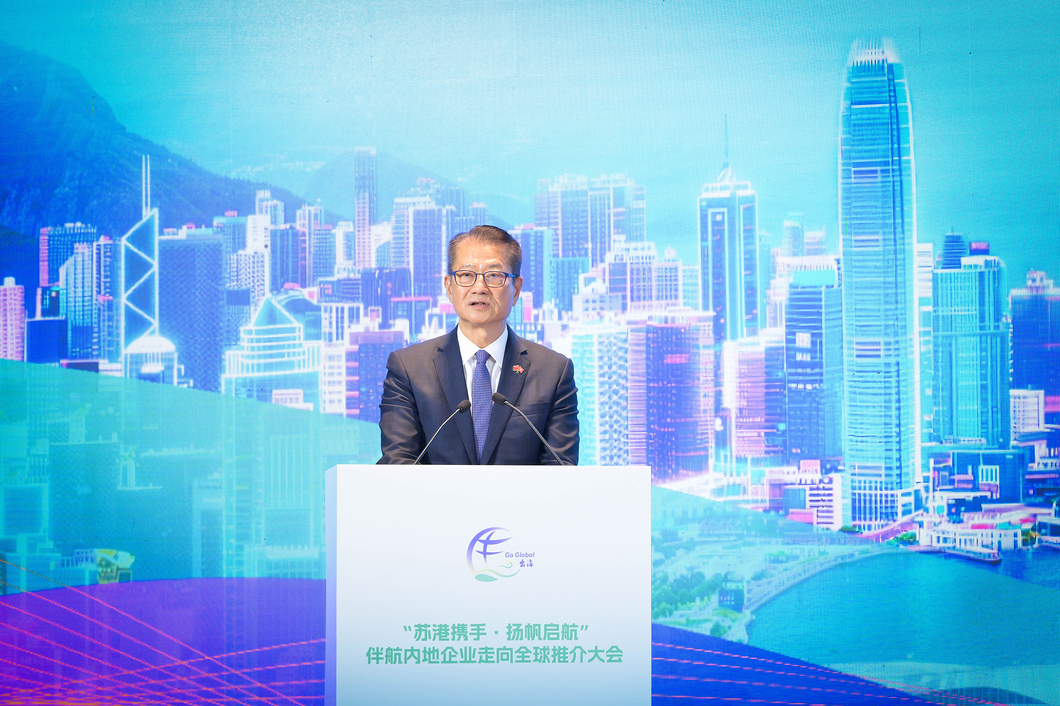
|
| Addressing the “Jiangsu-Hong Kong Partnership: Setting Sail Together” conference in Nanjing, organised to support Mainland enterprises in expanding globally. |
|
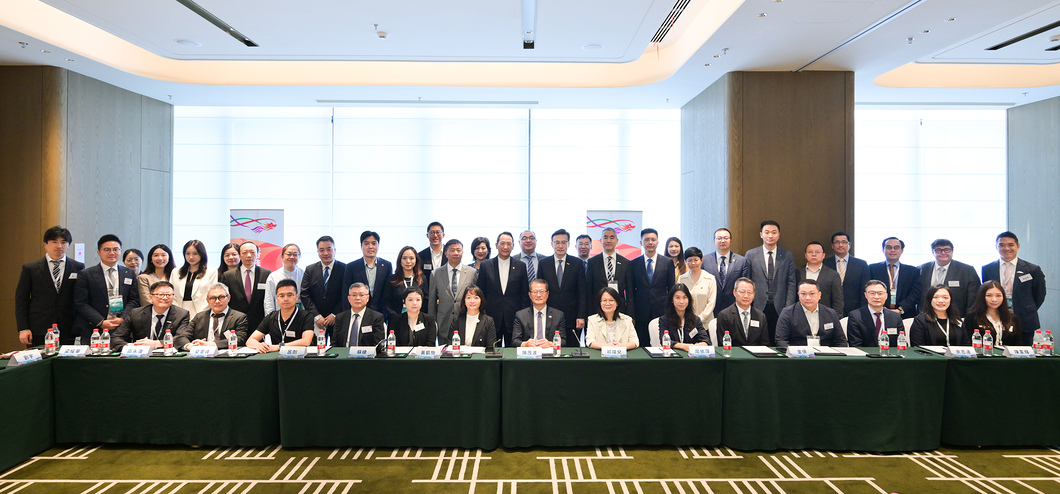
| Leading a delegation of around 30 members to Nanjing last week and exchanging views with Hong Kong businesspeople and enterprises operating in Jiangsu. |
|
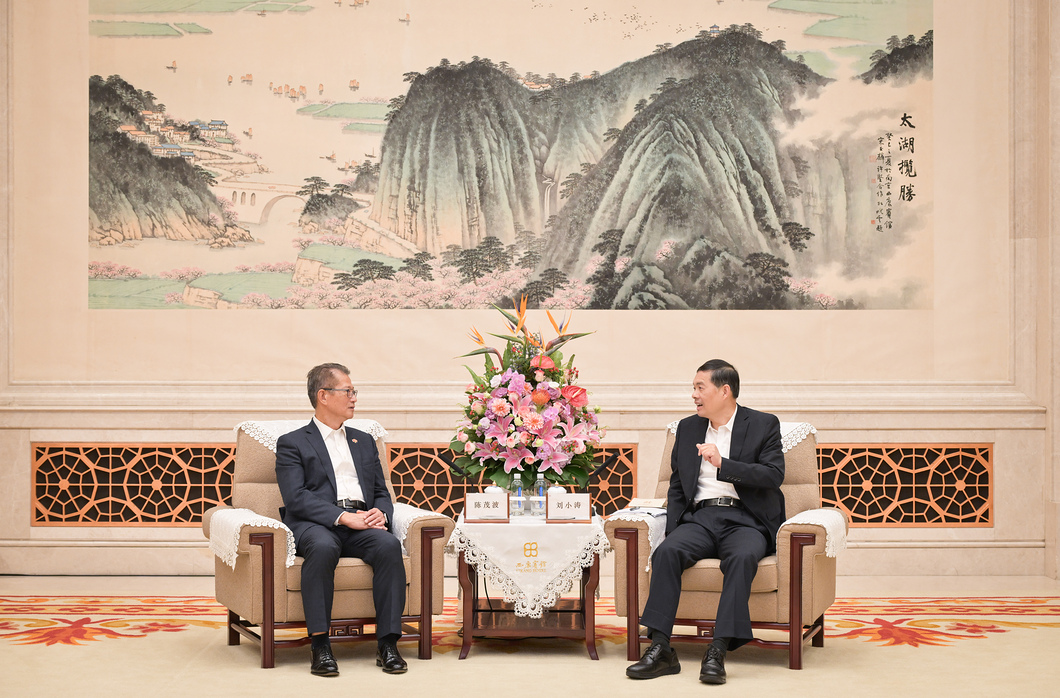
| Meeting Jiangsu Governor Liu Xiaotao (right) in Nanjing. |
|
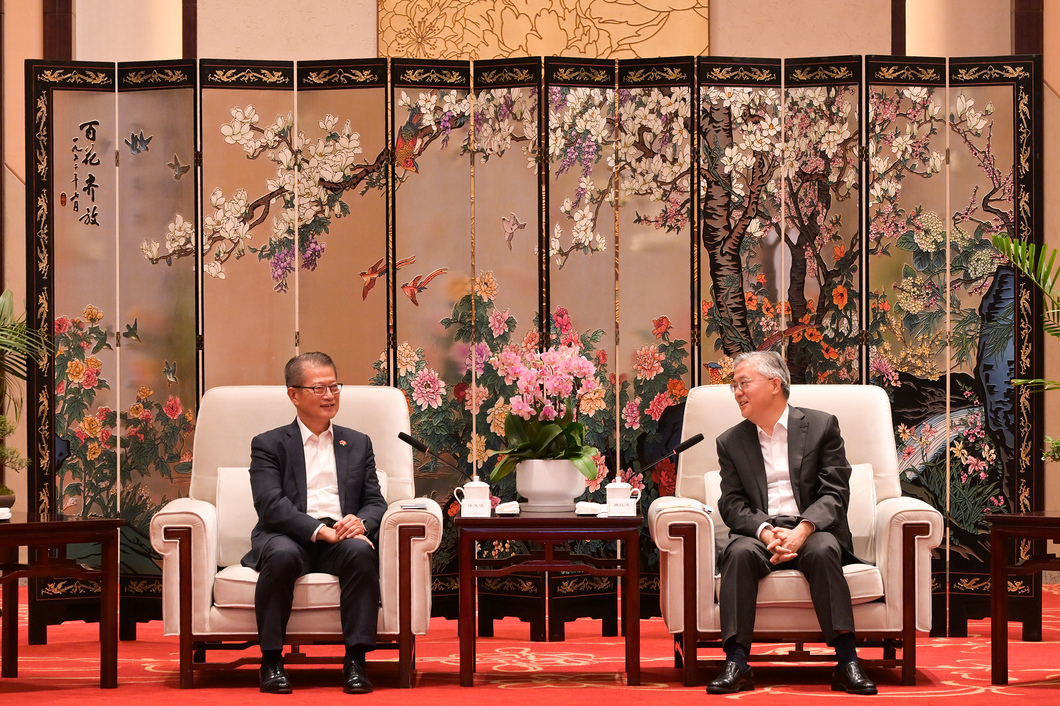
| Meeting the Secretary of Nanjing Municipal Committee Zhou Hongbo (right). |
Following years of development, Mainland enterprises expanding overseas need more than just capital. Talent, legal support, compliance, corporate governance and risk management must all keep pace. Enterprises also need to navigate differences between national and international standards. For sectors such as healthcare and AI, cross-border data connectivity is another important requirement. International expansion has entered a new phase. It is no longer simply about exporting products, but also about bringing technology and brands to global markets. Comprehensive professional support throughout that process has become essential. Under “one country, two systems”, Hong Kong provides both an important operating platform and the talent base to support this next stage of development.
AI offers significant opportunities for growth, but the transition may also bring some pain. A common concern among the international community is how to ensure that its benefits reach the wider population and translate into new employment opportunities. The World Bank advocates “small but practical” AI applications: helping farmers improve their yields, enabling teachers to tailor their instruction to cater for students’ needs, and supporting healthcare professionals to make better treatment and care decisions. The IMF has likewise emphasised that the gains from AI will not materialise automatically; they must be supported by institutional reforms and equitable access. Hong Kong’s efficient capital-raising and financing capabilities can support investment in AI infrastructure across developing economies. Through technology transfer and talent development, we can also help enhance the AI affordability and accessibility for more economies. At home, we are promoting AI training across the community so that people of different ages and circumstances are better equipped to use the technology.
|
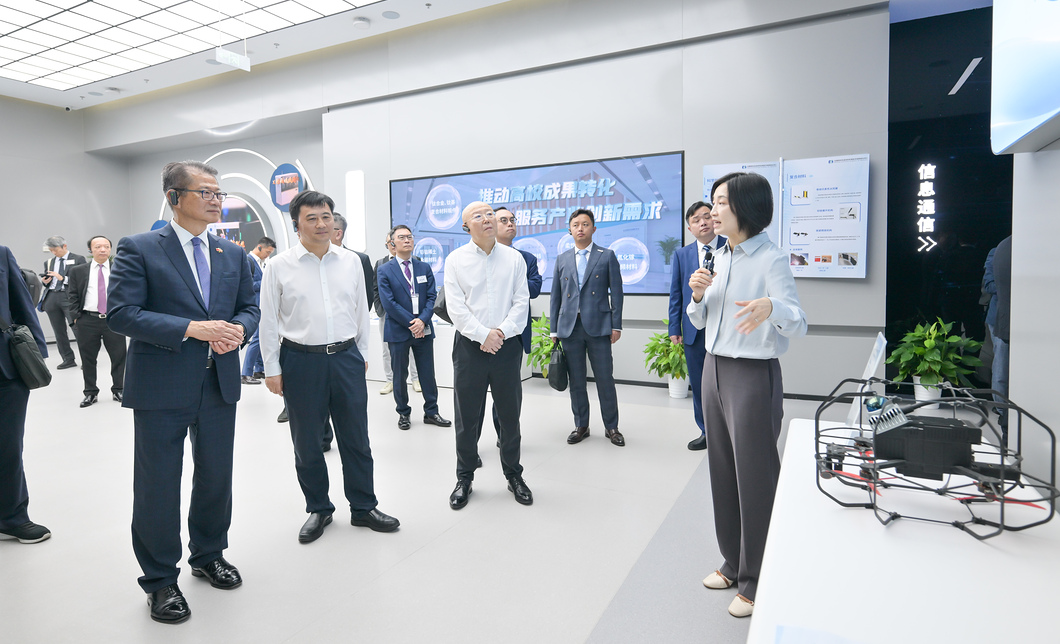
| Visiting the National Regional Technology Transfer and Transformation Center for Higher Education Institutions in Nanjing with members of the delegation. |
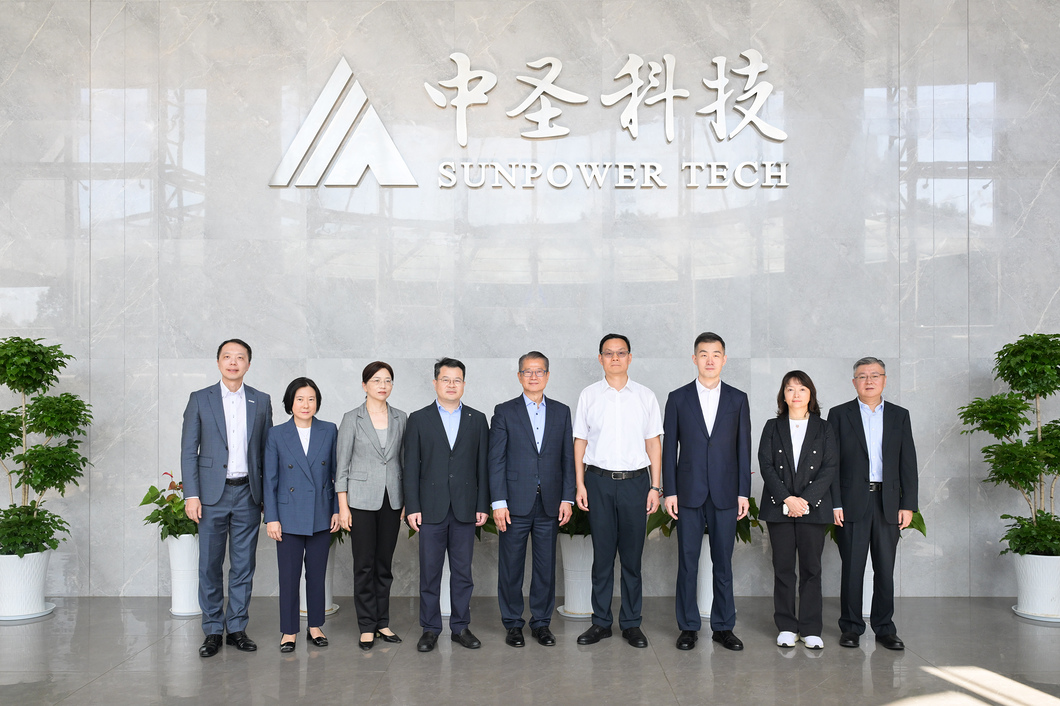
|
| Visiting a Jiangsu-based enterprise specialising in energy and energy-saving equipment in Nanjing with members of the delegation. |
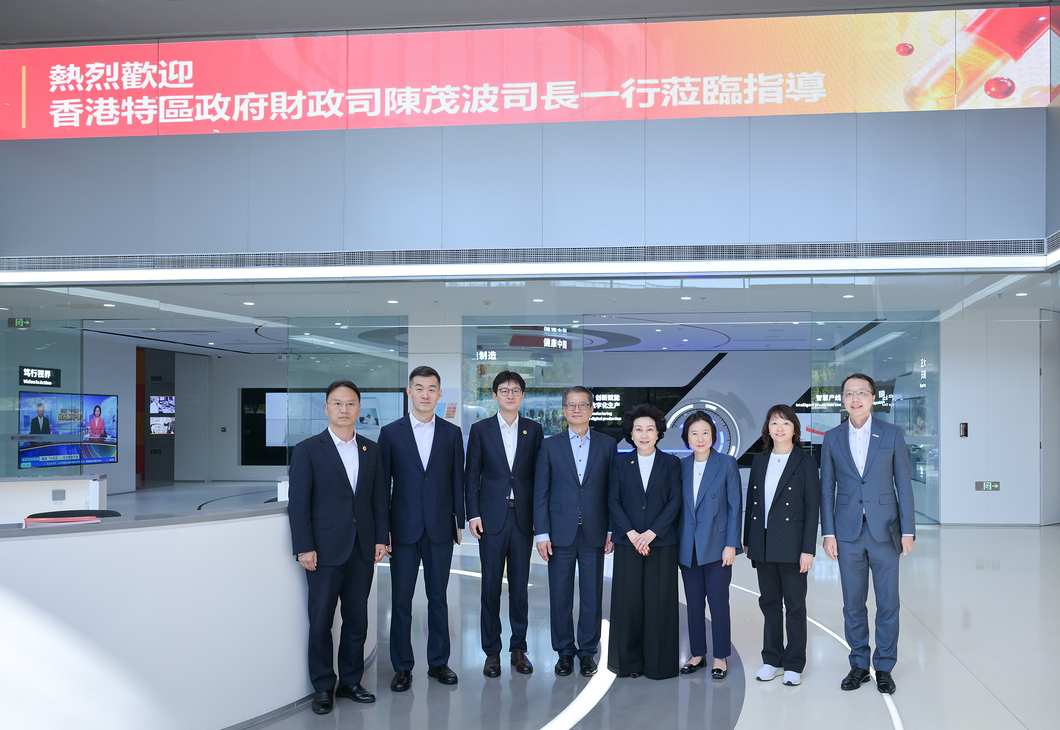
|
| Visiting a pharmaceutical enterprise in Nanjing with members of the delegation. |
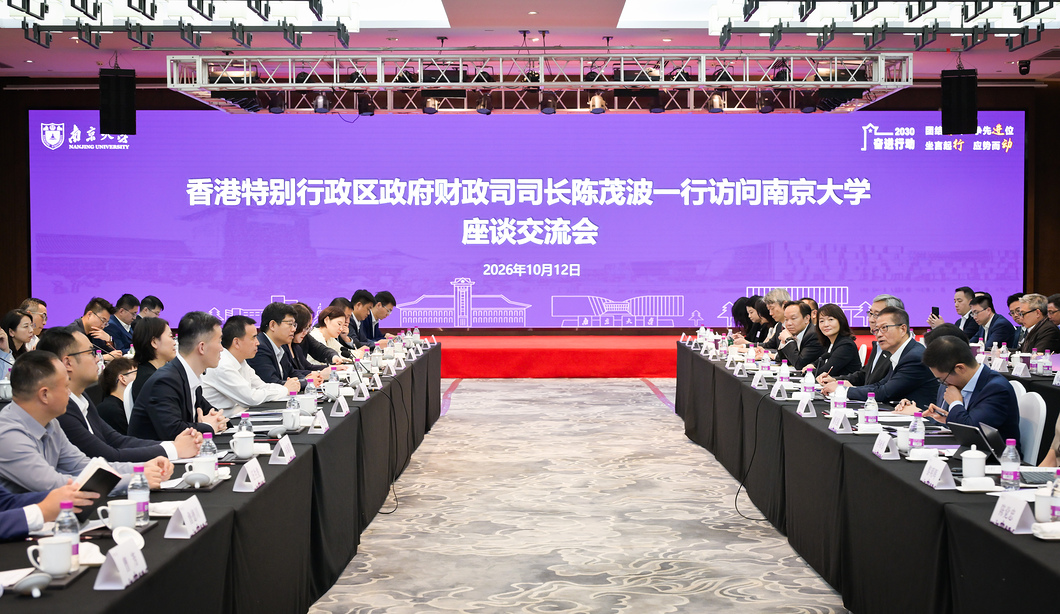
|
| Having a discussion with representatives of Nanjing University and several enterprises founded by its alumni, together with members of the delegation. |
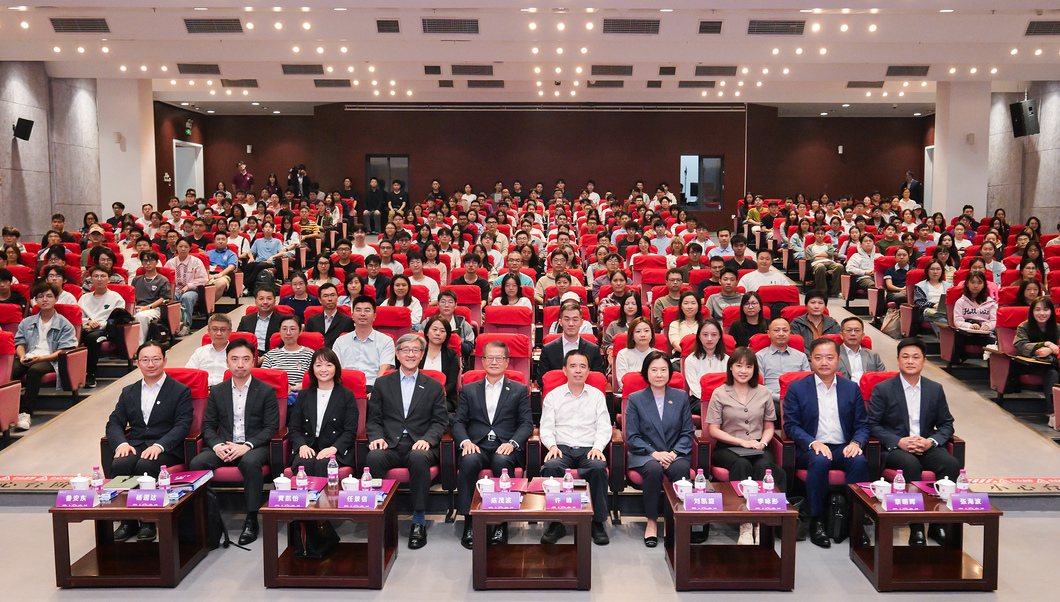
|
| Delivering a keynote speech during my visit to Nanjing University. |
My visits to Nanjing and Bangkok last week brought two enormous needs into clear focus: developing economies need capital and technology, while Mainland enterprises need access to international markets and professional services. It happens that these two needs converge in Hong Kong - our city connects global capital with the Mainland’s technological and industrial capabilities. We are well-positioned to support the development of others while strengthening our own capacity for growth.
These advantages, however, will not reinforce one another automatically, just as risks will not resolve themselves. Technological innovation is opening up new opportunities for development, but it is also creating challenges for employment. Realising its benefits requires deliberate action and sustained cooperation. The discussions in Bangkok will continue in Hong Kong this week, when we host the Asia-Pacific Economic Cooperation Finance Ministers’ Meeting for the first time. With leaders from government, business and finance gathering here, I look forward to substantive exchanges on these shared challenges and the opportunities for closer cooperation.
October 18, 2026