Blog
Seizing Opportunities to Deepen International Ties and Co-operation
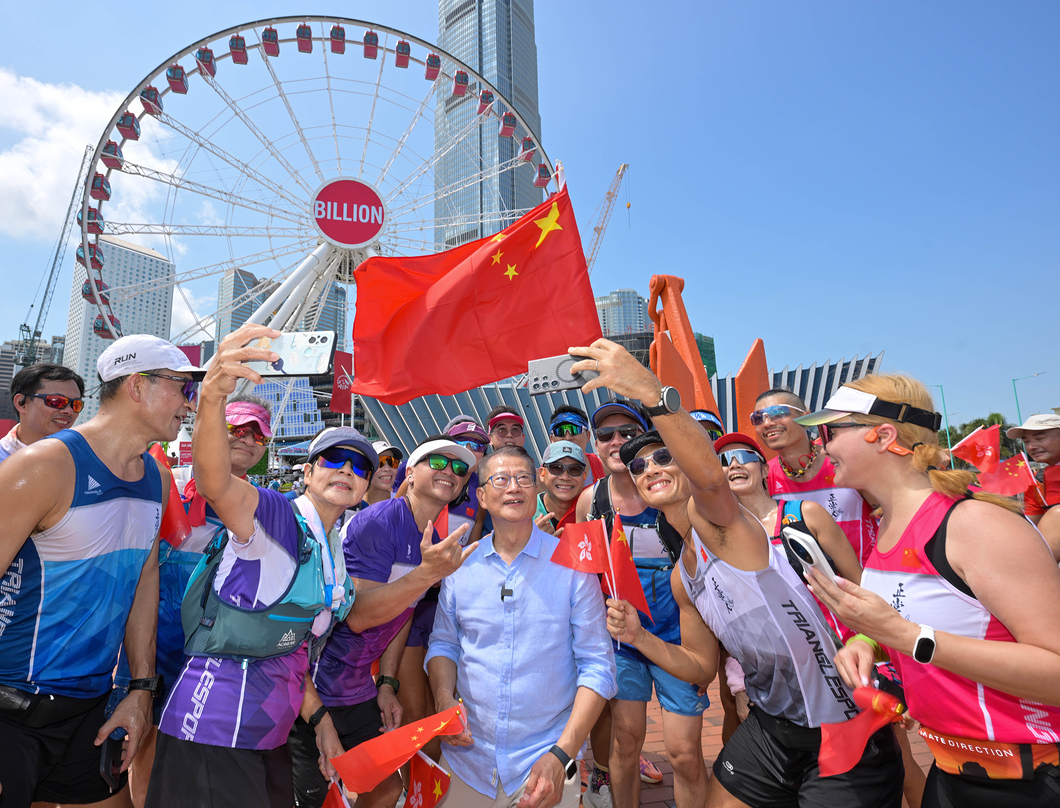
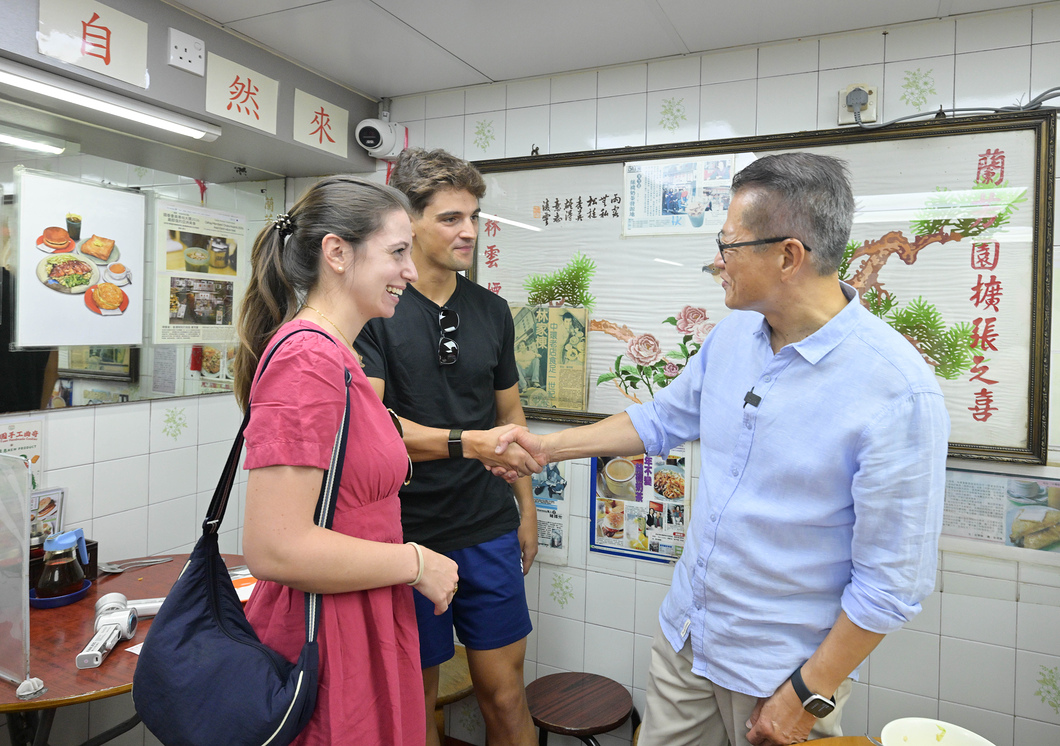
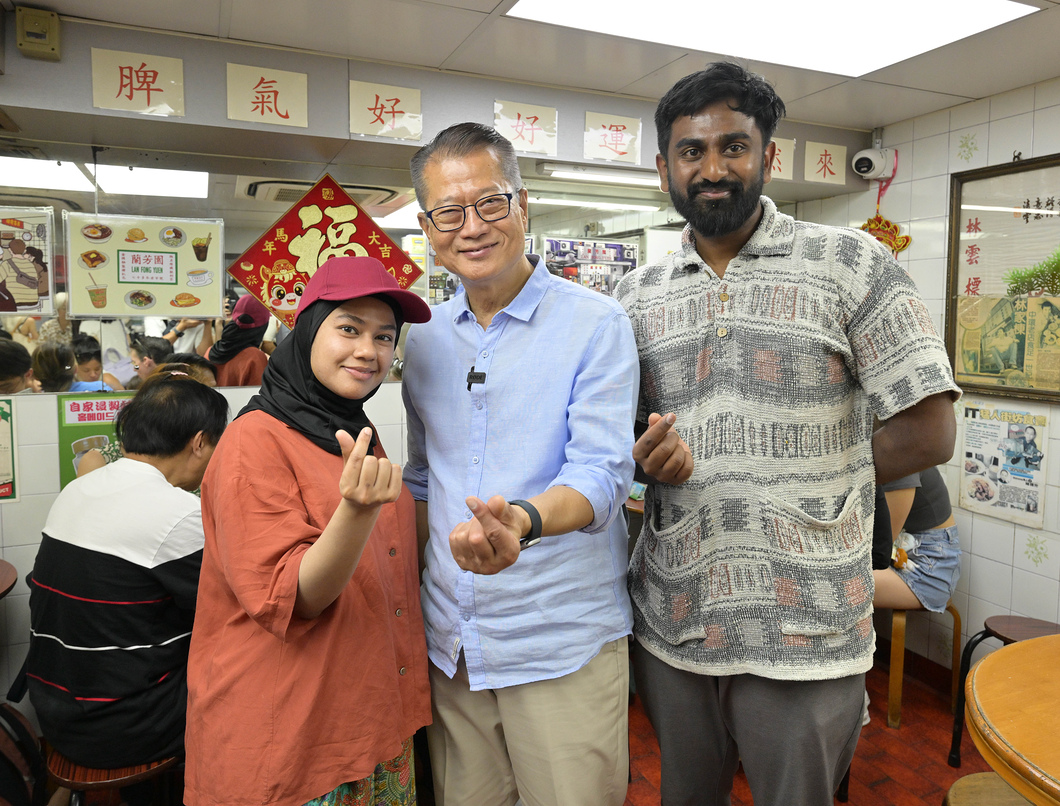
The National Day Golden Week has brought a vibrant festive atmosphere to Hong Kong. In its first three days, the city recorded more than 732,000 visitor arrivals from the Mainland, up about 8.4% year-on-year. Many restaurants and shops, particularly those in the tourist areas, have enjoyed a boost in business. On National Day, I visited a Hong Kong-style café in Central, where I met local residents and visitors alike amid a lively and welcoming atmosphere. The Immigration Department expects around 1.29 million Mainland visitor arrivals during the Golden Week, with average daily arrivals increasing by more than 5% year-on-year. Beyond the Mainland, arrivals from Europe, the United States (US) and some emerging markets have also recorded considerable growth since the start of the year.
|
| With the start of the National Day Golden Week, the streets of Hong Kong have been infused with a festive atmosphere. |
|
| Visiting a Hong Kong-style café in Central, where I ran into many local residents and visitors to Hong Kong, on National Day. |
|
| Visiting a Hong Kong-style café in Central, where I ran into many local residents and visitors to Hong Kong, on National Day. |
Apart from a buoyant tourism sector, Hong Kong's financial markets have remained active. In the first nine months of this year, average daily turnover in the stock market reached HK$272.9 billion, up 6.4% from the same period last year. The initial public offering (IPO) market was similarly vibrant, with 116 companies listing in Hong Kong and raising more than HK$388 billion—more than double the amount raised in the same period last year and already exceeding last year's full-year total. However, long-term US Treasury yields have climbed to a 24-year high, fuelling concerns about the global economic outlook and inevitably weighing on sentiment in Hong Kong's stock market. Short-term market volatility, however, has not changed the broader trends in global asset allocation and the restructuring of industrial and supply chains. Last week, I visited Doha, Qatar, to attend the Annual Meeting of the Asian Infrastructure Investment Bank (AIIB). Extensive exchanges with political and business leaders from different parts of the world reinforced my conviction that co-operation linking the Mainland and Hong Kong with the Middle East and the wider Global South is gathering pace. It is moving beyond two-way flows of capital and people towards broader collaboration in innovation and technology (I&T) and industrial projects, as well as deeper exchanges of experience in institutional development.
In recent years, Middle Eastern economies have actively pursued economic diversification, investing heavily in infrastructure and developing non-energy industries. Their sovereign wealth funds have broadened their investment portfolios accordingly. Key investment themes – including infrastructure, artificial intelligence (AI) and digitalisation, healthcare, industrial automation and robotics, new consumption models, renewable energy and new materials – align closely with Hong Kong's I&T development priorities. Some family-owned businesses in the region are also diversifying beyond domestic real estate into technology, logistics, capital markets and other sectors, taking a longer-term view of investment and business development. Amid shifting geopolitical and economic conditions, building strategic reserves of essential supplies and commodities, and ensuring stable supplies for domestic markets, have become key priorities. Businesses are therefore taking a more proactive approach to exploring investment opportunities in warehousing and logistics. With its extensive experience in these areas, Hong Kong is a partner they are keen to work with. Participation by some Middle Eastern funds in Hong Kong's IPO market has also increased notably over the past year. They told me that they hoped to allocate a larger share of their portfolios to Hong Kong.
|
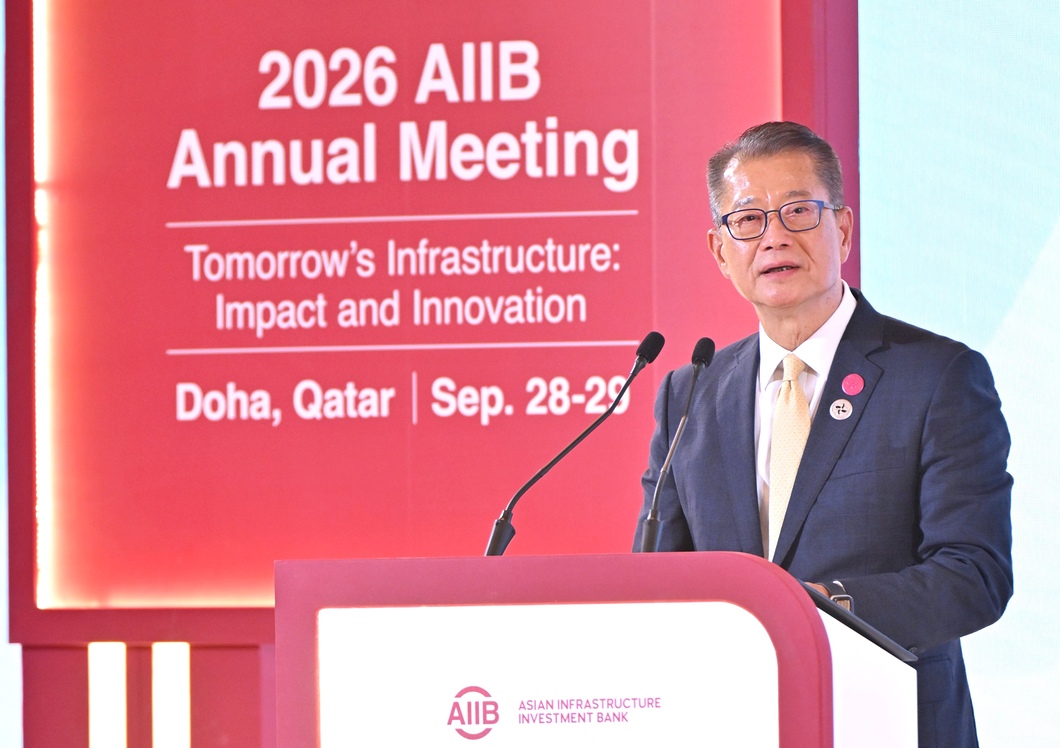
| Delivering a keynote speech at a seminar entitled "Digital Public Infrastructure as an Enabler for Resilient Economies" while attending the AIIB Annual Meeting in Doha, Qatar last week. |
|
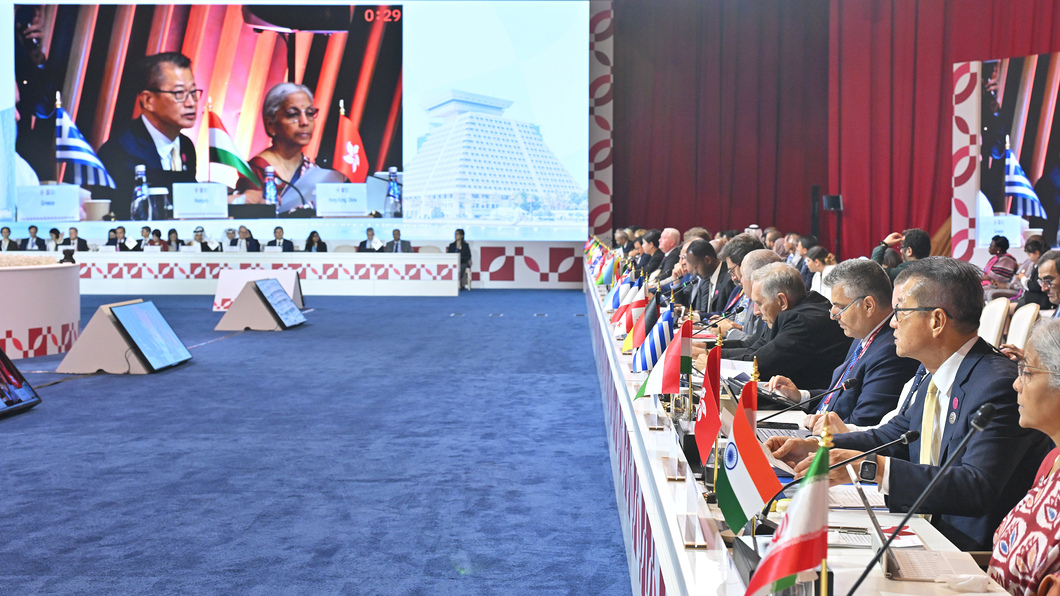
| Participating in and speaking at the AIIB Governors' Business Roundtable while attending the AIIB Annual Meeting. |
|
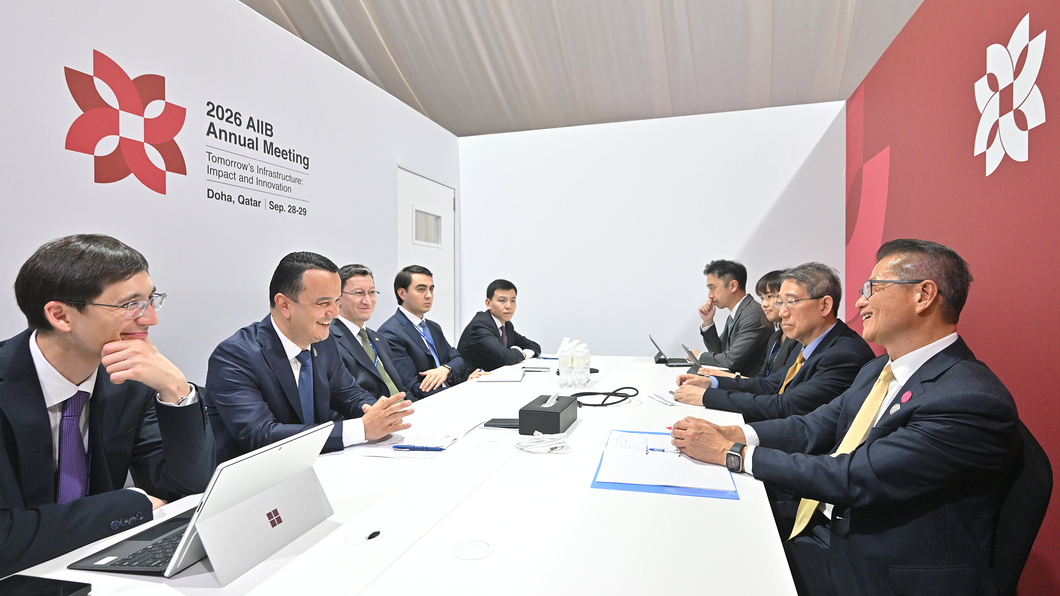
| Meeting with the Minister of Investment, Industry and Trade of Uzbekistan, Mr Laziz Kudratov (second left), while attending the AIIB Annual Meeting. |
|
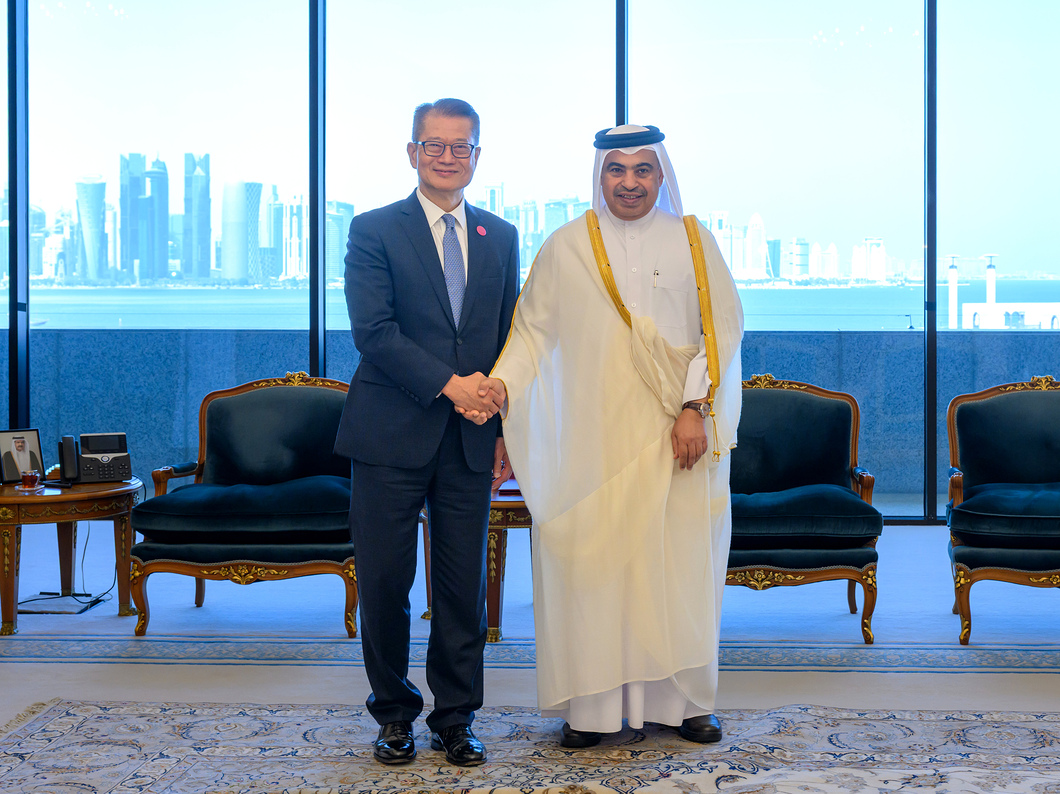
| Meeting with the Minister of Finance of Qatar, H.E. Ali bin Ahmed Al Kuwari (right) in Doha, Qatar. |
Compared with my previous overseas visits, discussions on this trip showed a clearer shift from expressions of interest in closer co-operation to detailed exchanges on specific projects. Our counterparts are looking not just for investment, but also for collaboration on projects and industrial development, expertise in institution-building, professional services and trusted partners. Representatives from a Central Asian country spoke candidly of their wish to draw on Hong Kong's experience in developing an international financial centre underpinned by common law. They were also interested in studying our listing rules for real estate investment trusts and welcomed Hong Kong banks to establish operations in their country. Representatives of Middle Eastern chambers of commerce raised concerns about the protection of contractual rights and dispute resolution in cross-border trade and investment. They showed keen interest in my suggestion that contracts designate Hong Kong as the venue for mediation and arbitration. These exchanges underscore that Hong Kong's value in regional co-operation extends well beyond the depth and efficiency of its financial markets. It also rests on our unique role under the "one country, two systems" framework in connecting the Mainland with the world, our common law system, our credibility, our internationally-oriented professional services and other sources of soft power.
At the AIIB Annual Meeting, I delivered a keynote speech on Hong Kong's digital public infrastructure. I shared our experience in identity authentication, convenient electronic payments and data exchange, explaining how these systems can improve public service delivery, facilitate cross-boundary transactions and help small and medium-sized enterprises use their data to secure trade finance. I also outlined our approach to AI applications and the governance of associated risks. Many developing economies have a pressing need for developing digital infrastructure. Turning plans into working projects, however, requires more than funding: it also calls for the capacity to plan and execute projects throughout their life cycle. Hong Kong's practical experience can be of good reference value for other economies in the Global South.
The visit made clear that Hong Kong's co-operation with the Middle East and the wider Global South is deepening and delivering increasingly concrete outcomes. These range from plans by major asset managers in the region to establish offices in Hong Kong and the development of Exchange Traded Products (ETPs) cross-listed in Hong Kong and partner markets, to collaboration in energy storage, data centres, e-commerce logistics and aviation. These examples illustrate how "Finance+" connects finance with the real economy and fosters international co-operation. They also demonstrate how Hong Kong can fulfil its roles as a "super connector" and "super value-adder", supporting economic development in partner markets and creating shared opportunities for success.
|
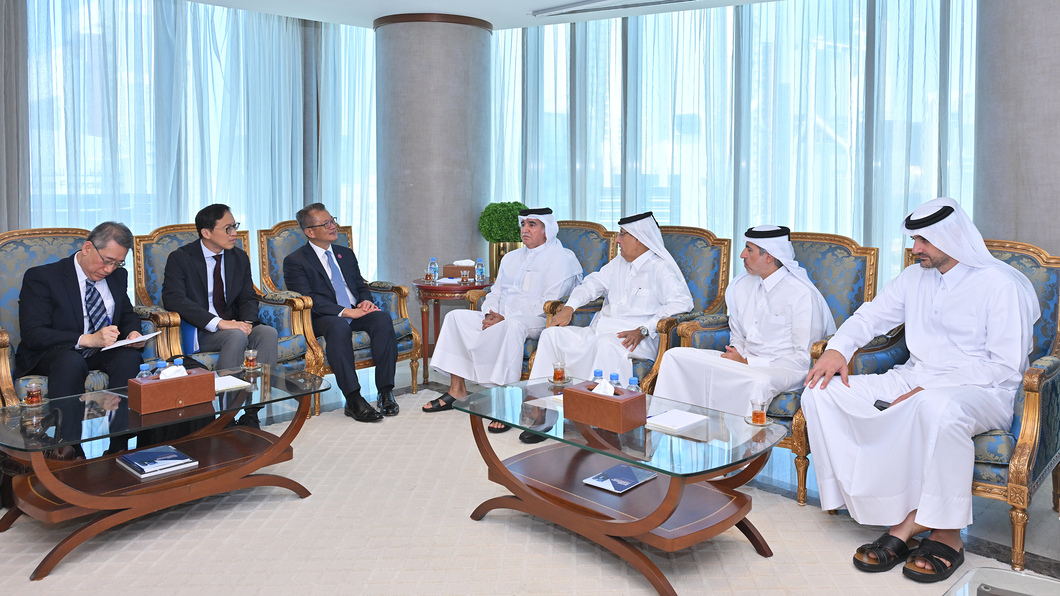
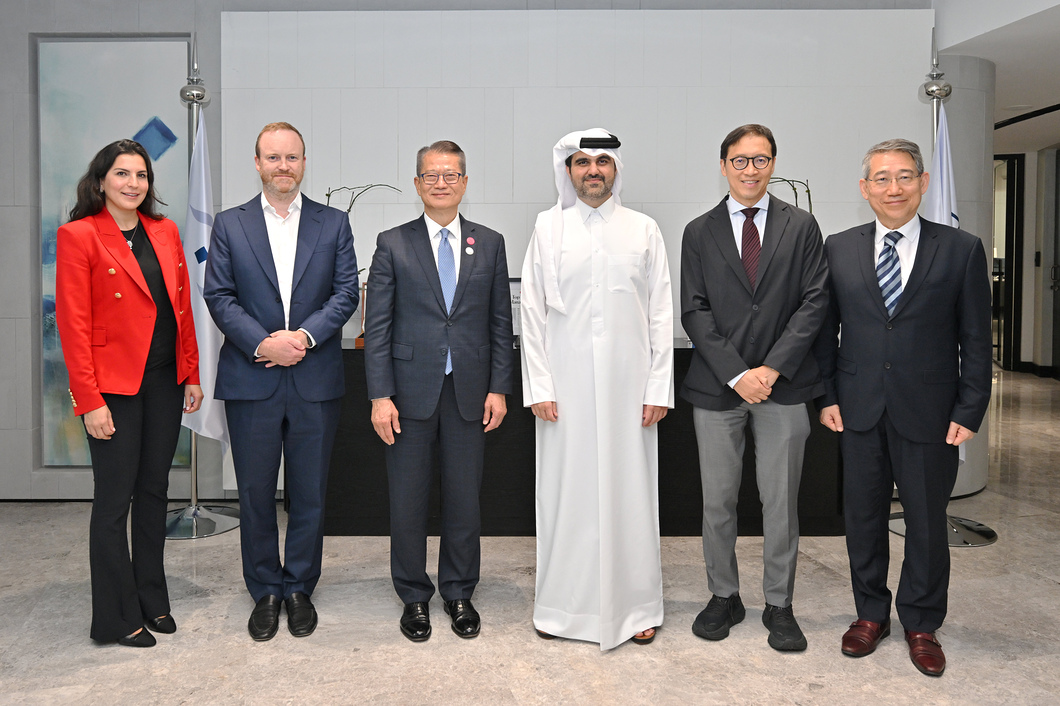
| Meeting with representatives of the Qatari Businessmen Association, including H.E. Sheikh Hamad bin Faisal bin Thani Al Thani (third right) and H.E. Sheikh Nawaf bin Faisal Al Thani (fourth right). |
|
| Meeting with the Group Chief Executive Officer of Lesha Bank, Mr Mohammed Ismail Al Emadi (third right). |
|
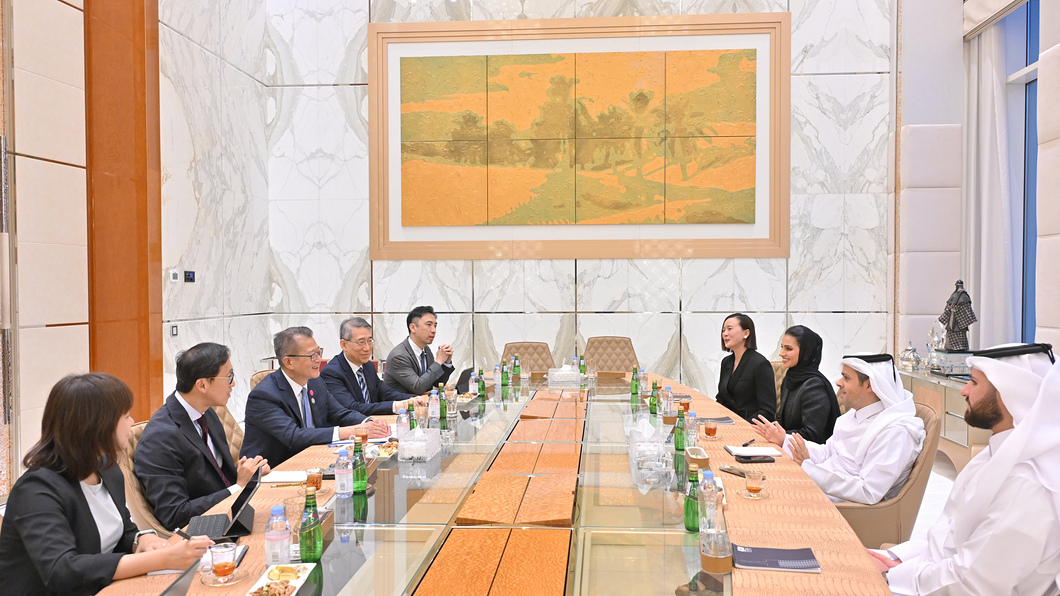
| Meeting with representatives of Al Asmakh Group Holding. |
We will continue to expand Hong Kong's international connections and influence as an international financial centre. Over the coming months, the city will host a series of major international financial events. This month, the Asia-Pacific Economic Cooperation (APEC) Finance Ministers' Meeting will be held in Hong Kong for the first time, bringing together finance ministers from across the region. Early next month, the Global Financial Leaders' Investment Summit will convene more than 100 chairmen and chief executive officers of the world's leading financial institutions. The Asian Financial Forum, to be held in January next year, will be even larger in scale, reinforcing its position as one of the region's most important annual financial events. These gatherings offer valuable opportunities to engage face to face with industry leaders and political and business figures from around the world. They allow us to showcase Hong Kong's strengths and business environment, deepen friendships and connections, and translate dialogue into practical co-operation.
While short-term investment sentiment is vulnerable to swings, the underlying trends and forces shaping economic development over the medium to long term are more enduring. In a complex and volatile global environment, Hong Kong has become a preferred partner for many in trade and investment, thanks to its institutional advantages under the "one country, two systems" framework, its international character, its transparency and its ability to work across different systems. We will continue to build on Hong Kong's strengths in financial markets, trade and logistics, I&T, culture and tourism, and international conferences and mega events. By attracting more talent, capital, technology and business opportunities from around the world, we will further strengthen Hong Kong's role as a global platform and enhance its international profile and influence.
October 4, 2026