Blog
With a Blueprint, Let’s Work Together for the Future
For the first time since its establishment as a trading port, Hong Kong has drawn up a comprehensive five-year development plan of its own. The First Five-Year Plan for Economic and Social Development of the Hong Kong Special Administrative Region was released last week, on the same day when the Chief Executive delivered his latest Policy Address. Setting out the direction, objectives, indicators and timetable, the Five-Year Plan serves as Hong Kong’s development blueprint for the next five years. The Policy Address, meanwhile, provides the annual action agenda for putting that blueprint into practice, with the flexibility to respond to changing conditions at home and abroad and realities on the ground. The two documents are closely aligned and mutually reinforcing.
The value of planning lies not merely in the document itself, but also in viewing the present through the lens of the future and translating a vision into indicators and action plans that can be reviewed year by year. The more volatile the external environment, the greater the market’s need for certainty beyond the annual horizon. The Government sets the direction, invests in infrastructure and drives institutional innovation, while the market allocates resources and unleashes dynamism. These roles complement and reinforce each other. With a clear understanding of where Hong Kong is headed over the next five years, businesses will be better placed to work with the Government to harness the combined strengths of a capable government and an efficient market.
|
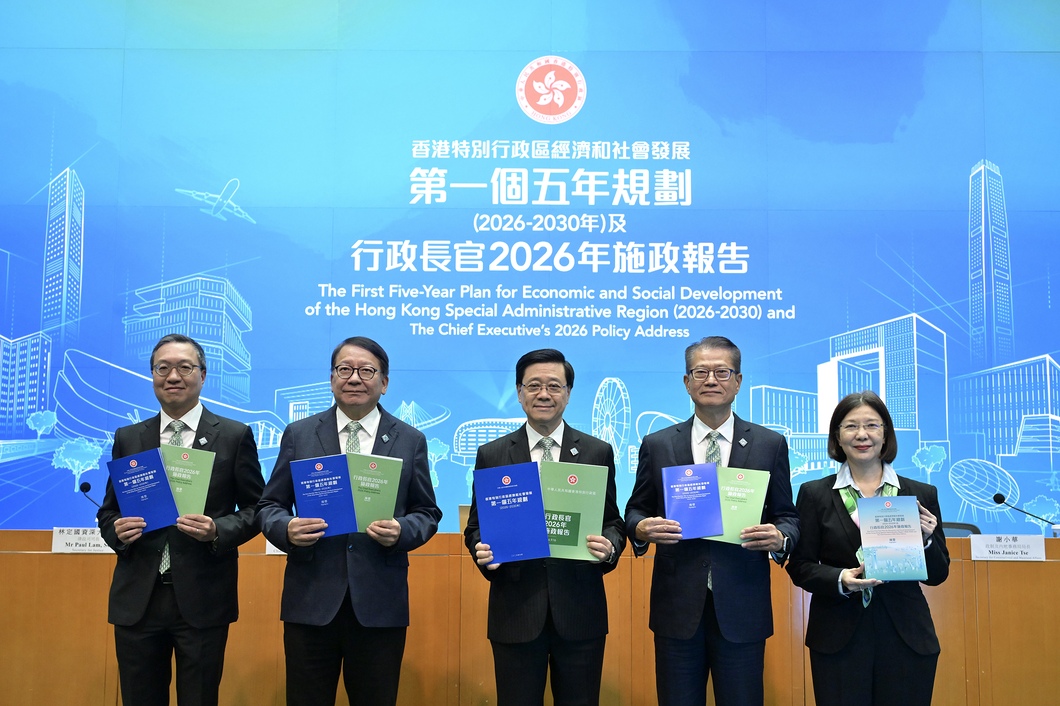
| Attending the press conference alongside the Chief Executive last week for the release of Hong Kong’s First Five-Year Plan and the new Policy Address. |
The Five-Year Plan sets a clear direction and concrete targets: within five years, the Northern Metropolis will deliver 900 hectares of spade-ready sites; the value added by manufacturing and industries related to new industrialisation will rise to 5.5% of gross domestic product (GDP); and total domestic expenditure on innovation activities will aim to reach 3% of GDP. The Policy Address translates these five-year targets into concrete annual actions, assigning each task to the relevant bureaux or departments with clear lines of accountability so that progress can be reviewed each year.
Space is a prerequisite for innovation and technology (I&T) development, and the Northern Metropolis is central to Hong Kong’s provision of industrial space. Accounting for about one-third of Hong Kong’s total land area and projected population, the Northern Metropolis is moving from blueprint to fruition. At least 200 hectares of spade-ready sites will be delivered across the current and next financial years. All nine new development areas have been launched, with construction already under way in four, covering about 800 hectares of land.
Space is only the starting point; industry is the key. The Hong Kong Park of the Hetao Shenzhen-Hong Kong Science and Technology Innovation Co-operation Zone (Loop Hong Kong Park) has already attracted more than 100 I&T enterprises and institutions, and its two wet laboratory buildings are fully leased. Scheduled for completion by the end of the year, Building 1, to be named “Loop Academy One”, will serve as the flagship project to kick-start the university town’s development. San Tin Technopole will provide 210 hectares of I&T land, linking up with the Loop to form an integrated industrial chain: the Loop will focus primarily on research and development (R&D), San Tin on pilot and mass production, and the Sandy Ridge Data Facility Cluster on computing power. The Hung Shui Kiu Industry Park has entered into substantive negotiations with enterprises in sectors such as advanced construction and testing and certification, strengthening the industrial chain’s links to the market. From R&D through mass production to market, each park has a distinct role to play, enabling I&T to bring fresh momentum to Hong Kong’s development, create jobs and generate economic benefits.
Ultimately, industrial upgrading depends on talent. The three university towns in the Northern Metropolis are being planned around the “One Town, Five Elements” concept, with their total planned area expanded to more than 1,000 hectares. San Tin University Town will focus on medicine, life and health technology, artificial intelligence, robotics and microelectronics. To support the development of the university towns, the number of research postgraduate places will gradually rise from 7,200 to 9,600—an increase of about 30%—while the number of places under the Hong Kong PhD Fellowship Scheme will increase from 400 to 550. Talent drives industrial development, while thriving industries help retain talent: the two are mutually reinforcing.
Even with parks completed, talent in place and enterprises established, financial support remains essential to sustain development and give businesses greater confidence to plan for the long term. The Hong Kong Investment Corporation Limited will continue to deploy patient capital to mobilise market resources in support of enterprises setting up in the Northern Metropolis. In parallel, the Innovation and Technology Industry-Oriented Fund has selected about 20 fund management companies and will be formally launched this year. Before the end of the year, we will introduce an amendment bill to offer strategic enterprises in sectors such as finance, advanced manufacturing, I&T research and development, headquarters activities, logistics and supply chain management a preferential tax rate of 5% or a half-rate tax concession. The Northern Metropolis Financing Advisory Task Force, established by the Hong Kong Monetary Authority and the Hong Kong Association of Banks, brings together 23 banks to tailor financing solutions for enterprises establishing a presence there. Only when space, talent, enterprises and capital are all in place can the local I&T industry accelerate its development.
|
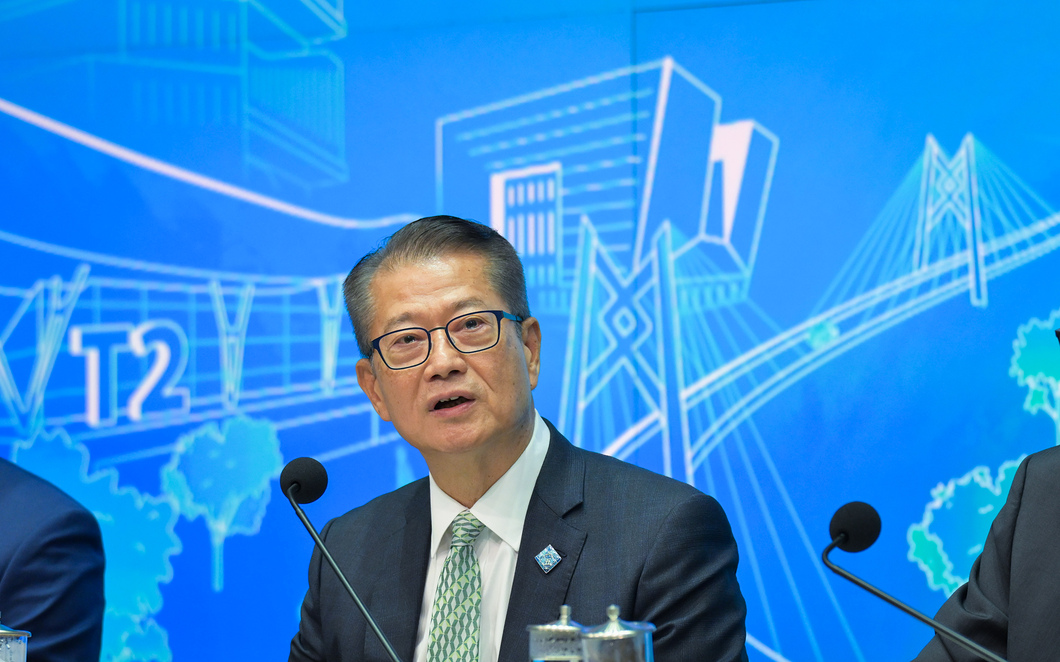
| I also hosted a press conference on the development of the Northern Metropolis as covered in Hong Kong’s First Five-Year Plan and the new Policy Address. |
|
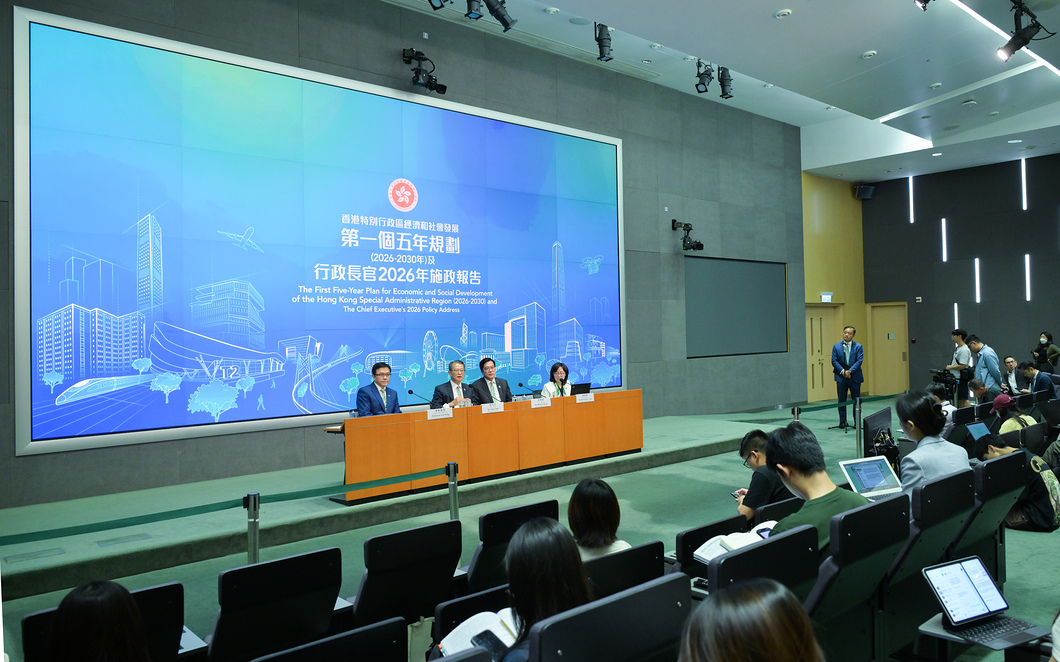
| I also hosted a press conference on the development of the Northern Metropolis as covered in Hong Kong’s First Five-Year Plan and the new Policy Address. |
We must nurture emerging industries while consolidating our traditional strengths. These are not competing priorities, but mutually reinforcing ones. In finance, we will enhance the securities market and listing regime to attract more high-quality enterprises from the Mainland and overseas to list in Hong Kong, and work towards including real estate investment trusts in the mutual market access arrangements as soon as possible. In shipping, we will actively harness “Finance+” to support the maritime industry’s development, working with the sector to explore closer links between finance and shipping while expanding the underwriting capacity of the marine specialty risk pool. In trade, we will build on the work of the Task Force on Supporting Mainland Enterprises in Going Global to provide more targeted support. Moving our traditional industries up the value chain will provide a solid foundation for emerging industries to grow.
The National 15th Five-Year Plan calls for accelerating the country’s development into a financial powerhouse. Hong Kong has a clear and distinctive role to play, including providing a safe and reliable offshore platform fully aligned with international rules. Hong Kong’s offshore renminbi (RMB) lending reached a record RMB 935 billion last year, while the RMB Business Facility has been expanded to RMB 500 billion. We will further expand the dim sum bond market and develop RMB-denominated gold and commodities markets, helping the country strengthen its influence over international pricing in these areas. We will leverage Hong Kong’s strengths to serve the country’s needs. The country’s high-quality development is both Hong Kong’s greatest opportunity for growth and its strongest source of confidence.
In the nearly 30 years since Hong Kong’s return to the Motherland, the city has weathered many ups and downs. Each time, seizing opportunities and overcoming challenges has required long-term strategic vision and sustained effort. Today, we bid farewell to Mr Tung Chee-hwa, the esteemed first Chief Executive of the Hong Kong Special Administrative Region. A leader of great foresight, he charted development directions of lasting strategic significance. Looking back, time has borne out his vision. Hong Kong now stands once again at a critical juncture, with immense potential for development. The blueprint has been drawn up; we must now turn it into reality, step by step, with even greater confidence and perseverance.
September 20, 2026