Blog
Connecting with Global South to Advance High-quality Development
In last week's blog, we explored the deepening co-operation between Hong Kong and the Middle East. Events over the past week have brought this growing partnership into sharper focus. Sohar International, Oman's second-largest bank, opened its first office outside the Middle East in Hong Kong, becoming the first Omani bank to establish a presence here. On the same day, the Oman Investment Authority announced plans to participate in the Hong Kong SAR Government's Innovation and Technology Venture Fund by investing approximately HK$250 million in partnership with a local fund management company. It is the first Middle Eastern sovereign wealth fund to participate in the scheme.
Co-operation between the Middle East and Hong Kong is expanding beyond finance into industry-oriented innovation and technology (I&T), opening up new avenues for trade and investment. The 11th Belt and Road Summit, held last week, further underscored this trend. More than 6,000 government and business leaders and other participants from over 70 countries and regions gathered in Hong Kong, with memoranda of understanding and agreements covering a wide range of sectors signed both at the Summit and on its sidelines. During the Summit, the Hong Kong Monetary Authority (HKMA), Hong Kong Exchanges and Clearing Limited, the Dubai Financial Services Authority and Nasdaq Dubai announced the establishment of a strategic working group to put financial connectivity between Asia and the Middle East on a more structured and sustained footing.
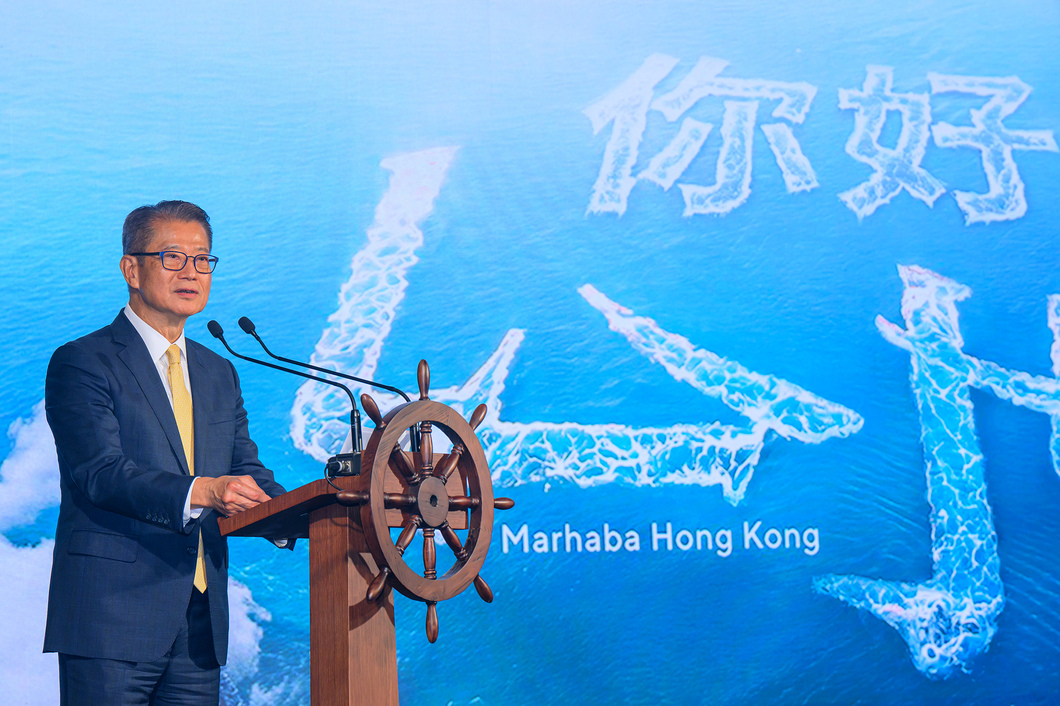
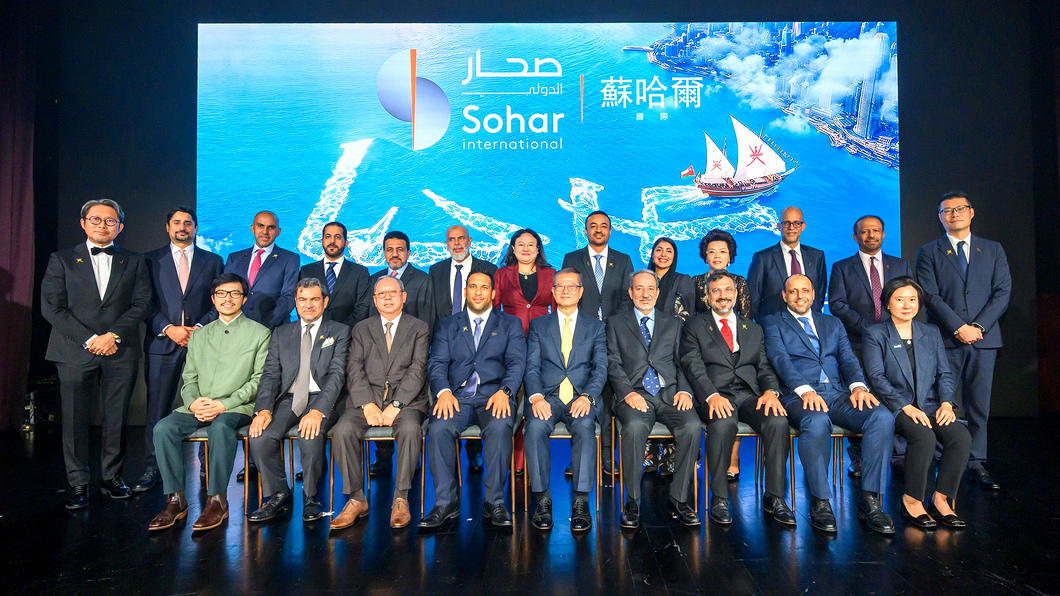
The opening ceremony of Sohar International's Hong Kong office.
|
| Speaking at the opening ceremony of Sohar International's Hong Kong office last week. |
|
| In a group photo with fellow officiating guests at the opening ceremony of Sohar International's Hong Kong office, including the Ambassador-at-Large at the Foreign Ministry of Oman, Sheik Abdulaziz Abdullah Al Hinai (front row, fourth right); the Chairman of Sohar International, Mr Said Mohamed Al-Aufi (front row, fourth left); and the Chief Executive Officer of Sohar International, Mr Abdulwahid Mohamed Al Murshidi (front row, third right). |
Meanwhile, the Financial Services and the Treasury Bureau and the Central Bank of Uzbekistan exchanged a memorandum of understanding on strengthening co-operation between each other's gold markets. It will explore how Hong Kong's central clearing system for precious metals can complement Uzbekistan's strengths as a major gold producer and holder of gold reserves. From the Middle East to Central Asia, Hong Kong's mutually beneficial partnerships with Belt and Road economies are moving beyond individual projects towards broader, more interconnected networks underpinned by institutional arrangements.
This expansion of cross-regional co-operation into I&T rests on Hong Kong's solid research and innovation capabilities, together with its strong links with the technology and industrial chains of the Guangdong-Hong Kong-Macao Greater Bay Area (GBA). Last week in Geneva, the World Intellectual Property Organization released its ranking of the world's top 100 innovation clusters under the Global Innovation Index 2026. The Shenzhen–Hong Kong–Guangzhou cluster ranked first globally for the second consecutive year. The ranking draws on three indicators: international patent filings under the Patent Cooperation Treaty (PCT), scientific publications and venture capital deals. In per capita terms, the cluster recorded 2,259 PCT applications, 4,060 scientific publications and 138 venture capital deals per million inhabitants over the past five years.
Hong Kong's own I&T foundations continue to strengthen. The number of start-ups grew from over 1,500 in 2015 to more than 5,200 in 2025, while Hong Kong Science Park and Cyberport have together nurtured around 20 unicorns to date. Since the Hong Kong Park of the Hetao Shenzhen-Hong Kong Science and Technology Innovation Co-operation Zone opened in December last year, more than 100 technology enterprises and institutions have signed leases and have begun moving in. Meanwhile, the 210 hectares of I&T land in the San Tin Technopole are being developed in tandem with the Loop Hong Kong Park to support co-ordinated development across the upstream, midstream and downstream segments of the I&T chain.
|
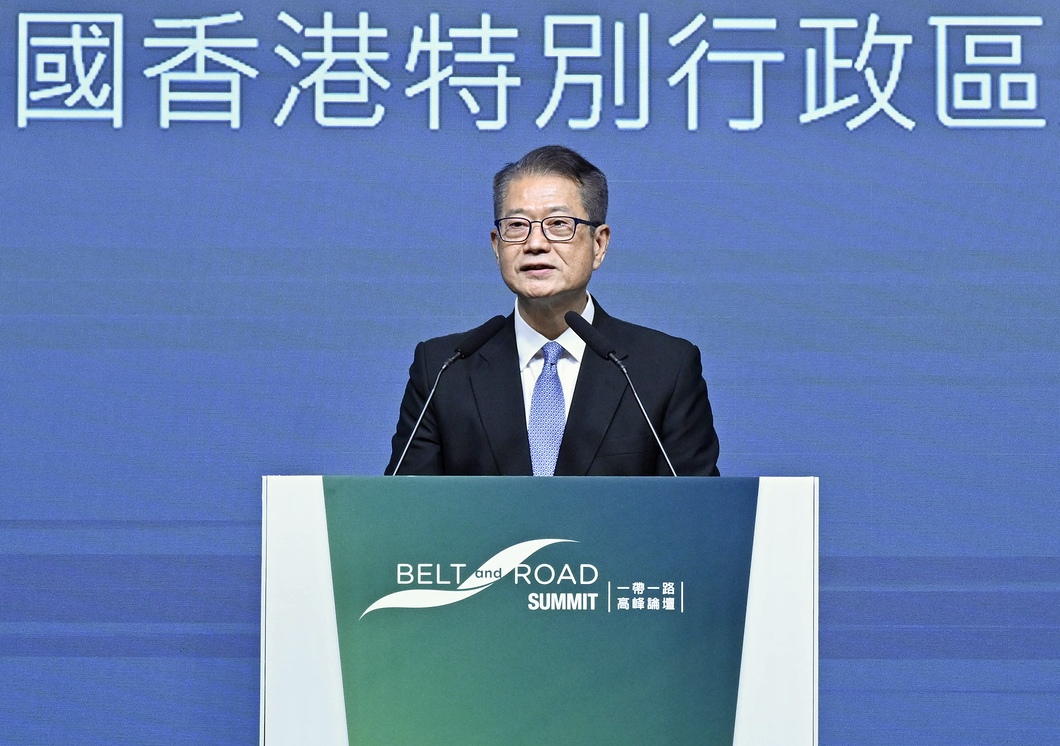
| Speaking at the 11th Belt and Road Summit Keynote Luncheon last week. |
|
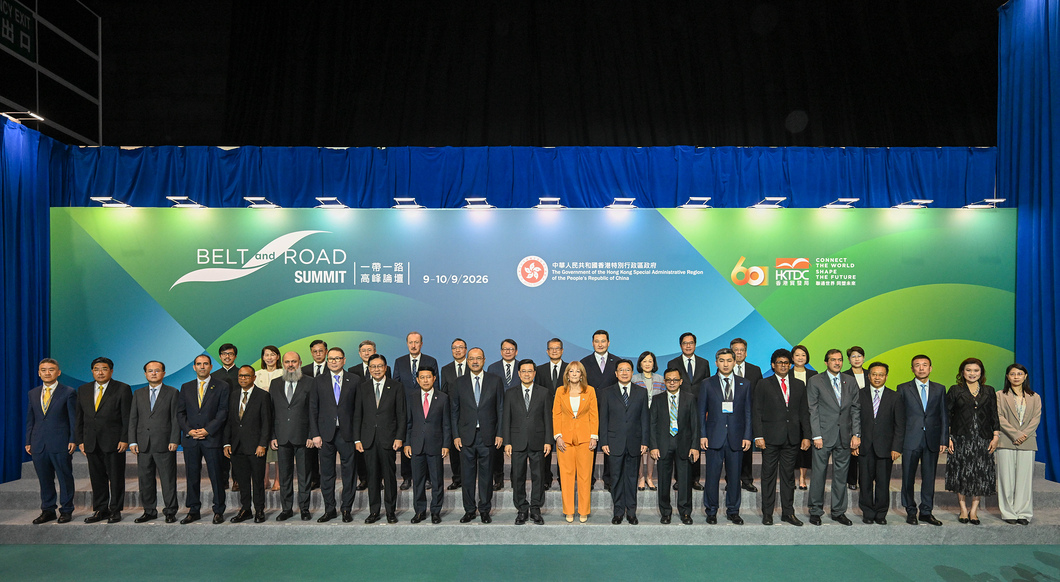
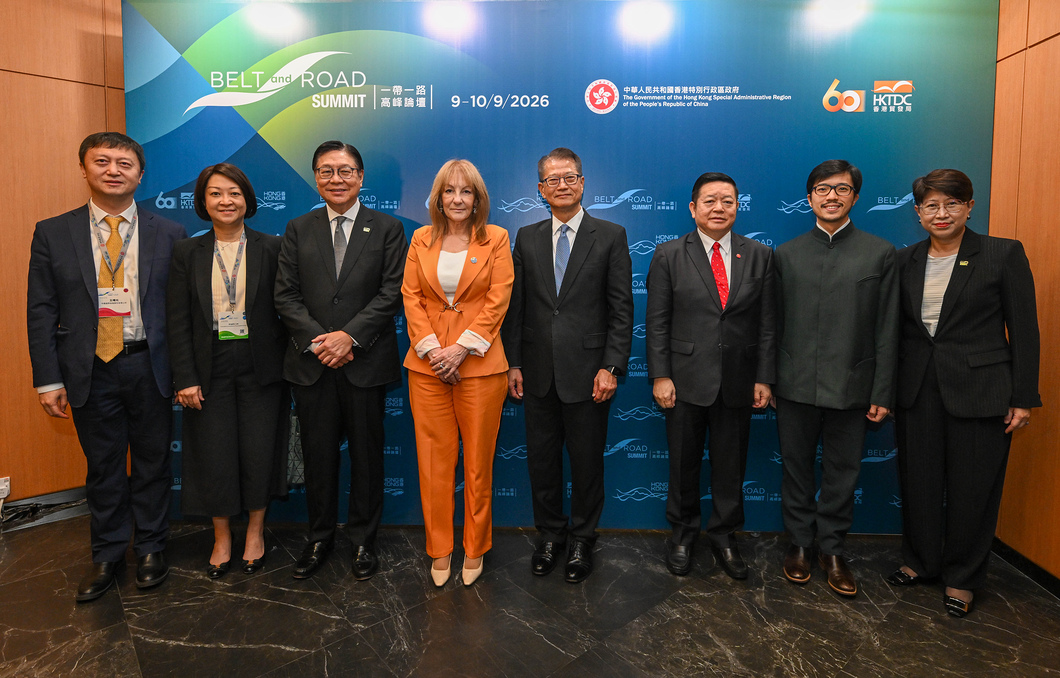
| In a group photo with key political and business leaders attending the 11th Belt and Road Summit. |
|
| In a group photo with distinguished guests at the 11th Belt and Road Summit Keynote Luncheon, including the Vice President of Uruguay, Ms Carolina Cosse (fourth left) and the Secretary-General of ASEAN, Dr Kao Kim Hourn (third right). |
For our partners in the Middle East and Central Asia, this means access to Hong Kong's strengths in research and development, commercialisation and high-end industry. When combined with the advanced manufacturing capabilities and vast markets of our sister cities in the GBA, these strengths can deliver not only commercial returns, but also high-quality development that benefits all sides.
Cross-regional co-operation also extends to the green transition, where aligning rules and standards is essential. The Global South is on the front line of climate change and faces a substantial financing gap in its transition to a greener economy. Credible standards give investors the confidence to direct capital to where it is most needed. Hong Kong Green Week, held last week, showcased the breadth of Hong Kong's capabilities in supporting this process. The HKMA launched a public consultation on the prototype for the next phase of the Hong Kong Taxonomy for Sustainable Finance, setting out practical transition pathways for hard-to-abate sectors such as aviation and iron and steel manufacturing. This work aims to help establish a common reference framework across jurisdictions.
Indeed, green and sustainable bonds arranged in Hong Kong in the first half of this year totalled US$20.2 billion, with Hong Kong retaining its position as Asia's leading market for the eighth consecutive year. Capital needs investment opportunities, and technology needs real-world applications. Rules and standards are essential to bringing the two together. This is another important contribution Hong Kong can make to the Global South.
|
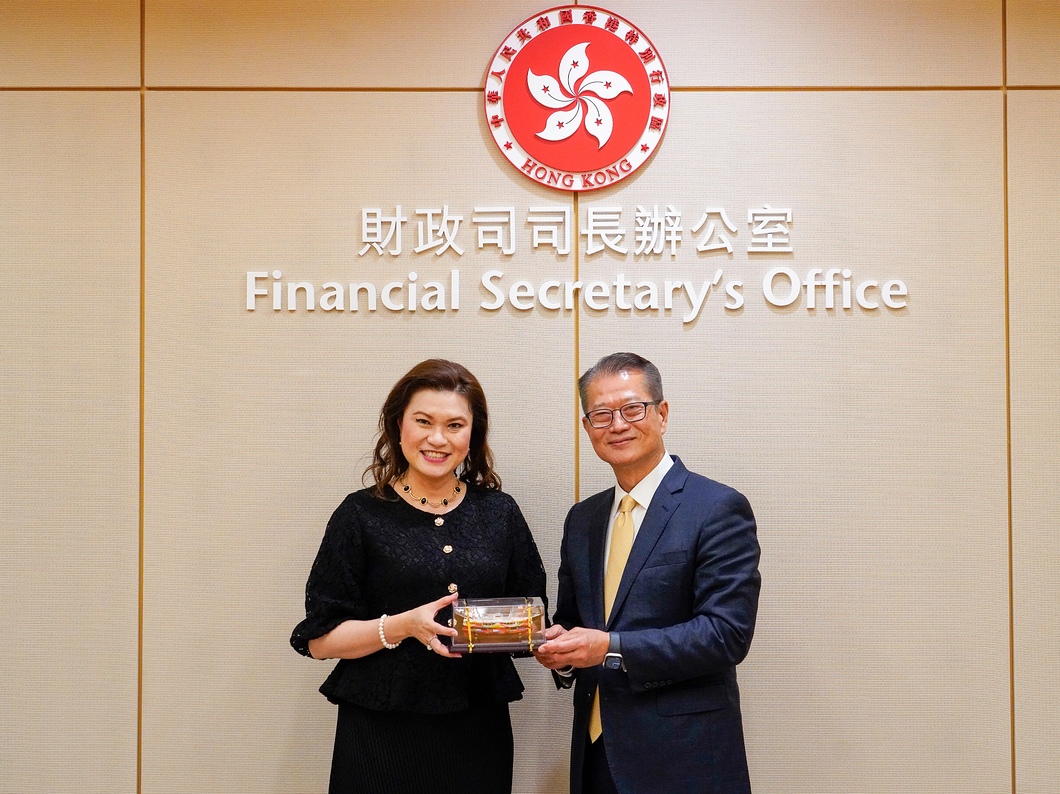
| Meeting the Vice Minister for Commerce of Thailand, Dr Kirida Bhaopichitr during the Belt and Road Summit. |
It is worth emphasising that this co-operation works both ways. The Global South brings Hong Kong new business opportunities, greater capital inflows and deeper market liquidity, while Hong Kong provides tangible and essential support for its development. A joint survey released last week by the Securities and Futures Commission and the HKMA showed that sales of non-exchange-traded investment products in Hong Kong rose by 63% year on year to a record HK$9.9 trillion in 2025. The number of clients who completed transactions also increased to more than 1.6 million. In recent months, several major financial institutions from the Middle East, Europe and North America have expanded their teams and operations here. Global investors' growing demand for diversification represents a structural shift that is adding depth and breadth to Hong Kong's markets. It is also creating a larger and more diverse pool of capital to support our partnerships with Belt and Road economies.
Over the past week, Hong Kong's connections with Belt and Road economies and the Global South have continued to broaden and deepen—from the Middle East to Central Asia, and from finance and I&T to green transition. The outline of the National 15th Five-Year Plan supports Hong Kong's development as an international I&T centre and the consolidation and enhancement of its status as an international financial, shipping and trade centre. Our country's steadfast support across all these areas gives Hong Kong the confidence and strength to build closer ties with the Global South and accelerate development.
This week, market attention will turn to Hong Kong's First Five-Year Plan and the new Policy Address. They will set out the overarching vision and direction for Hong Kong's development, together with concrete policy measures to be rolled out progressively. This will give businesses and investors a clearer basis for planning further investment and expansion in Hong Kong and the wider region. Together, we can open a new chapter of boundless opportunity as Hong Kong advances from stability to prosperity.
September 13, 2026