Blog
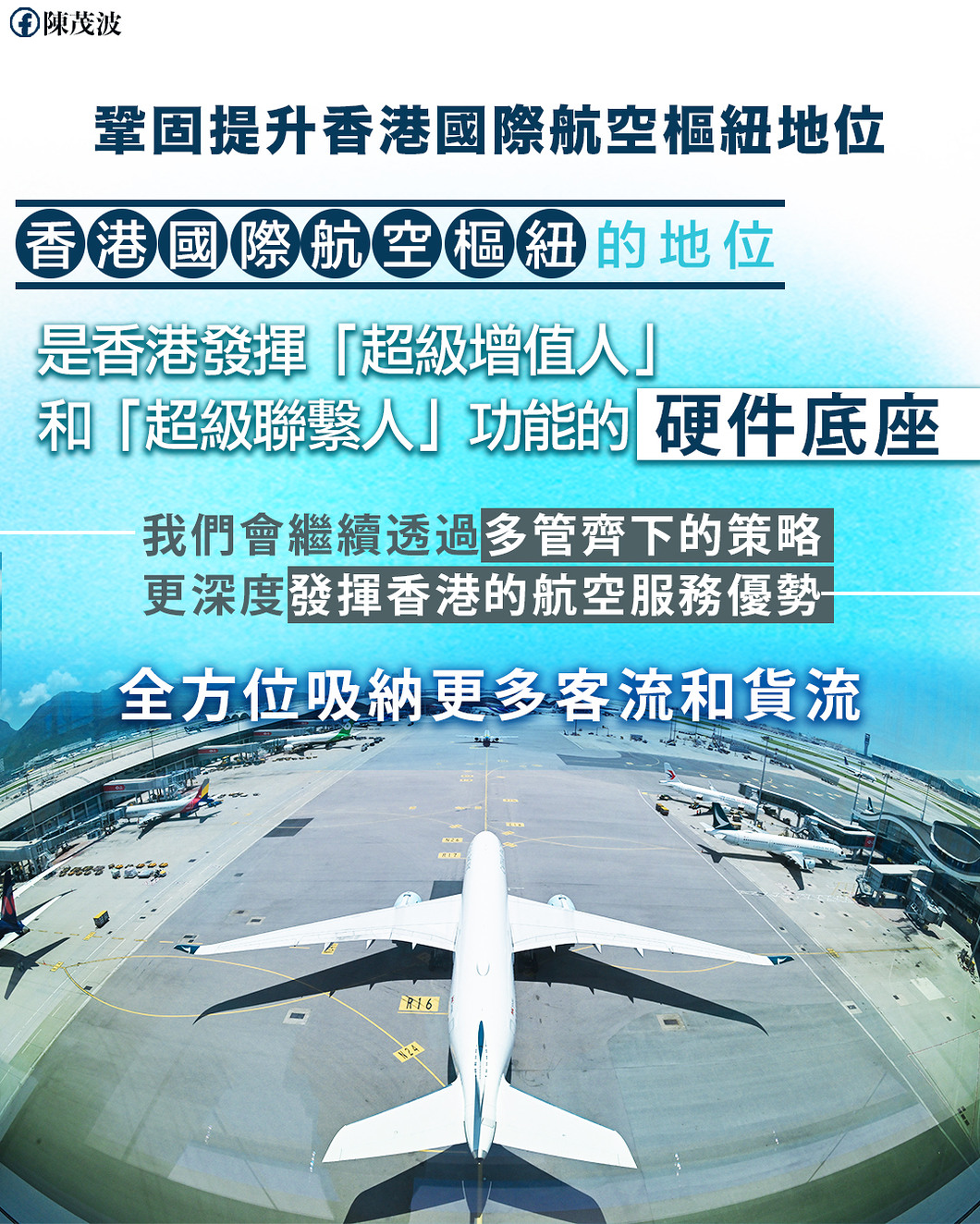
Reinforcing Hong Kong's Status as an International Aviation Hub
Following the Book Fair and Ani-Com & Games, the Food Expo is taking place this week at the Hong Kong Convention and Exhibition Centre in Wan Chai. This highly popular large-scale exhibition and four concurrent fairs have drawn more than 1,800 exhibitors from over 30 countries and regions around the world. This year also marks the first time that enterprises and representatives from all 11 ASEAN member states are taking part. In addition to business representatives exploring opportunities, the venue has been bustling with members of the public sampling delicacies and snacks.
Hong Kong has long been a preferred destination for major exhibitions and conventions. In the first half of this year, the city's two flagship venues — the Hong Kong Convention and Exhibition Centre and AsiaWorld-Expo — hosted more than 170 events, attracting 3.5 million participants. Hong Kong's success as a convention and exhibition capital is underpinned not only by its role as a gateway connecting the Mainland and international markets, and by its vibrant commercial environment, but also by its dynamic city life and efficient, convenient global connectivity. At present, around 140 airlines operate flights connecting Hong Kong with more than 225 destinations worldwide, forming an efficient and convenient network for both point-to-point travel and transit, offering passengers flexible and diverse travel options. In the first half of this year, Hong Kong International Airport handled more than 200,000 aircraft movements, an increase of 4.4% year-on-year, while passenger throughput reached 32.8 million, representing an 11.7% year-on-year growth.
|
|
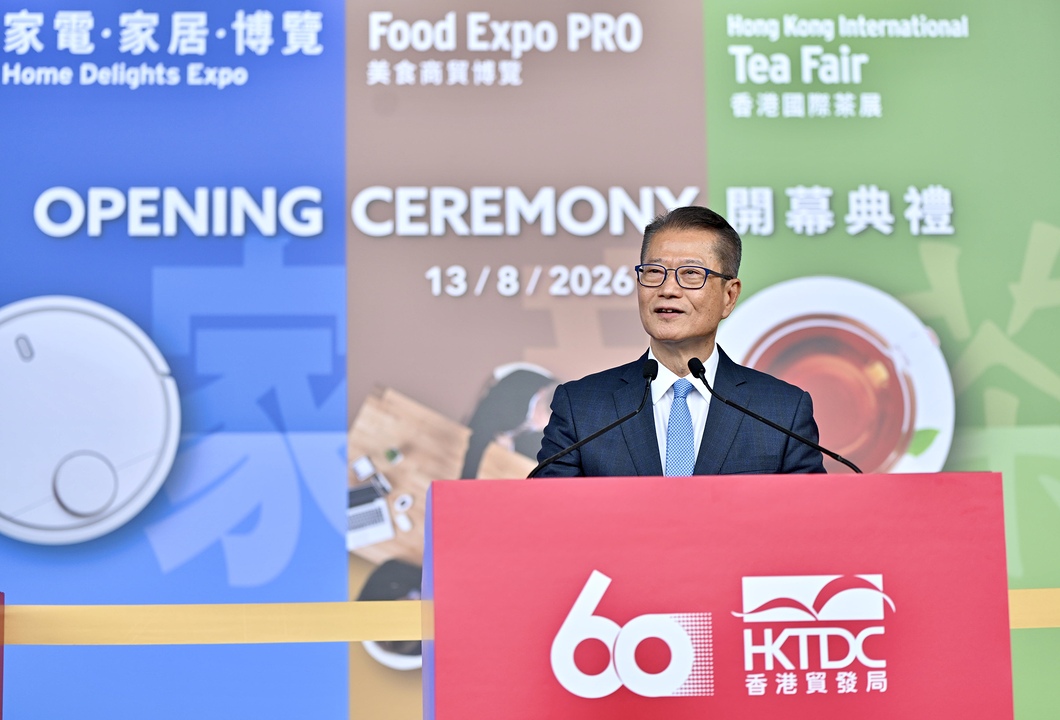
| Attending the joint opening ceremony of the HKTDC Food Expo and four other concurrent fairs last week. |
|
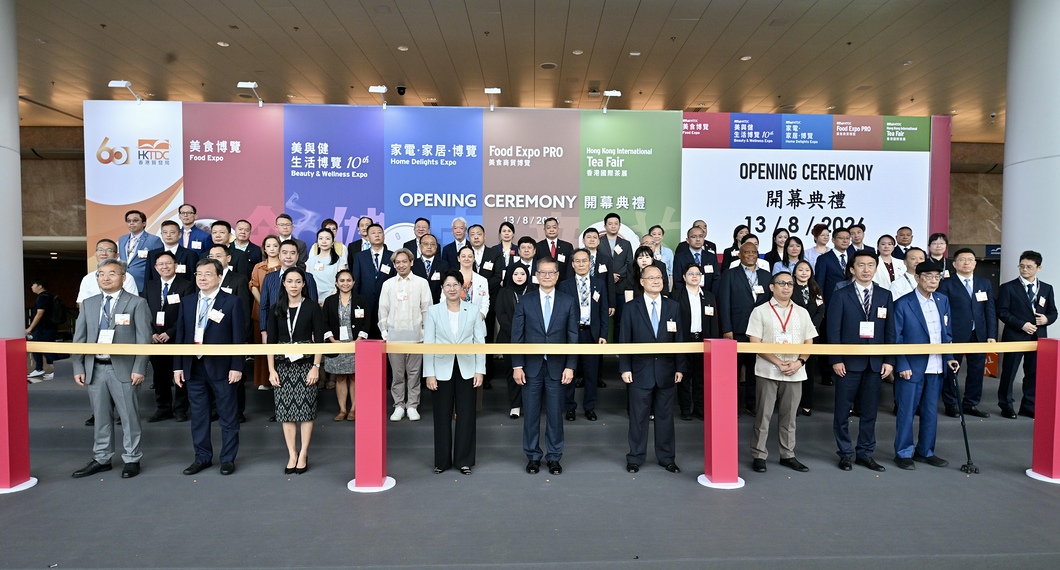
| Attending the joint opening ceremony of the HKTDC Food Expo and four other concurrent fairs last week. |
Efficient and convenient international connectivity, coupled with a vibrant lineup of mega events, has helped attract more business and leisure visitors to Hong Kong. In the first seven months of this year, Hong Kong recorded 31.22 million visitor arrivals, up 12% year-on-year. This continuous flow of people has injected greater vitality into the city and created more business opportunities.
Hong Kong's status as an international aviation hub is not only the lifeblood of its aviation industry; it is also a critical piece of infrastructure that enables Hong Kong to perform its role as a "super value-adder" and "super connector". It supports the continued growth of trade, logistics, conventions and exhibitions, tourism as well as broader cultural and people-to-people exchanges.
As geopolitics and regional trade patterns continue to evolve, we are taking a more proactive approach to expanding Hong Kong's aviation network, concluding more bilateral air services arrangements, and continuously upgrading our airport infrastructure. The Three-runway System, commissioned two years ago, will gradually increase aircraft movement capacity. The departure facilities at Terminal 2, which came into operation in May this year, are now used by 15 airlines and are expected to divert around 8 million passengers in their first year of operation, thereby strengthening the airport's capacity to handle outbound passenger flows.
Many local, Chinese Mainland and overseas travellers who have used Hong Kong International Airport have spoken highly of their experience. The Airport Authority Hong Kong (AAHK) is also actively advancing the development of a "smart airport", comprehensively upgrading airport operations through biometrics, artificial intelligence and the Internet of Things. These initiatives enhance the efficiency of passenger and flight operations while providing travellers with a smoother and more pleasant journey. For example, the facial-recognition-based Flight Token system has accelerated the entire check-in and boarding process; mobile express baggage drop-off services have been introduced; and the Smartlane system has been adopted to improve security screening efficiency. As at June this year, the Flight Token service covered around 80% of departing passengers at the airport.
|
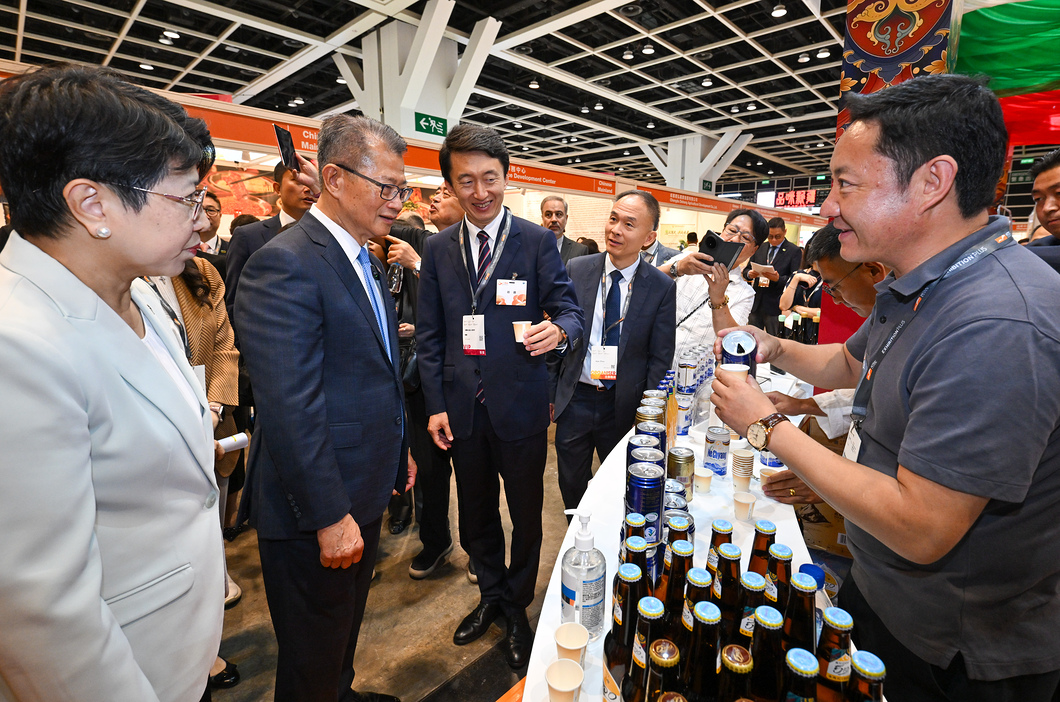
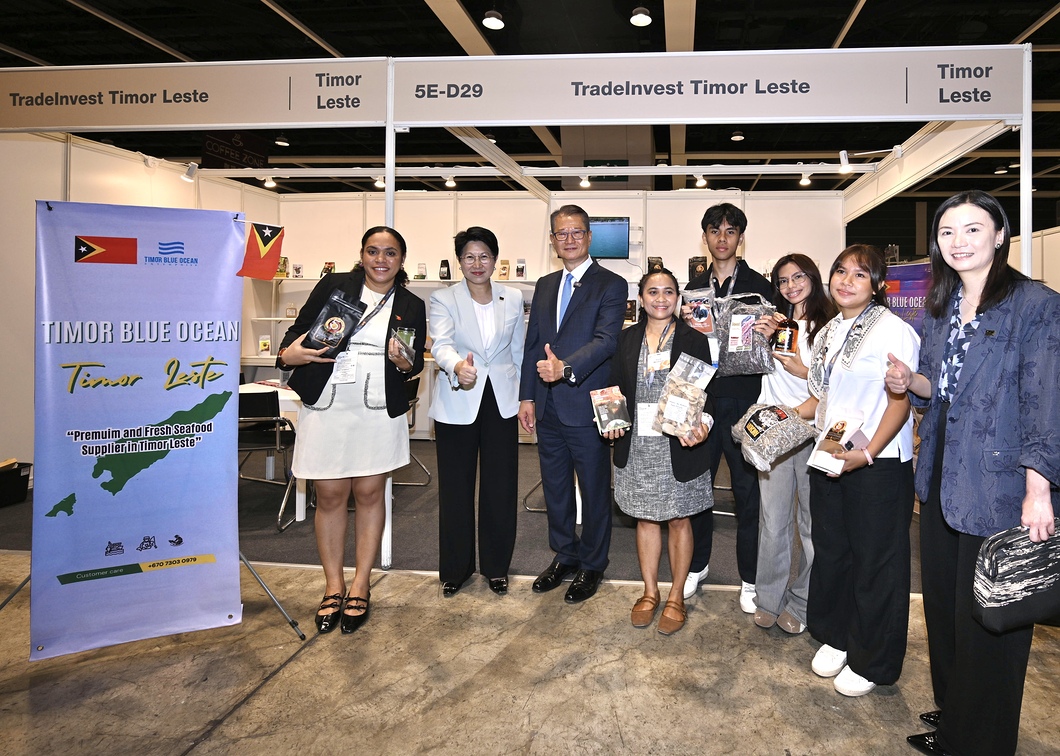
| Visiting an exhibition booth at the Food Expo. |
|
| Visiting an exhibition booth at the Food Expo. |
Around the world, many international hub airports are no longer merely immigration and transport facilities; they have become major integrated tourism and service landmarks, attracting more high value-added and high-spending international visitors. Hong Kong International Airport has enormous development potential in this regard. The SKYTOPIA project will develop a new landmark integrating high-end commerce, art, tourism, leisure and wellness activities. Among them, construction of AsiaWorld-Expo Phase 2 has commenced and is expected to be completed in 2028, which will significantly expand capacity for conventions, exhibitions and mega-events.
The strategic location and attractive waterfront setting of SKYTOPIA offer new opportunities for developing yacht tourism. AAHK will make use of the waters adjacent to the Airport Island and the Hong Kong Port Island to provide more than 500 berths, including berths for superyachts over 100 metres in length, together with supporting facilities and a water recreation area. AAHK has extensively engaged local, Mainland and overseas investors and operators on the development, and has received a very positive response. The project is expected to be completed in phases from 2028 onwards.
At the same time, we will establish an arts ecosystem within SKYTOPIA, bringing together art creation, appreciation, trading and storage. This will include a storage facility for artworks and valuables, supported by related professional services. The facility is expected to commence operation in early 2027, generating greater synergy with the high-end passenger flows served by airport lounges and the business aviation centre.
We will continue to adopt a multi-pronged strategy to fully leverage Hong Kong's strengths as an aviation hub and attract more passenger and cargo flows on all fronts. This includes developing integrated multimodal transport to make it easier for passengers to reach Hong Kong International Airport by sea and land for their flights; strengthening co-operation between the Hong Kong and Zhuhai airports; working with travel companies to attract more transit passengers; and collaborating with Dongguan to promote the innovative sea-land-air cargo intermodal transport model.
When travellers from around the world arrive at, depart from or transit through Hong Kong International Airport, every detail of the services they experience shapes their impression of Hong Kong. These experiences can open up more opportunities for tourism, exchanges and business. We will continue to make every effort to further reinforce Hong Kong's status as an international aviation hub, while injecting new vitality into the interconnected development of related economic sectors.
August 16, 2026