Blog
Arts, Cultural Creativity and Mega Events
Last week, I visited the Hong Kong Palace Museum in the West Kowloon Cultural District to see the recently launched exhibition, The Forbidden City and the World. The rare and valuable works on display drew crowds of visitors, many of whom stopped to admire them. One piece that especially caught my attention was a Qing-dynasty hanging screen depicting a landscape. Set against a black lacquer ground, its mountains were embellished with kingfisher-feather inlay, while the pavilions, trees and rocks glow in blue-green hues against the darkness. The composition feels lively and intricate, with a striking sense of depth and layering. The superb craftsmanship of our country at the time – combined with the distinctive kingfisher feathers sourced from Southeast Asia – makes this cultural relic truly unforgettable.
This exhibit is just one of more than 130 treasures on display. The exhibition also features 18 grade-one national treasures spanning paintings and calligraphy, jewellery, clocks and watches, and furniture. Tracing over 600 years of history across the Yuan, Ming and Qing dynasties, the show highlights China’s exchanges with the wider world in diplomacy, trade, ideas, religion and craftsmanship, inviting visitors to explore how these encounters shaped art and sparked innovation.
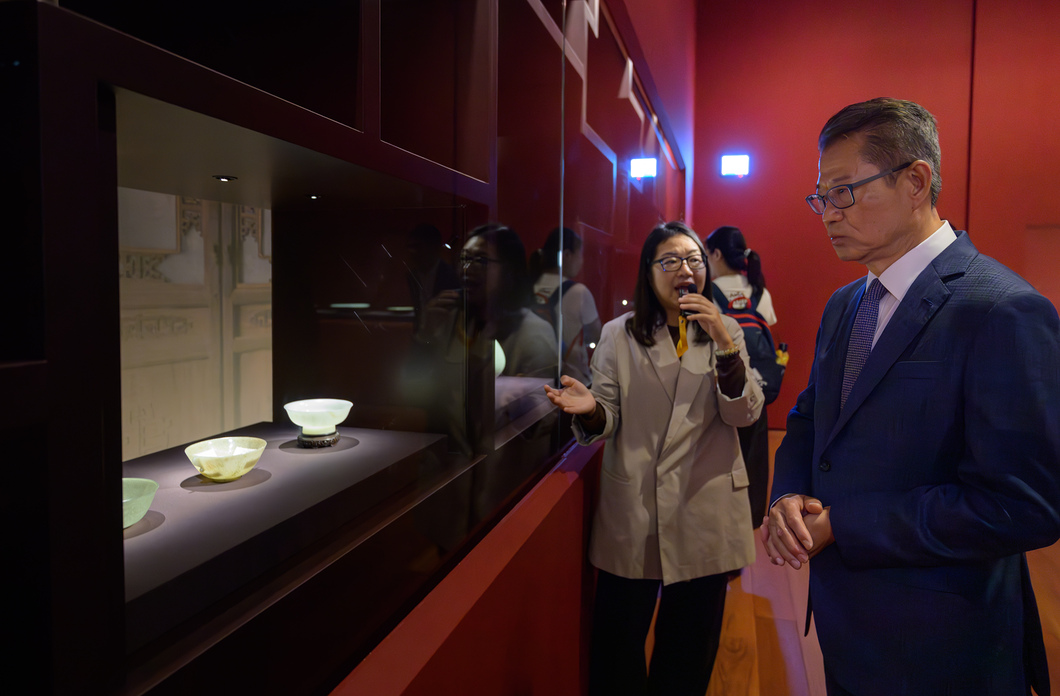
|
| Visiting The Forbidden City and the World exhibition at the Hong Kong Palace Museum. |
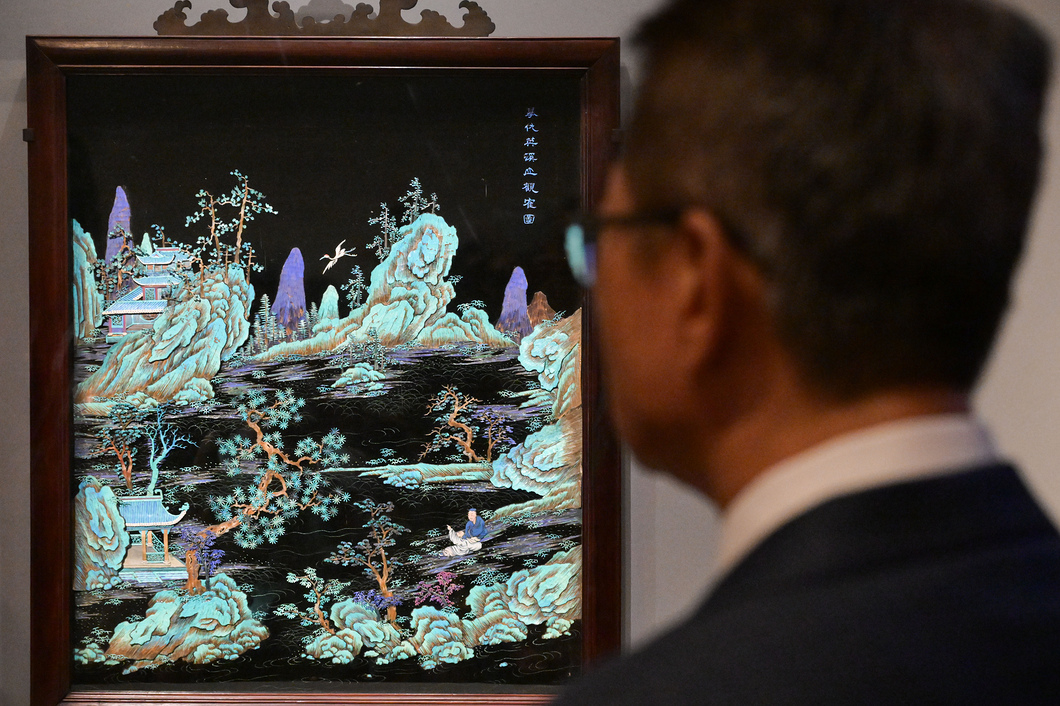
|
| An impressive Qing dynasty landscape hanging screen showcased in The Forbidden City and the World exhibition. |
Complementing The Forbidden City and the World is Ancient Egypt Unveiled in the neighbouring gallery. Since opening at the end of last year, it has attracted more than 570,000 visits. The cultural and creative products area at the exit was packed, with visitors lingering to browse and choose souvenirs – an example of how exhibit-inspired creativity can be translated into real economic value. In this sense, cultural content provides the foundation of value; industry platforms determine its scale; and major events help unlock it. These three elements are tightly connected, together forming a dynamic, self-reinforcing ecosystem.
Cultural Content
From artworks to cultural and creative products, creations that speak to the soul resonate with audiences and generate value. The combined revenue of the Hong Kong Palace Museum and M+ rose by 22% compared with the previous financial year, with venue hire and sales of cultural and creative products becoming important income streams. Take Ancient Egypt Unveiled as an example: the museum launched around 200 related cultural and creative items, and total sales have already exceeded $30 million.
Hong Kong is one of the world’s top three art trading centres, and we are committed to building a richer ecosystem that brings together more high-end art services and transactions. This includes developing art storage facilities at the airport and creating an integrated operating model that spans collecting, appraisal and trading. The Artist Square Towers in the West Kowloon Cultural District, scheduled for completion this year, aim to attract galleries, insurers, auction houses, family offices and other businesses across the art-industry value chain. We have also signed a five-year collaboration agreement with Art Basel, under which Hong Kong will remain the exclusive host city in the region.
Industry Platforms
At the same time, intellectual property (IP) trading platforms in the cultural and creative sphere play a vital role in unlocking value. They generate wider economic benefits for creative and innovation-driven industries, while also encouraging further creativity and innovation. For example, with support from the Cultural and Creative Industries Development Agency, the Hong Kong Trade Development Council has strengthened the Asia IP Exchange, which began operations in March this year. The newly added arts and creative IP database features information on more than 10,000 cultural and creative IP assets, along with market transaction data and related professional services. This makes it easier for potential buyers to identify relevant IP, thereby facilitating deals and enabling cross-sector collaboration.
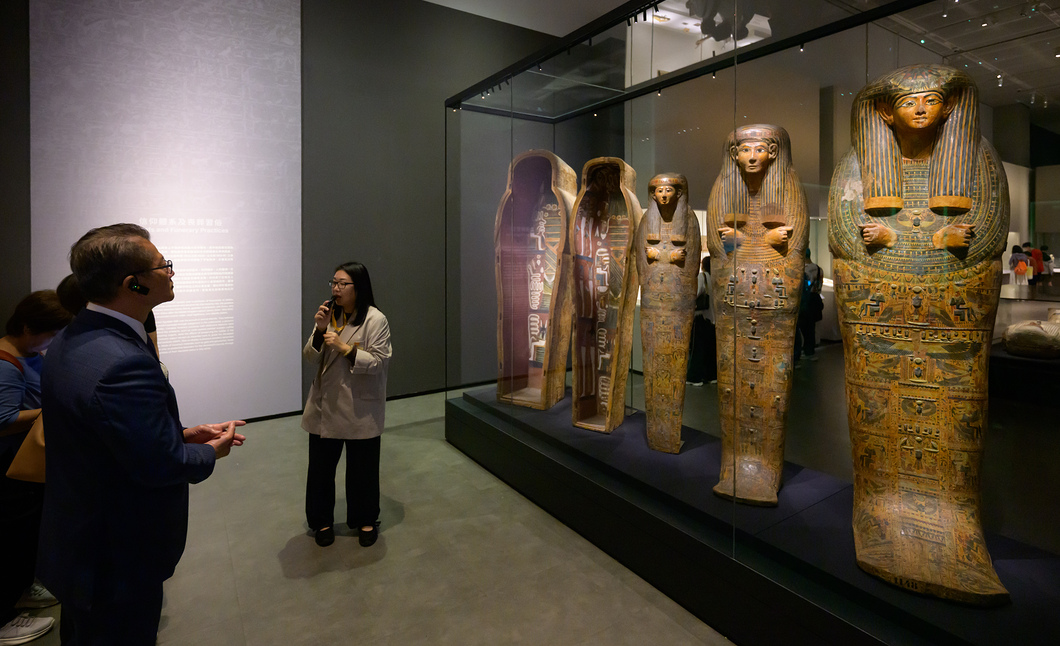
|
| Visiting the Ancient Egypt Unveiled exhibition at the Hong Kong Palace Museum. |
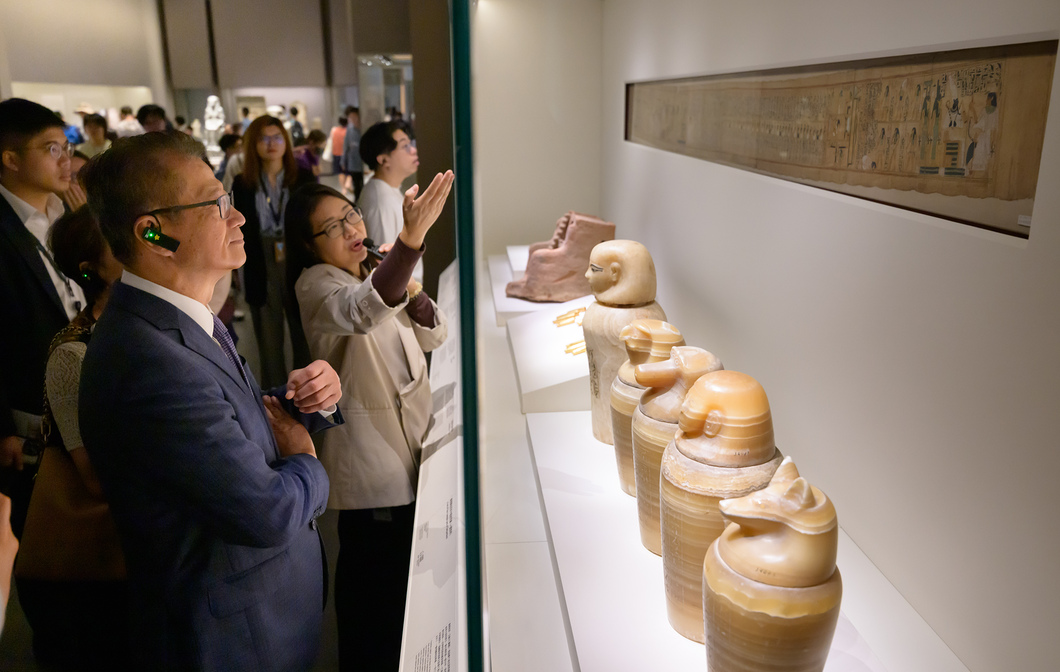
|
| Visiting the Ancient Egypt Unveiled exhibition at the Hong Kong Palace Museum. |
|
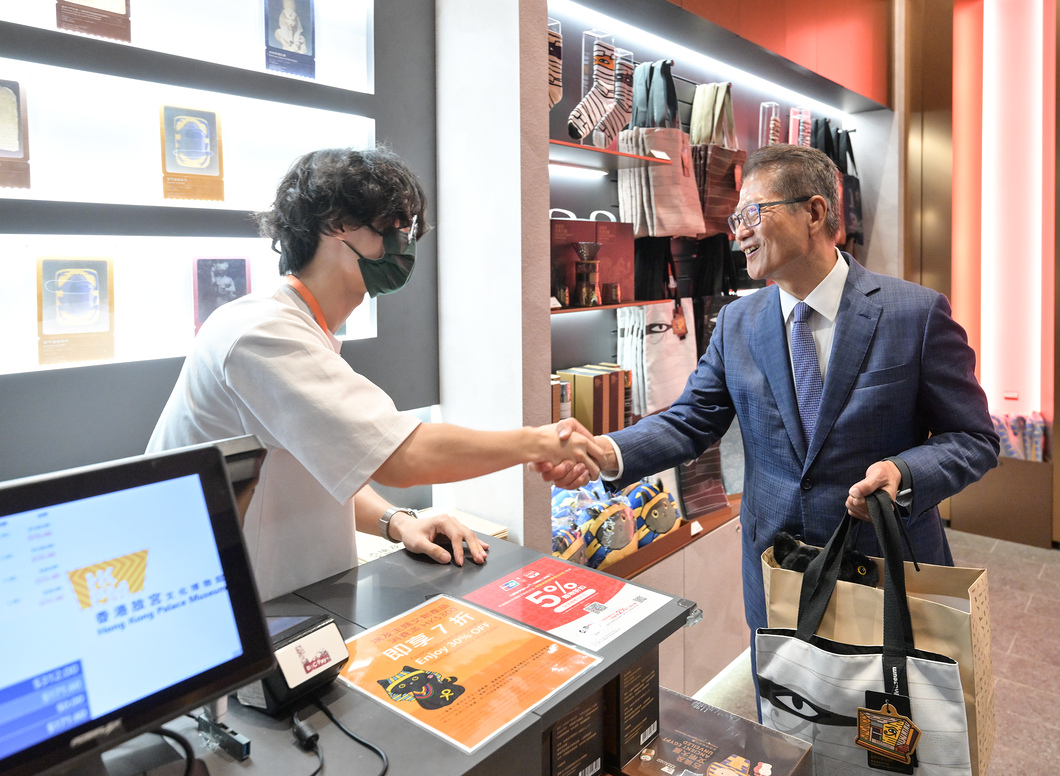
| Buying cultural and creative products while visiting the Ancient Egypt Unveiled exhibition at the Hong Kong Palace Museum. |
Mega Events
Mega events drive both local and inbound visitor flows, while creating multi-dimensional links across consumption. Following the recently concluded World Cup matches, the Hong Kong Football Festival 2026 and the Audi Football Summit 2026 – held at Kai Tak Sports Park – drew a combined audience of more than 120,000 across three matches. Ticket revenue is expected to exceed $180 million. Beyond ticket sales, these events generated broader positive spillovers. For instance, some restaurants near Kai Tak reported business growth of around 20% during the period. Many merchants also rolled out ticket-stub promotions, dining discounts and free parking, using creative offers to capture new opportunities. The Hong Kong Tourism Board worked with industry partners to launch joint promotions across different districts during major events, further stimulating visitor spending.
In summary, in the first half of this year, around 1.75 million visitors attended more than 130 mega events, generating approximately $5.8 billion in spending and contributing about $3.3 billion in value added to Hong Kong’s economy. From arts and cultural creativity to major events, these initiatives have helped create a positive social atmosphere and stimulate consumer demand in the city. The broader figures point to the same momentum: Hong Kong’s total retail sales value has risen year on year for 14 consecutive months, with a growth of 9.6% in the first half of this year.
Looking ahead to the second half of the year, we will host more than 100 mega events, including the HKTDC Food Expo, the National Day Fireworks Display, the Hong Kong Cyclothon, the Hong Kong Wine & Dine Festival, and much more. These events are expected to attract over 1.85 million visitors, generate around $5.9 billion in spending, and contribute about $3.3 billion in value added to Hong Kong’s economy. Notably, Hong Kong will host its first-ever APEC Finance Ministers’ Meeting this October, bringing together key political and business leaders from across the Asia-Pacific region. We will seize this opportunity to showcase Hong Kong not only as a premier international financial centre, but also as a world-class events capital – rich in cultural, creative, arts, sports and lifestyle experiences, and an ideal place to live, work and visit.
August 9, 2026