Blog
Building a World-class City for Living, Working, Studying and Visiting
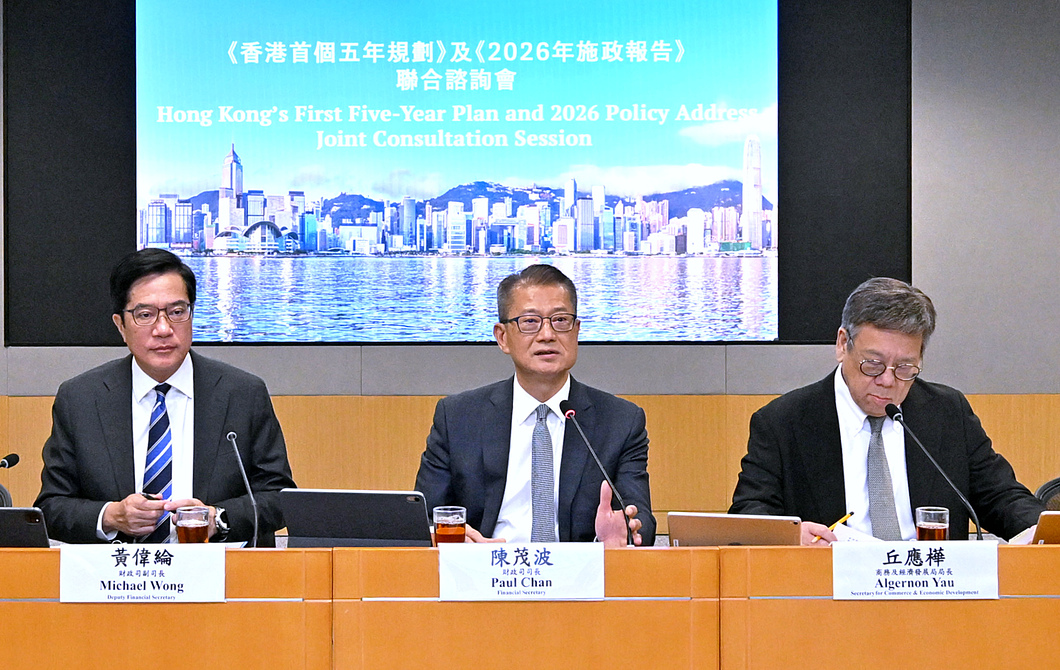
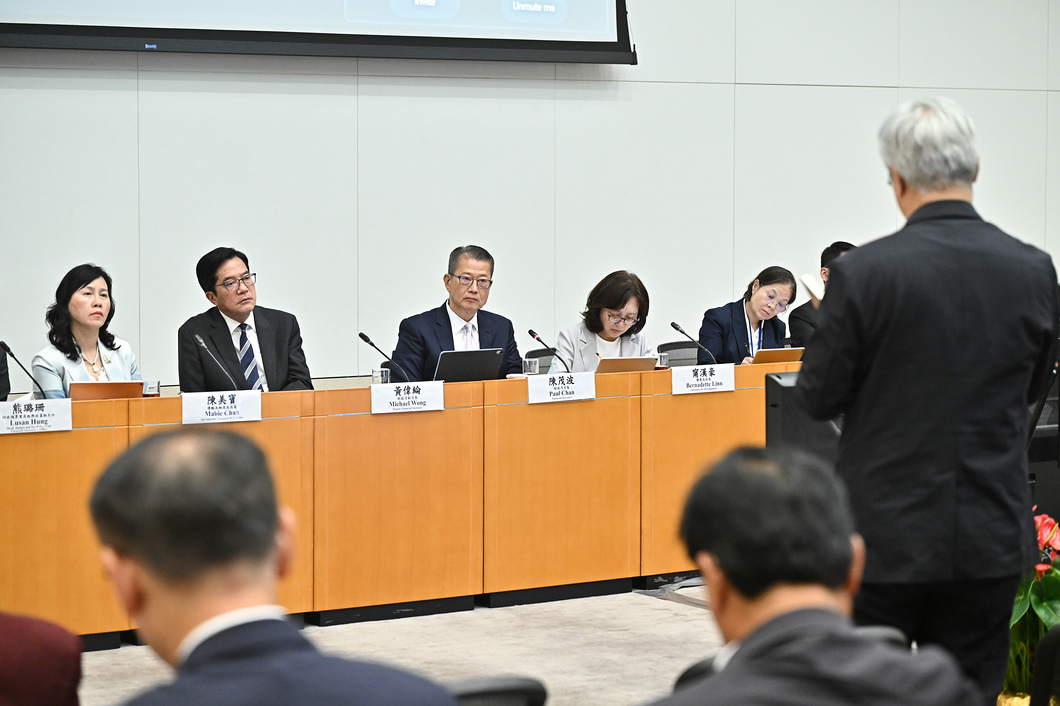
We are now formulating the first five-year plan for the Hong Kong Special Administrative Region. At the same time, public consultation is under way for the Chief Executive's new Policy Address. Last week, a consultation session on the theme of sustainable and liveable city was attended by more than 80 representatives from the planning, environmental, social welfare, and think tank sectors, as well as professional bodies and organisations. They offered views from different perspectives and contributed ideas for the further development of Hong Kong as a liveable city. Participants expressed great enthusiasm for the development of the Northern Metropolis. They agreed that its beautiful natural ecology, sound spatial planning, convenient transport links and quality tertiary education would be organically combined with the incoming technology enterprises, talent and industries. This will facilitate the development of the Northern Metropolis into a hub ideal for living, working, studying and visiting, while serving as a new engine for Hong Kong's future economic growth.
|
| Last week, I chaired several joint consultation sessions on different themes for Hong Kong's first five-year plan and the 2026 Policy Address. |
At present, works have commenced in four new development areas in the Northern Metropolis. More than 520 hectares of land have been resumed, and about 120 hectares have been formed. In the next five years, the Northern Metropolis will provide more than 70,000 housing units and 1 million square metres of economic floor area. Looking ahead, over the next decade, about 240,000 housing units and over 10 million square metres of economic floor area will be completed in the Northern Metropolis. Communities in the Northern Metropolis are being planned under the concept of a "15-minute living circle". Community facilities will be distributed in a balanced and reasonable manner, so that residents can meet most of their daily needs within a walk or bicycle ride of no more than 15 minutes.
We also hope to take the opportunity of developing the Northern Metropolis to gradually improve the living space and quality of life of our residents. For residential units built there, the living space per person for public housing is being enhanced, while the size requirements for private housing units are also being raised. As for public space, the standard adopted in the Northern Metropolis will be about 30% higher than the current territory-wide level, reaching 3.5 square metres per person. We believe the development of the Northern Metropolis will also create more favourable conditions for the renewal of old districts.
"Infrastructure-led and industry-driven" is the core principle of the Northern Metropolis development. It will also bring more convenient transport and more employment opportunities for residents in the area. Kwu Tung Station, located between Sheung Shui Station and Lok Ma Chau Station on the East Rail Line, will open next year and become Hong Kong's 100th heavy rail station. Hung Shui Kiu Station on the Tuen Ma Line is expected to come into operation in 2030. The Northern Link Main Line and Spur line are being taken forward together as one project. This will not only save costs, but also advance the programme of the Spur Line by two years to commission together with the Main Line by 2034 or earlier. In future, travelling from Hung Shui Kiu to Qianhai on the Hong Kong-Shenzhen Western Rail Link will take only about 15 minutes.
On the industry front, the Northern Metropolis will be where the development of innovation and technology as well as diversified industries will be promoted. It is expected to create about 500,000 new jobs. At the Hong Kong-Shenzhen Innovation and Technology Park in the Hetao area, more than 90 innovation and technology enterprises have already moved in, and five more buildings will be completed within this year. Park companies for San Tin Technopole and the Hung Shui Kiu Industry Park have also been established, and they are expediting work. Together with the large-scale Northern Metropolis University Town, these developments will realise integrated development among the Government, industry, academia, research and investment, while creating more employment opportunities.
Another distinctive feature of the Northern Metropolis is its beautiful countryside and bays. Robin's Nest Country Park, covering 530 hectares, was established the year before last as Hong Kong's 25th country park. We are also taking forward the Sam Po Shue Wetland Conservation Park, which will cover more than 300 hectares. The park will not only protect wildlife, but also preserve more than 250 hectares of ecologically enhanced fishponds. It will promote local biodiversity, provide quality local aquatic products for the public, and offer a pleasant leisure destination. The first phase of works for the park will begin as early as the end of this year, with completion targeted for 2031.
|
| Last week, I chaired a joint consultation session on the theme of sustainable and liveable city for Hong Kong's first five-year plan and the 2026 Policy Address. |
Efficient city management with high accessibility is essential to a city ideal for living, working and visiting, as it is linked to residents' direct experience of everyday life.
Smart management is a key development direction for urban management. Taking immigration clearance as an example, Hong Kong handles a massive volume of passenger and cargo flows on a daily basis, giving rise to a substantial need for smart clearance. In 2026, an average of approximately 500,000 passenger trips are made daily by Hong Kong residents using the e-Channel service. The relevant services have in fact been continuously enhanced. Examples include the launch of the "Contactless e-Channel" in 2021, the "Face Easy e-Channel" at the Hong Kong International Airport in September last year, and the "Seamless e-Channel" at the Hong Kong-Zhuhai-Macao Bridge Hong Kong Port in June this year. At present, about 380,000 passenger trips are made daily using the aforementioned upgraded e-Channel services across various control points.
In addition, the airport's smart security screening system has been upgraded. Computed tomography X-ray machines, or CTX, generate 360-degree three-dimensional images, allowing security officers to inspect the inside of baggage clearly from different angles. As a result, items such as computers, power banks and liquids no longer need to be removed from carry-on baggage during security screening.
Building a smart city and providing more efficient and convenient public services require more comprehensive support from a digital foundation. We are committed to providing digital identity authentication for citizens and businesses. As a personal digital identity and a one-stop personalised digital services platform, "iAM Smart" has more than 4.6 million registered users, with average daily usage exceeding 220,000 times. Within this year, we will provide an AI Assistant for "iAM Smart" users to answer enquiries and offer more personalised services, further enhancing the user experience. The "Digital Corporate Identity Platform" is also under development and is expected to be launched within this year, with services to be expanded gradually thereafter.
Over the past few decades, we have continued to invest resources, accelerate infrastructure development, and make steady progress towards becoming a more liveable and business-friendly city. This is also a key theme in the ongoing public consultations for Hong Kong's five-year plan and the Chief Executive's Policy Address. I look forward to your active participation, so that together we can build greater momentum for a beautiful home that is smarter, more efficient, more convenient, and greener.
July 26, 2026