Blog
Seizing Every Opportunity to Contribute to the Great Rejuvenation of the Chinese Nation
Last Wednesday, the Conference Celebrating the 105th anniversary of the founding of the Communist Party of China (CPC) was solemnly held in Beijing. General Secretary Xi Jinping delivered an important speech at the conference, offering a comprehensive and systematic account of the CPC's glorious history of unremitting struggle and the tremendous achievements it has made in leading the entire nation forward with determination. As we watched the conference together in Hong Kong and reflected on the country's proud development journey under the leadership of the CPC, we were filled with profound excitement and inspiration.
Over the past 105 years, the history of the CPC has been closely intertwined with that of the Chinese nation. The Party has led the country in achieving national independence and the liberation of the people, advancing socialist construction, and, in particular, steadfastly promoting economic development since reform and opening-up. Through the hard work and dedication of successive generations, our country has completed, in just a few decades, an industrialisation process that took developed countries several centuries to achieve. It has realised a historic leap in people's living standards — from inadequate access to food and clothing, to moderate prosperity overall, and then to the building of a moderately prosperous society in all respects. Our country's economic, technological, defence and overall national strengths have been comprehensively enhanced, creating the dual miracles of rapid economic development and long-term social stability.
What we feel most deeply is that our destiny has always been inextricably linked with that of the Motherland. Despite facing a complex and volatile international environment, as well as diverse internal and external challenges, the country has continued to overcome obstacles and maintain steady development under the leadership of the CPC. Every stage of this progress and every leap forward have opened up new horizons for Hong Kong. Indeed, every step of Hong Kong's development has been inseparable from the nation's solid and unwavering support.
|
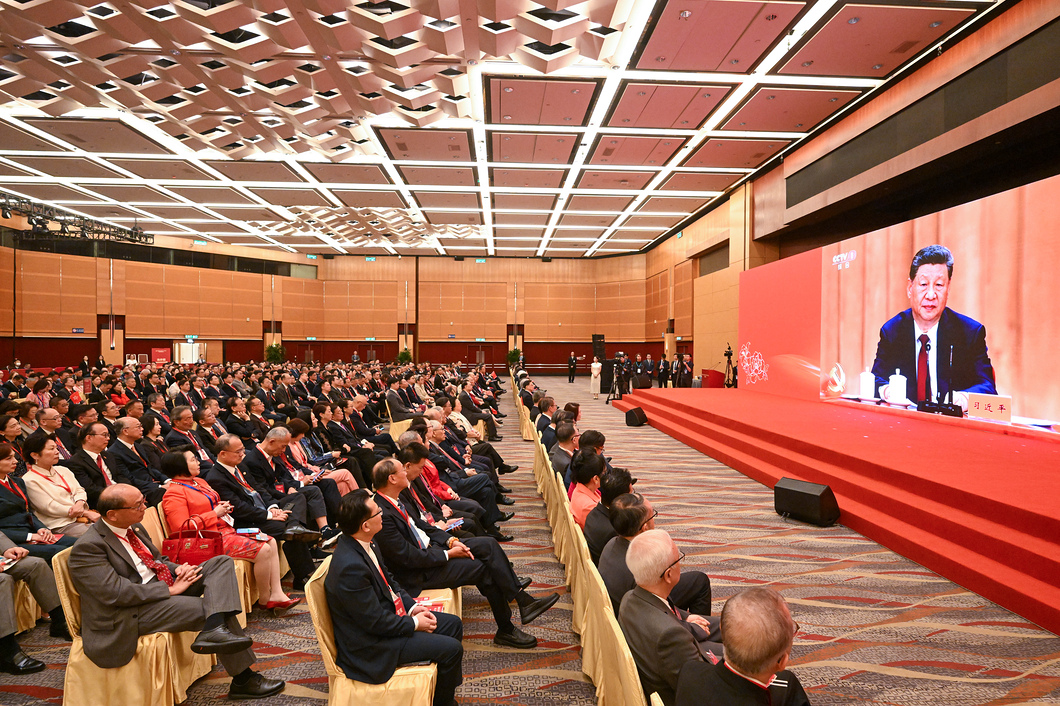
| During the Conference Celebrating the 105th anniversary of the founding of the CPC solemnly held in Beijing last Wednesday, General Secretary Xi Jinping delivered an important speech. We watched the conference together in Hong Kong. |
|
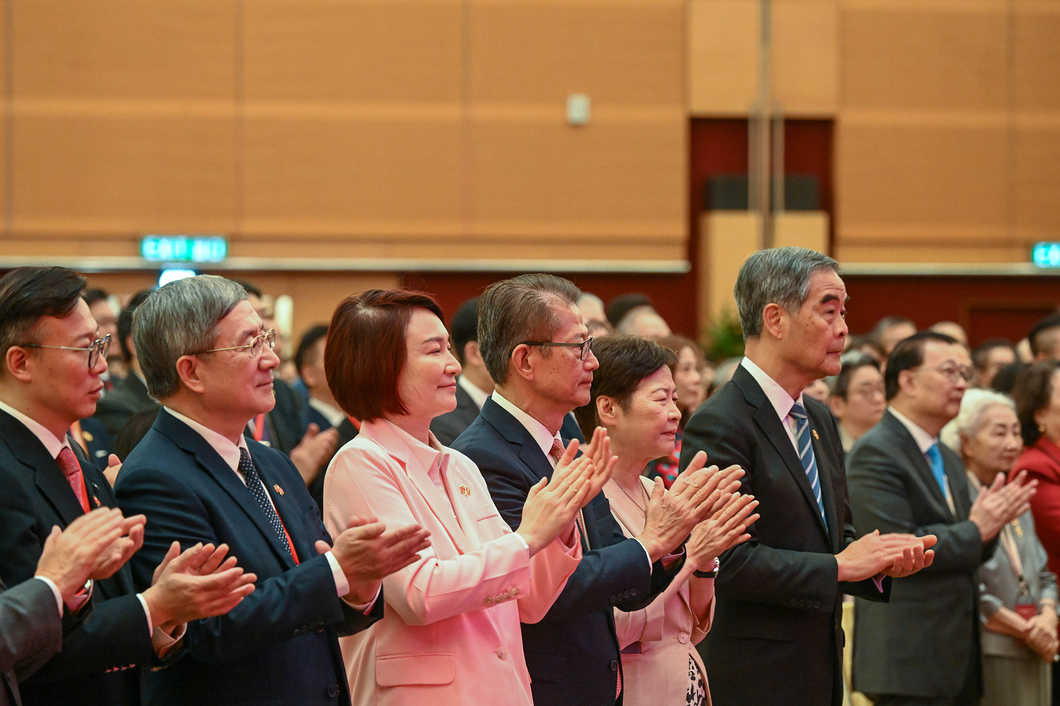
| During the Conference Celebrating the 105th anniversary of the founding of the CPC solemnly held in Beijing last Wednesday, General Secretary Xi Jinping delivered an important speech. We watched the conference together in Hong Kong. |
In the magnificent landscape of our country's development, there is one uniquely distinctive stroke: "one country, two systems." Conceived more than 40 years ago as a visionary concept advanced by the CPC, it has since evolved into an institutional strength of our country, providing a solid foundation for Hong Kong's unique advantages, prosperity, stability and development. No other city in the world is quite like Hong Kong. We are deeply integrated into the country's economic development and governance framework, while remaining seamlessly connected with international rules and markets. Established under the authorisation of the "one country" framework, we continue to uphold the common law and free port system under "two systems." We participate actively in the Mainland's domestic circulation while also serving as a vital node in international circulation.
General Secretary Xi Jinping has explicitly pointed out that "promoting the long-term prosperity and stability of Hong Kong and Macao is an inherent requirement of the great rejuvenation of the Chinese nation." Under the strong leadership and support of the Central Government, Hong Kong is advancing towards a future of greater prosperity and development.
It has become evident that Hong Kong is not only a beneficiary of the country's development, but also a contributor to the advancement of national strategies. We must combine the institutional, international, financial and professional advantages built through the hard work of generations under the "one country, two systems" framework with the new opportunities arising from the country's steady, high-quality development. By doing so, we can transform these strengths into more solid, long-term and sustainable contributions to the country's overall development in this new stage, while ultimately carving out a new growth trajectory for Hong Kong's future.
|
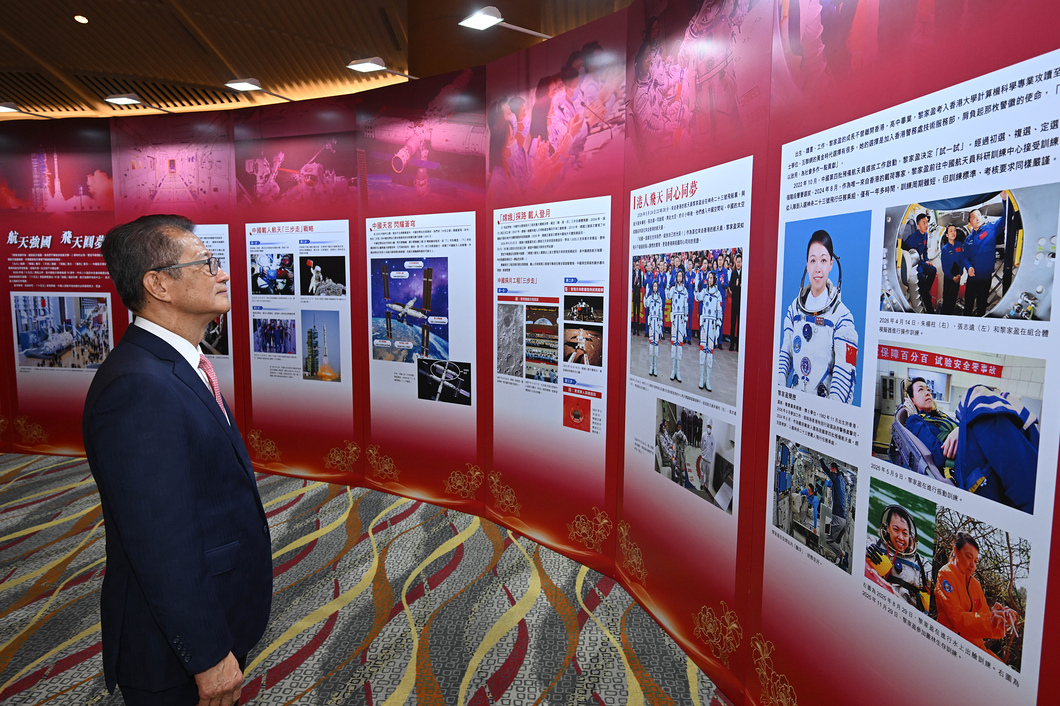
| On the same day in Hong Kong, the HKSAR Government held the launch ceremony of activities celebrating the 105th anniversary of the founding of the CPC, where I visited the exhibition. |
Specifically, there are several areas in which we can accelerate progress, deepen engagement and further consolidate our work.
First, we should promote the internationalisation of the Renminbi (RMB) and deepen mutual access between the Mainland and Hong Kong financial markets. As a global hub for offshore RMB business, Hong Kong currently handles more than 70% of global offshore RMB settlements. In terms of interbank clearing and settlement services, Hong Kong's monthly RMB settlement volume exceeds RMB41 trillion, equivalent to about RMB2 trillion per business day.
As our country continues to advance high-level opening up, more foreign enterprises are choosing to invest in and expand their businesses on the Mainland. At the same time, the country's high-end manufacturing, consumer goods, technology products and business services are gaining increasing recognition in overseas markets, prompting more Mainland enterprises to expand their global operations. This will further increase two-way flows of people and goods, trade settlements, and demand for cross-boundary fund allocation and management.
With the efforts of the HKSAR Government and various financial regulators, an increasing number of enterprises have chosen to establish their international or regional headquarters in Hong Kong and use RMB as their principal settlement currency. With the support of the People's Bank of China, the Hong Kong Monetary Authority has launched the RMB Business Facility, enabling banks to obtain RMB funds at lower interest rates and better meet enterprises' financing and working capital needs. We have also seen banks in Hong Kong progressively adopting this enhanced model to serve more clients and create new business opportunities. Looking ahead, we will step up efforts to encourage enterprises to make greater use of offshore RMB in trade, investment and financing, while strengthening collaboration with more central banks in the region. The Hong Kong Fixed Income and Currency (FIC) and Bond Connect Summit to be held this Tuesday will not only discuss the development of Hong Kong's bond market, but also explore key issues such as the growth of the offshore RMB market.
Second, we should actively participate in building the country's modernised industrial system. The development and application of technological innovation are the result of the long-term integration of talent, scientific research, capital, manufacturing capabilities and real-world use cases. Hong Kong enjoys an international research environment and talent pool, practises the common law system, and maintains a robust intellectual property protection regime as well as a mature capital market. It is also advancing the development of the Northern Metropolis and actively fostering an ecosystem for patient capital, venture capital funds and other forms of investment. If Hong Kong's strengths in basic research, talent, capital, international innovation resources and market networks can be more effectively integrated with the industrial capabilities and application scenarios of the Guangdong-Hong Kong-Macao Greater Bay Area and the country as a whole, the city will be well positioned to play a more active role in building the country's modernised industrial system.
|
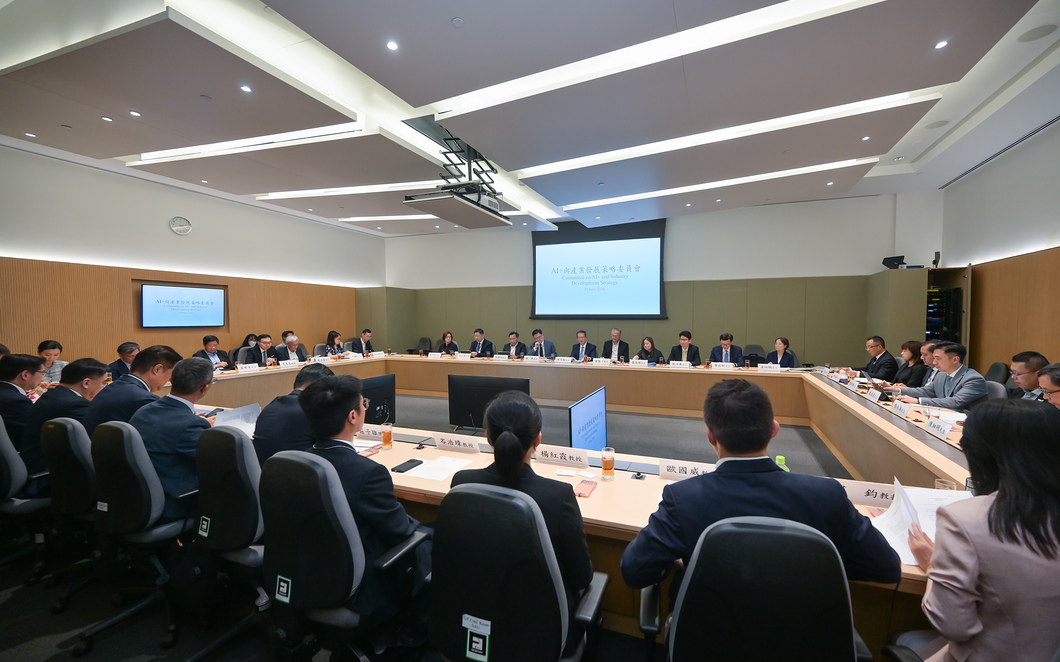
| The Committee on AI+ and Industry Development Strategy, which I chair, held its first meeting last Monday to discuss how to make good use of AI to empower the upgrading and transformation of our various industries, as well as matters relating to the promotion of AI development in Hong Kong. |
|
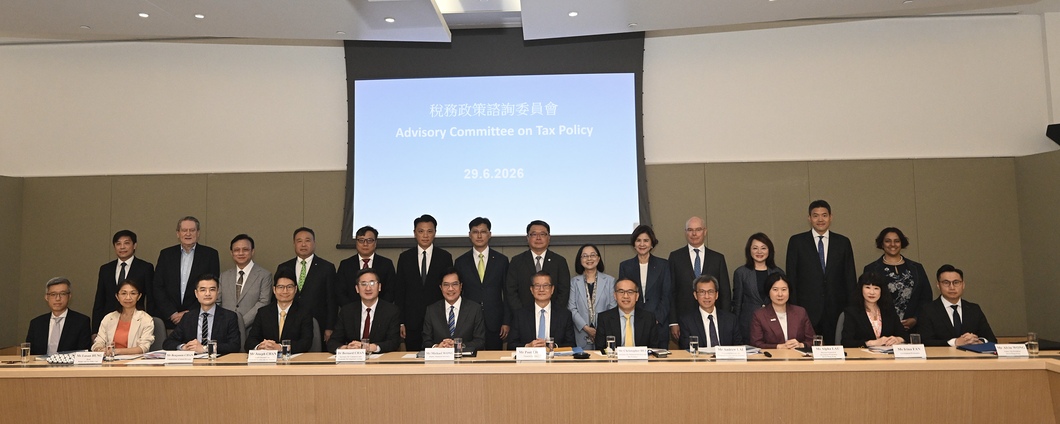
| The Advisory Committee on Tax Policy, which I chair, held its first meeting last Monday to discuss the continuous enhancement of Hong Kong's tax regime to maintain its competitiveness. |
Third, we should support broader regional and global co-operation by leveraging our international character and professional services capabilities. The world continues to face significant development imbalances. Many regions are still striving to advance infrastructure development, industrial upgrading and improvements to people's livelihoods, while countries in the Global South face challenges such as financing constraints and lagging infrastructure development. With years of experience in financing, risk management, ESG compliance, project management, legal services and dispute resolution, Hong Kong can, through the Belt and Road Initiative, multilateral development banks and various international cooperation platforms, apply these professional strengths to concrete projects and help more enterprises and regions identify sustainable and viable cooperation opportunities.
29 years after Hong Kong's return to the Motherland, sustained efforts across various sectors have laid a solid foundation and given the city a distinctive leading edge. Under the strong leadership of the CPC, the country is advancing with confidence and determination along the Chinese path to modernisation. As a unique node on this journey, Hong Kong has not only the capability, but also the responsibility and confidence, to seize every opportunity and contribute to the great rejuvenation of the Chinese nation.
July 5, 2026