Blog
From the Greater Bay Area to the Yangtze River Delta: Hong Kong’s Value as an International Platform
Last week, I travelled to Shanghai and Nanjing. Besides attending the Lujiazui Forum, I met with representatives from frontier technology enterprises and toured a number of companies specialising in artificial intelligence (AI), semiconductors, biotechnology, the low-altitude economy, and other emerging fields. This series of visits and exchanges gave me fresh insights and prompted some new reflections.
These hard-tech enterprises rest on solid technological foundations. Many are genuinely at the cutting edge, with business models already proven in the Mainland market and products now entering markets overseas. The questions they are grappling with are practical ones: how to tap into global capital, find more partners and potential customers around the world, plan their production capacity, and manage their treasury. They are keen to seize this critical period of rapid AI development—consolidating their position at home while accelerating their push abroad—and to map out the optimal global footprint for their business.
|
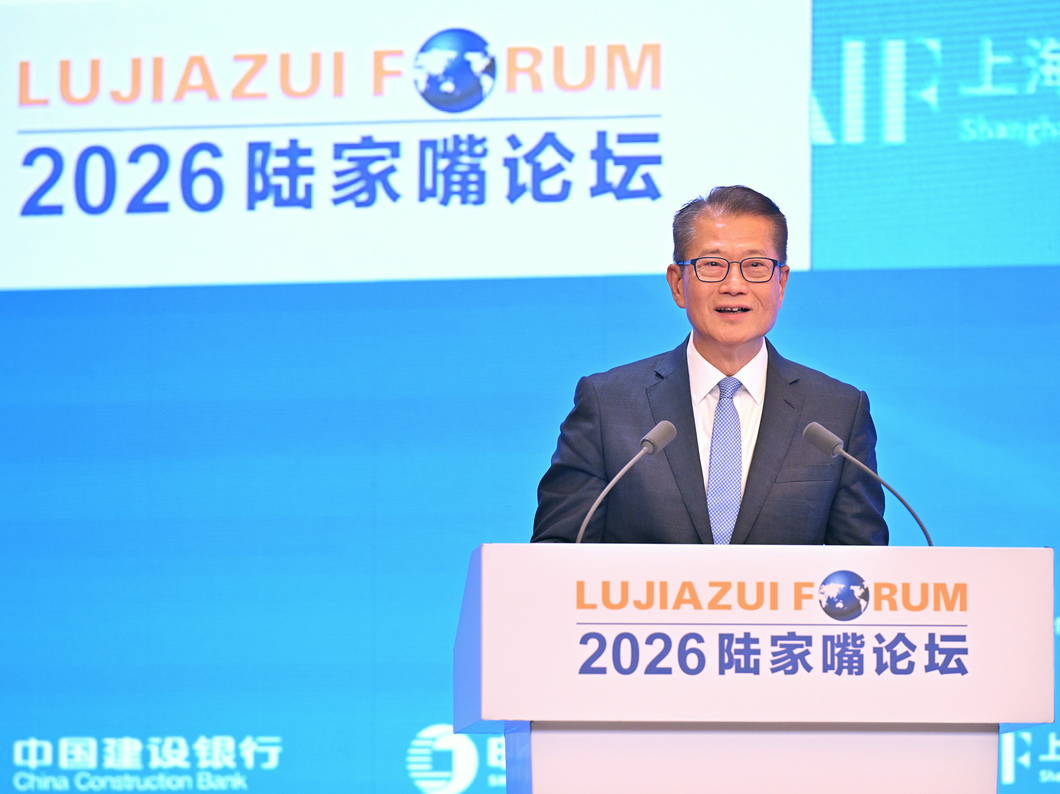
| Attending and speaking at the plenary session of the 2026 Lujiazui Forum in Shanghai last week. |
|
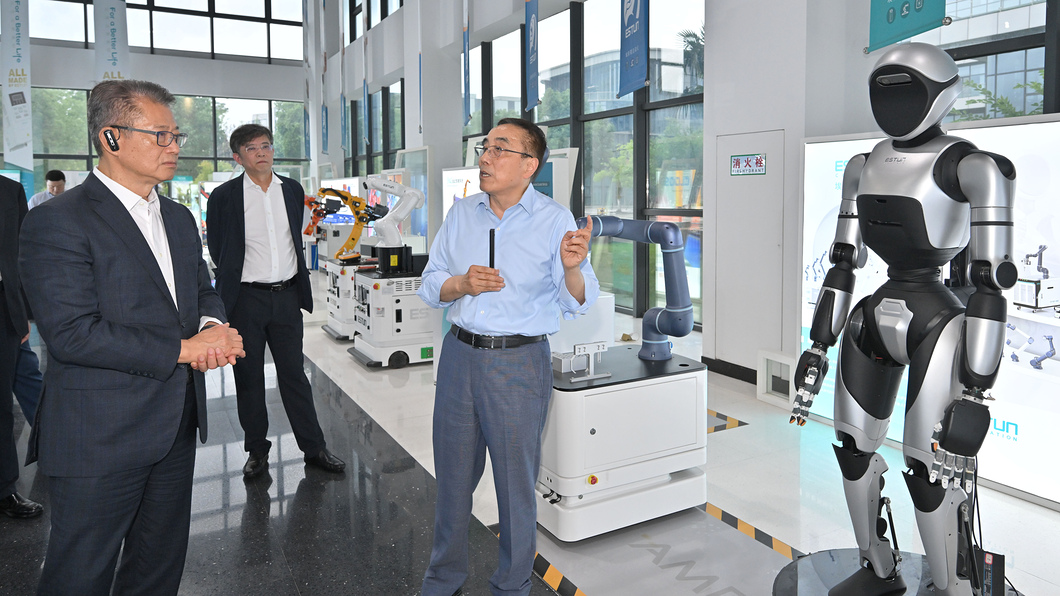
| In Nanjing, I visited Estun, a company specialising in intelligent equipment and industrial robots, and was briefed by its Chairman, Mr Wu Bo (right), on the company’s business. |
For Mainland technology enterprises, going global no longer means simply exporting products. By bringing in international capital and talent and by building their brands and sales networks, they are turning overseas business into a new engine of growth. What struck me most was hearing one executive after another describe the same ambition: to become true multinationals. That means connecting with the world not only in their markets, but also in their capital structure, governance systems, talent, research and development (R&D), and production and supply chains. Many have chosen Hong Kong as the strategic base from which to adapt to international expansion. This reflects their trust in Hong Kong's international investor network and global platform—and their recognition of Hong Kong as the bridge linking Chinese technological innovation with global capital.
What these enterprises expect of Hong Kong now goes far beyond a simple financing platform. Our common law system, free flow of capital, financial reporting and corporate governance standards aligned with international norms, worldwide investor networks, world-class professional services, and the everyday convenience of working in both Chinese and English—these are precisely the support and infrastructure that such rapid adaptation requires.
For Mainland technology enterprises, Hong Kong is a gateway to the world. For international capital, it is the best window to access China's innovation and technology (I&T) sector. As more and more hard-tech enterprises choose to launch initial public offerings or secondary listings here, international investors can take part more directly in the rapid growth of China's I&T industries, while the enterprises themselves are tempered by Hong Kong's regulatory framework and market discipline into stronger global competitors. This two-way dynamic is exactly what makes Hong Kong both a "super connector" and a "super value-adder".
|
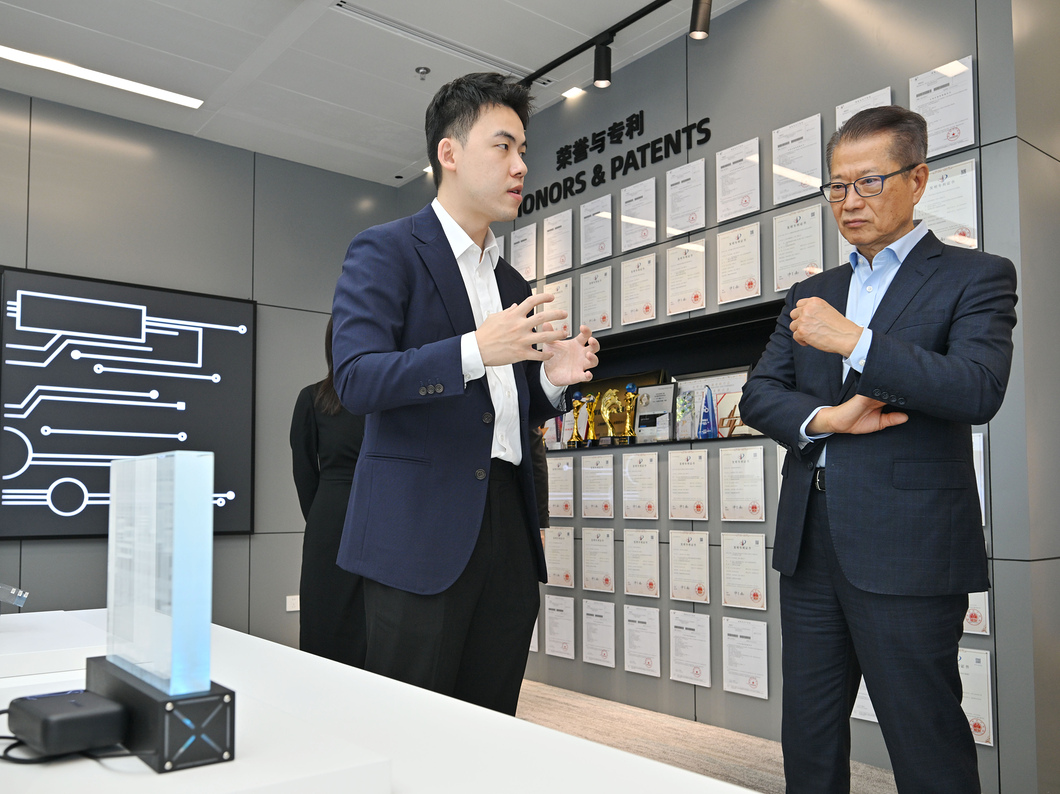
| Visiting Lightstandard Company in Shanghai and listening to its Chairman, Mr Xiong Yinjiang (left), introducing the company’s latest products. |
|
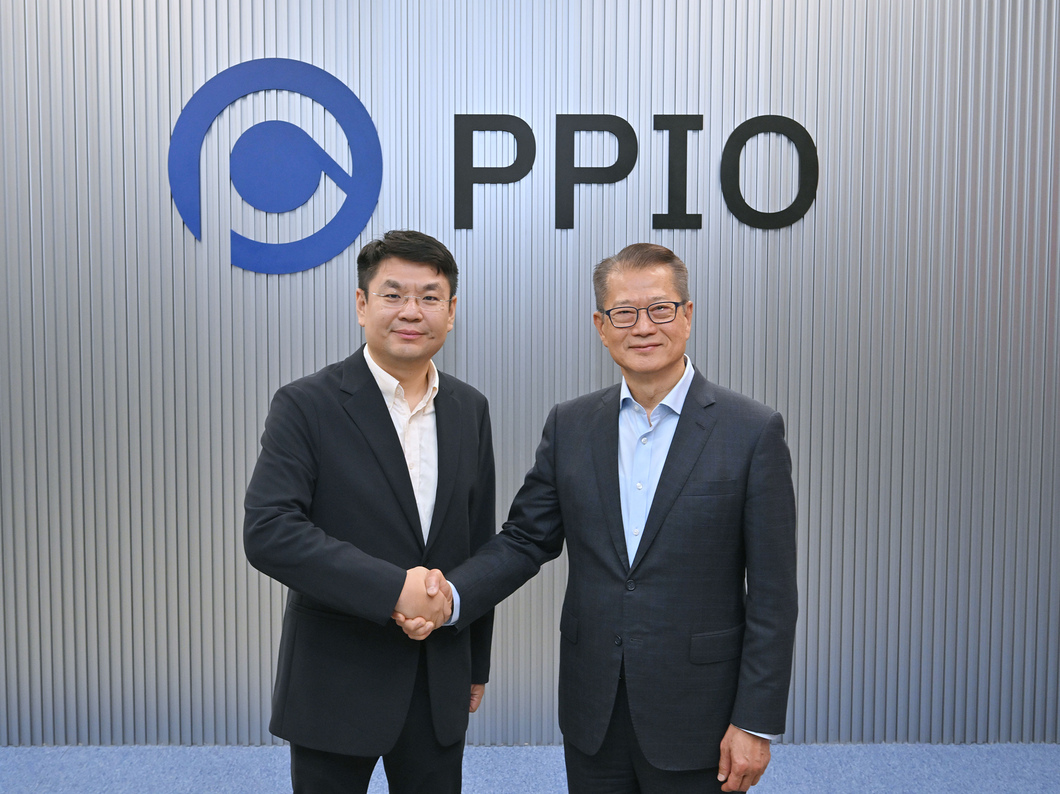
| Visiting PPIO Cloud Computing (Shanghai) Company Limited in Shanghai and taking a photo with its Chairman, Mr Yao Xin (left). |
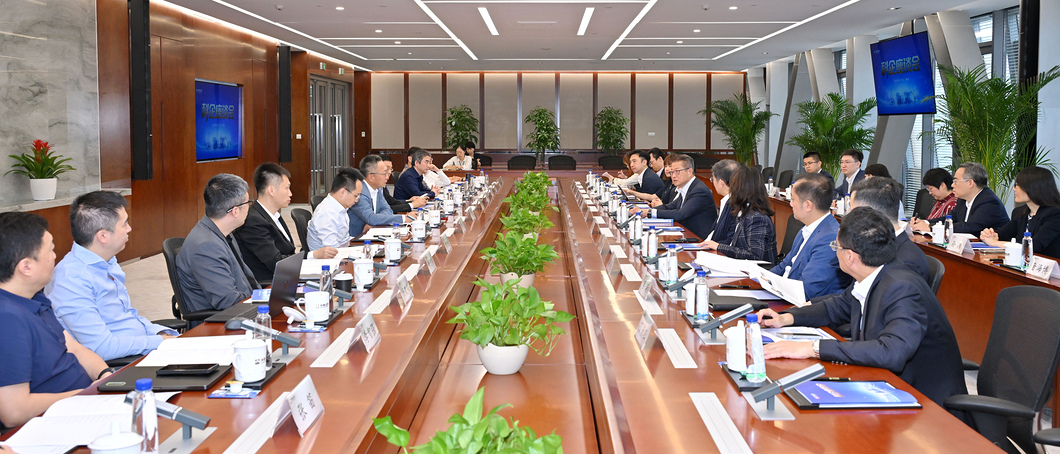
|
| Attending an exchange session for technology enterprises in Nanjing and engaging in in-depth exchanges with I&T entrepreneurs from Jiangsu and other provinces. |
Hong Kong is one of the core cities of the Guangdong-Hong Kong-Macao Greater Bay Area (GBA). As the GBA and the Yangtze River Delta pursue closer regional coordination during the 15th Five-Year Plan period, Hong Kong is becoming the international anchor point for both of these fast-growing regions. From listing and fundraising to trade finance and treasury operations, and from intellectual property protection and trade to the deployment of international talent, Hong Kong's professional services—and our regulators' deep understanding of I&T enterprises—help these companies to be better understood, recognised and valued.
Seen in this light, Hong Kong's journey over the 29 years since its return to the Motherland comes into sharper focus. Our role as an international platform has grown steadily stronger, and its substance richer and deeper. With the country's firm backing, Hong Kong has kept moving forward over the past four years. The economy has expanded for three years running, growing by about 3.6% in 2025 to reach a total of $3.3 trillion, and growth in the first half of this year was both faster and more broad-based. International recognition has been rising too. In the latest World Competitiveness Yearbook 2026, published by the International Institute for Management Development in Lausanne, Switzerland, Hong Kong climbed to second place worldwide—up five places in three years. In the Global Financial Centres Index, we remain first in the Asia-Pacific and third globally, and the Fraser Institute of Canada continues to rank Hong Kong as the world's freest economy.
Our financial market keeps evolving and reinventing itself, growing ever deeper and broader. Since the listing regime reforms of 2018, new economy companies' share of total market capitalisation has surged from 2.8% that year to around 25%. The number of exchange-traded products rose to 243 by April this year, with assets under management approaching HK$700 billion—a gain of more than 80% in just over three years. In wealth management, total assets under management reached HK$35.1 trillion at the end of 2024, equivalent to 11 times our GDP, and continued to grow last year; the number of single-family offices passed 3,380, up more than 25% from the end of 2023. In I&T, the Office for Attracting Strategic Enterprises has brought in over 120 strategic enterprises, expected to deliver around HK$73 billion in investment and create some 25,000 jobs, while the number of start-ups exceeded 5,200, an 11% rise year-on-year and yet another record high. Trade also performed well: total merchandise exports reached HK$5,240.3 billion in 2025, a record high and up 15.4% year-on-year. Hong Kong's air cargo throughput has ranked first in the world for many years running. Although air freight accounts for less than 3% of our total export volume, it represents around 45% of total export value—and the value of air exports has climbed by nearly 35% so far this year, a sign of Hong Kong's central role in high value-added supply chains and e-commerce.
Hong Kong's commitment to I&T shows in many ways. Beyond the steady growth in R&D spending and the research workforce, and the rising number of I&T enterprises we are nurturing and attracting, it is also evident in how we cultivate and gather talent. Thanks to our sustained efforts to strengthen STEM education, the proportion of undergraduates enrolled in science, engineering and technology programmes at post-secondary institutions rose to over 52.3% in the 2025/26 academic year, up 5.5 percentage points from three years ago. Our higher education sector has also become more international: in the recently released QS World University Rankings, for instance, five Hong Kong universities ranked among the world's top 50 for their international faculty ratio. Many leading scholars from around the world have come to Hong Kong to set up research centres or pursue collaboration.
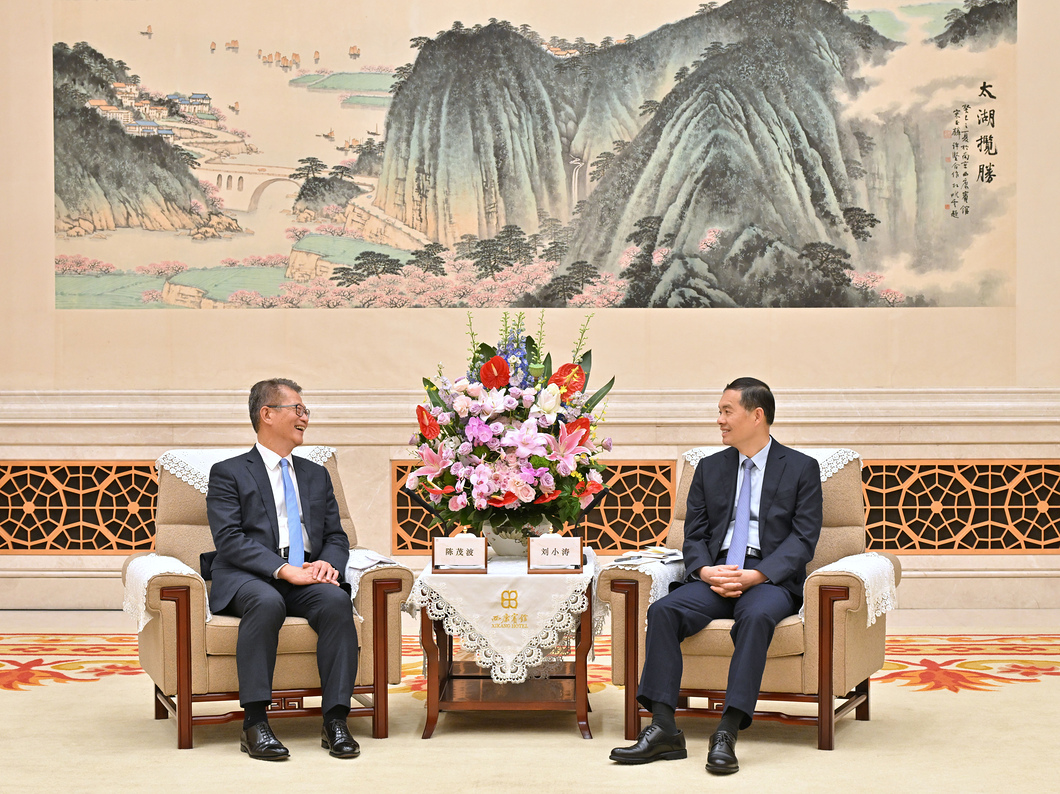
|
| Paying a courtesy call on the Governor of Jiangsu Province, Mr Liu Xiaotao (right), in Nanjing. |
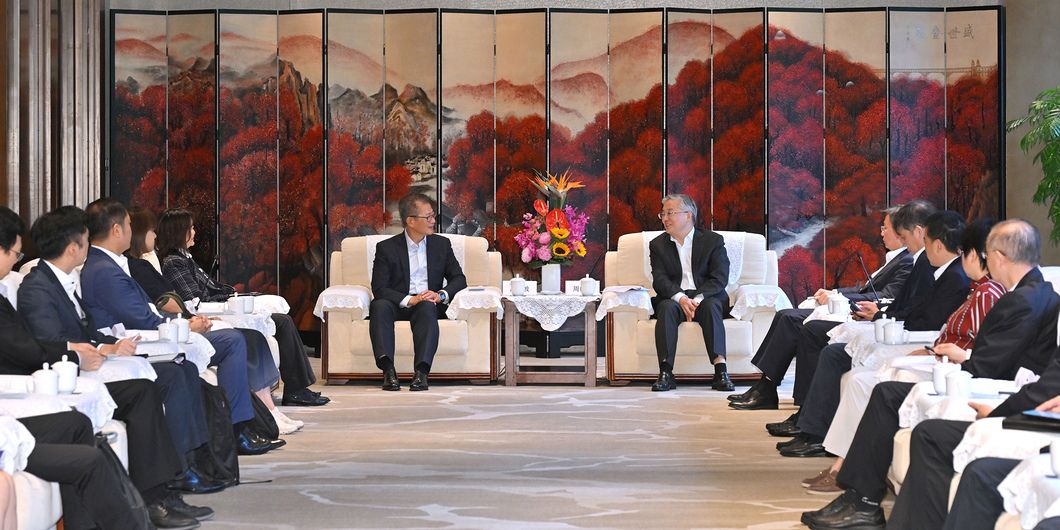
|
| Paying a courtesy call on the Secretary of the CPC Nanjing Municipal Committee, Mr Zhou Hongbo (sixth right), in Nanjing. |
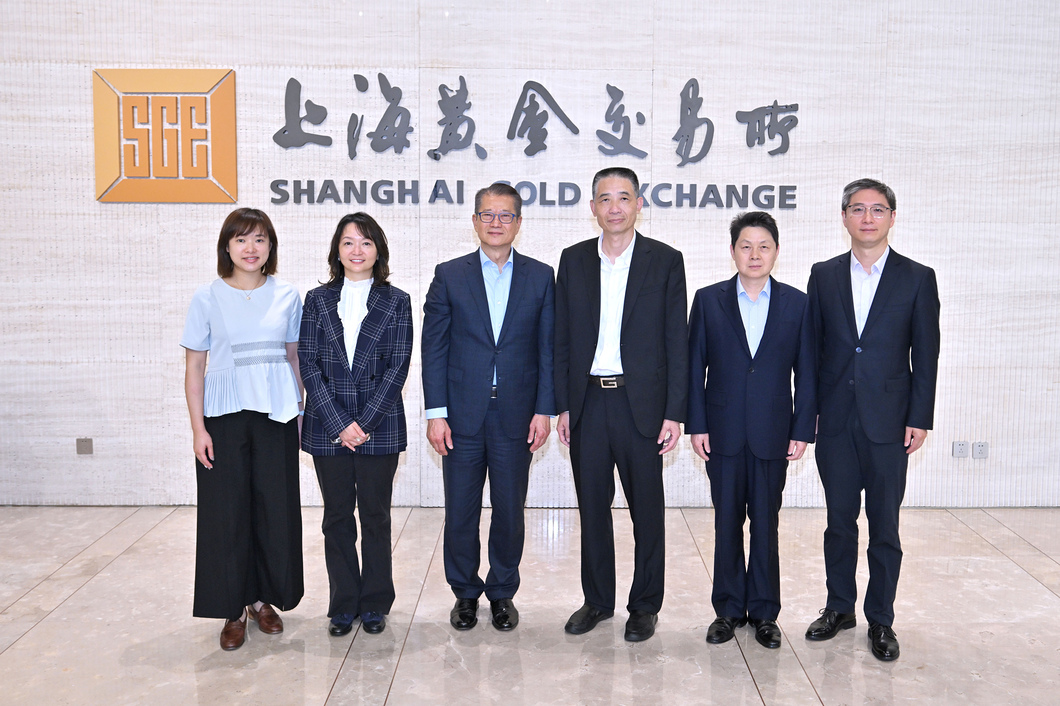
|
| Visiting the Shanghai Gold Exchange and meeting with its Chairman, Mr Yu Wenjian (third right), last week. |
Looking ahead, we launched the public consultation on Hong Kong's first five-year plan last week, designed to align the city with the positioning set out in the National 15th Five-Year Plan: consolidating and enhancing Hong Kong's status as an international centre for finance, trade, and shipping; developing it into an international I&T centre; and building it into a magnet for top-tier talent, among other goals. We will also use "Finance+" to empower the real economy and "AI+" to drive industrial upgrading.
As we approach the 29th anniversary of Hong Kong's return to the Motherland, tracing the path we have travelled over these years—and seeing just how rapidly things have moved forward — I am confident that a still more prosperous and stable future awaits us. This confidence is well founded: it rests on the country's steady progress and the firm support of the Central Government, as well as on the concerted efforts of the HKSAR Government and the community at large. Hong Kong's institutional strengths and international outlook, together with the country's prowess in innovation and industry, reinforce one another—giving the city a unique and irreplaceable place in the global landscape of competition and cooperation in technological innovation.
June 21, 2026