Blog
My Visit to Three European Countries
Yesterday, I concluded a five-day visit to Europe, covering France, Belgium and Switzerland. During the trip, I held in-depth exchanges at multiple levels with leaders from the political, business and financial sectors. My strongest impression from this visit was Europe's clear and growing desire for change. This is evident on several fronts. Politically, unilateralism and intensifying competition among major powers have reinforced Europe's awareness of the need to secure greater strategic autonomy. In economic and trade relations, Europe is seeking stronger multilateral cooperation and better risk diversification to build stronger economic resilience. In industrial investment, particularly in cutting-edge innovation and technology fields such as artificial intelligence (AI), there is a clear recognition that discussion must be turned into action, and that Europe needs to pool its strengths and catch up as quickly as possible.
Against this backdrop, there is significant room for Hong Kong and Europe to pursue pragmatic cooperation in trade, investment as well as innovation and technology, with a view to creating mutual benefits.
Take investment as an example. Some representatives from the European financial sector pointed out that their current asset allocations were overly weighted towards US dollar assets, thereby resulting in excessive risk concentration. At the same time, households across the European Union possess wealth amounting to tens of trillions of euros, with savings rates among the highest in the world. Yet, much of their wealth remains parked in bank deposits and fixed-income products that only offer conservative returns. It has not been sufficiently channelled into capital markets with stronger growth potential. Nor has it been used effectively to support local technological innovation and strengthen economic momentum. Europe also faces funding gaps amounting to trillions of euros in addressing climate change and investing in strategic industries. Mobilising this wealth and channelling capital into the real economy to support technological innovation and application have become one of Europe's most pressing priorities. For Europe, Hong Kong's value proposition is particularly compelling in three areas.
First, Hong Kong remains an under-allocated market for European financial institutions and investors. As one of the world's most active stock markets, a hub for venture capital and private equity funds, as well as a centre for cross-border asset and wealth management, Hong Kong offers a diverse range of investment products and risk management tools, covering securities, bonds, currencies, derivatives and digital assets. Hong Kong is also closely connected to the Guangdong-Hong Kong-Macao Greater Bay Area (GBA) and the Mainland's frontier innovation, technology and advanced manufacturing capabilities. These present diversified asset allocation opportunities with strong potential returns. To European investors, the opportunities in Hong Kong are highly attractive. In fact, during my exchanges with local representatives from asset management, venture capital and private equity sectors, their questions were practical and specific. They asked about various issues such as the licensing requirements in Hong Kong, the right timing for setting up operations, the local investment ecosystem, and the communication channels with regulatory authorities.
|
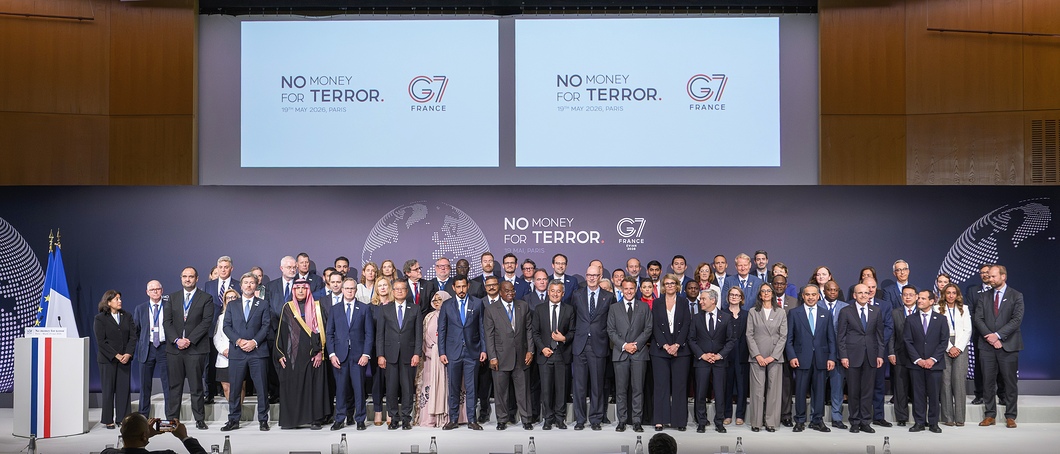
| Last week, I attended the "No Money for Terror" Ministerial Conference in Paris, France and took an official group photo (first row, seventh left) with other guests. The French President, Mr Emmanuel Macron (first row, seventh right), delivered the closing remarks at the conference. |
|
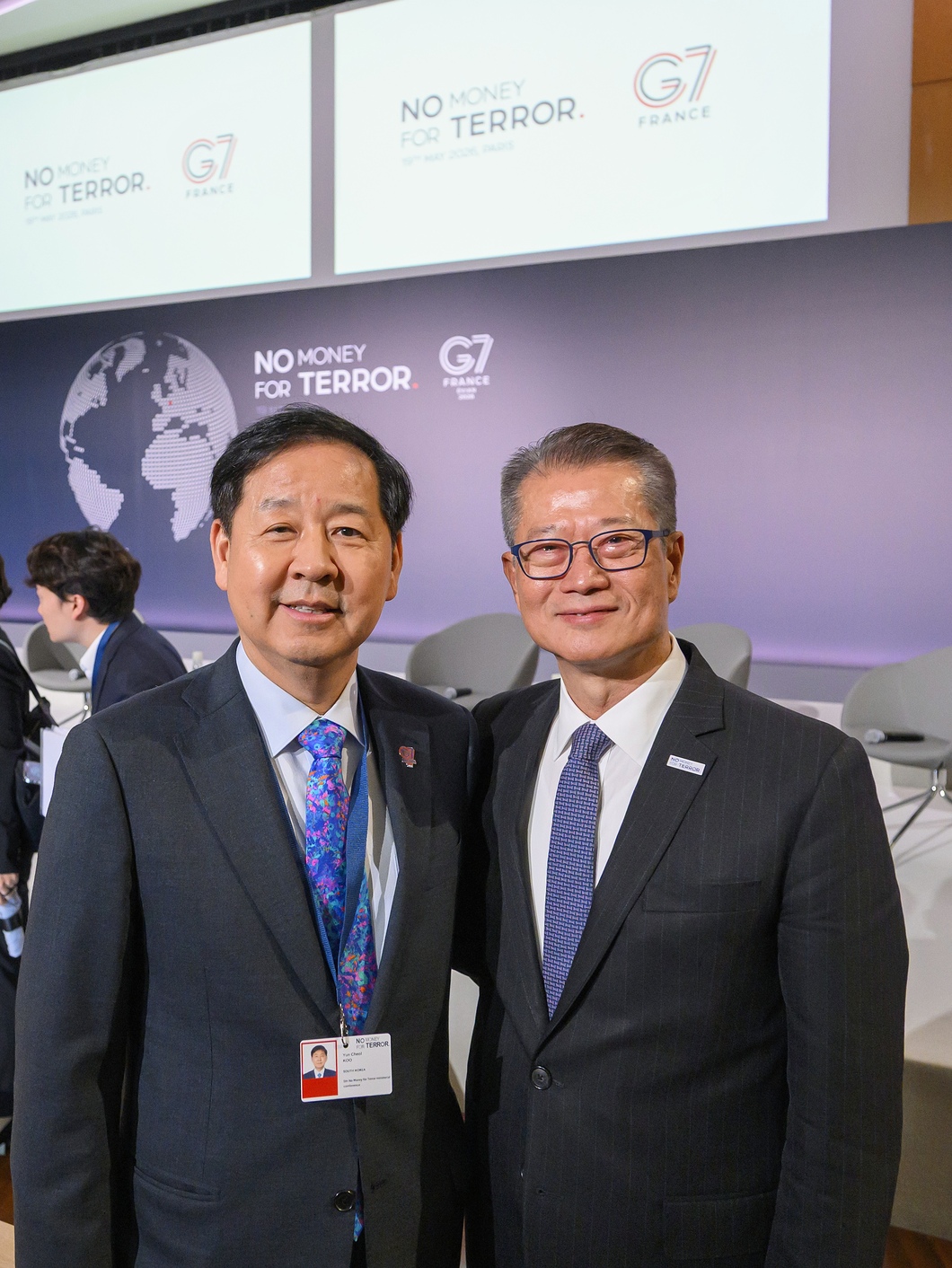
| During the "No Money for Terror" Ministerial Conference, I exchanged views with the Deputy Prime Minister and Minister of Economy and Finance of Korea, Mr Koo Yun-cheol who also attended the conference. |
|
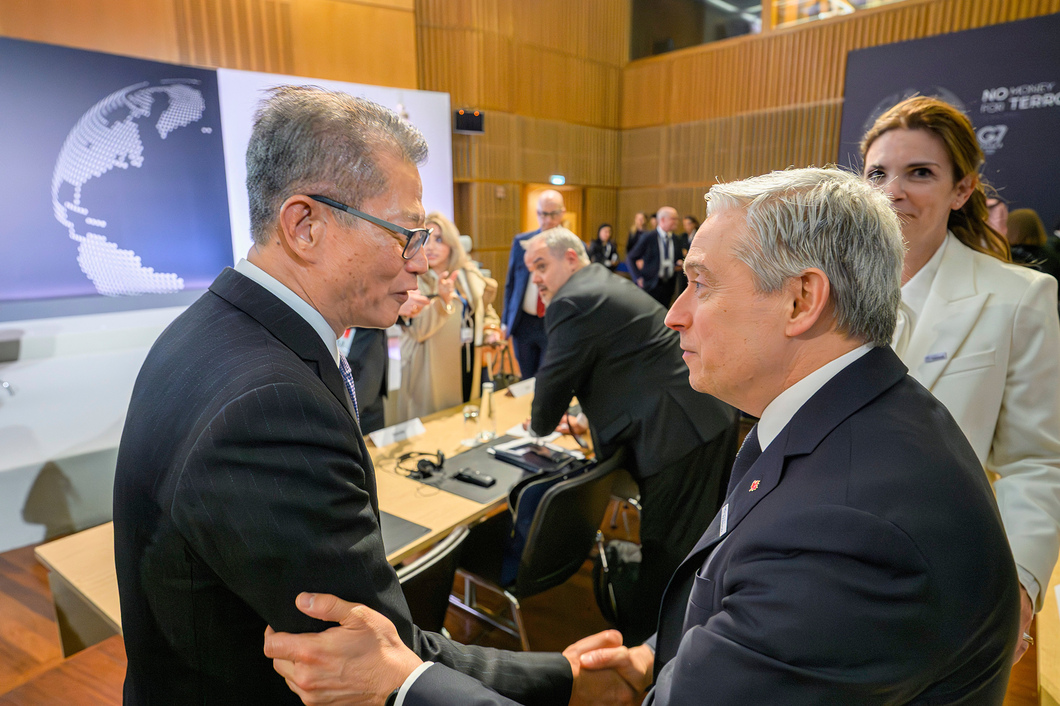
| Having a chat with the Canadian Minister of Finance, Mr François-Philippe Champagne who also attended the conference. |
|
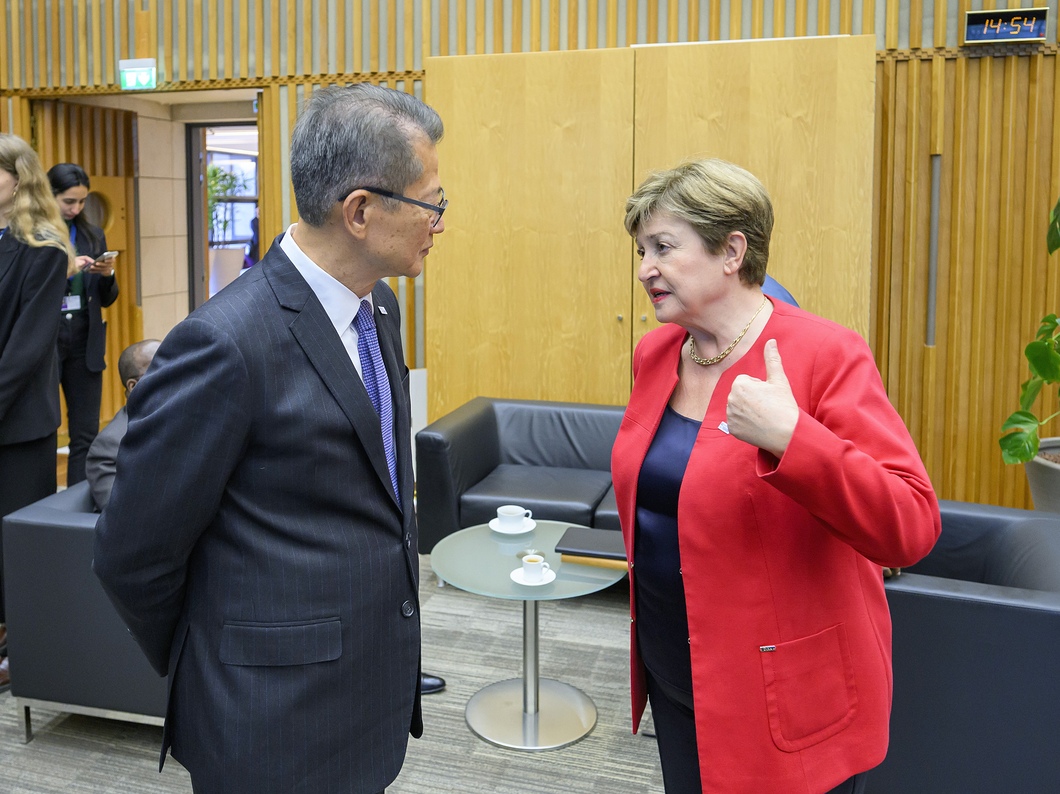
| Exchanging with the Managing Director of the International Monetary Fund, Ms Kristalina Georgieva who also attended the conference. |
|
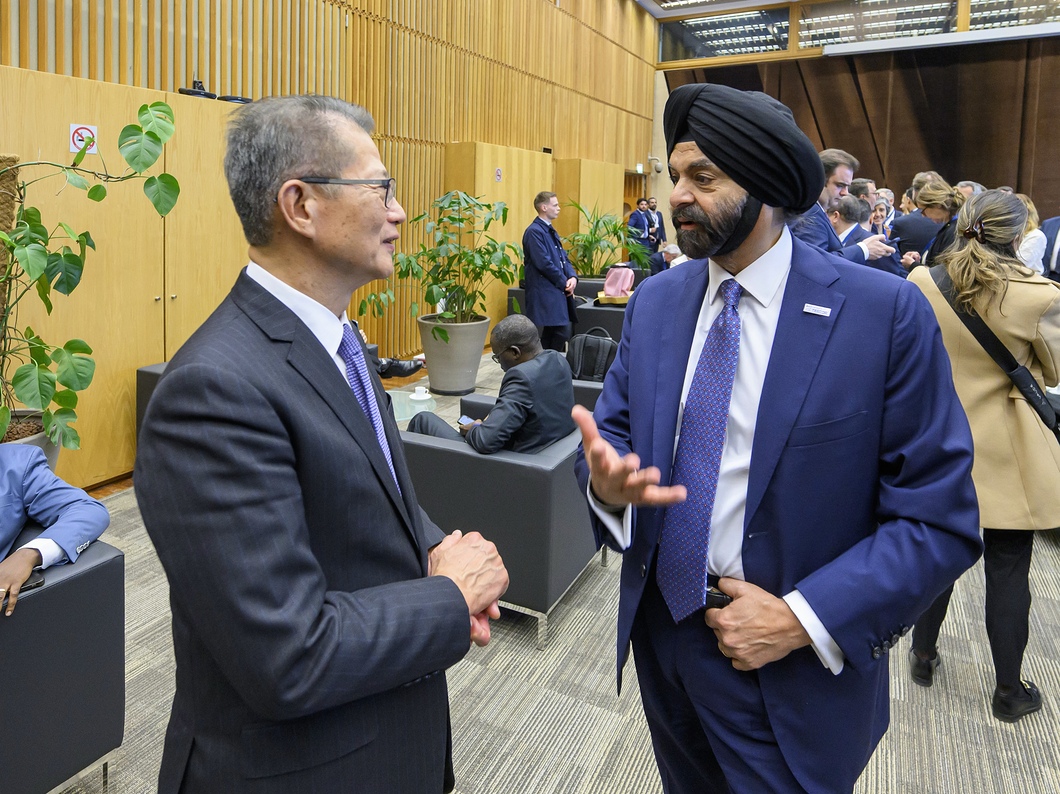
| Having a chat with the President of the World Bank Group, Mr Ajay Banga who also attended the conference. |
Second, Hong Kong and Europe can explore cross-border investment and regulatory cooperation to help each other expand market access. In recent years, Hong Kong has actively promoted connectivity between the Mainland and overseas capital markets. This has improved market liquidity and broadened investment choices (e.g. mutual listing of ETF products with Saudi Arabia and Korea). Hong Kong has also supported high-quality companies seeking dual listings and has promoted cross-border regulatory cooperation. At the same time, Hong Kong is gradually building an ecosystem for "patient capital", providing stronger long-term support for emerging and future industries. During my discussions with European financial institutions, they expressed strong interest in Hong Kong's experience in these areas, and agreed that both sides should work together to advance cooperation.
Third, financial innovation. The use of blockchain and AI will be an inevitable trend in the future development of finance. Yet these technologies also bring real governance challenges. Criminals and terrorists may attempt to exploit differences in regulatory regimes across jurisdictions for money laundering and fundraising. At this year's "No Money for Terror" Ministerial Conference, preventing financial innovation from being misused for illegal purposes was a major topic of discussion. During the conference, I shared Hong Kong's principles, practices and experience in the development and regulation of digital assets. In these areas, Hong Kong is indeed ahead of Europe, and there is considerable room for cooperation and mutual learning. This not only can support the healthy development of the industry, but also contribute to stronger global governance.
|
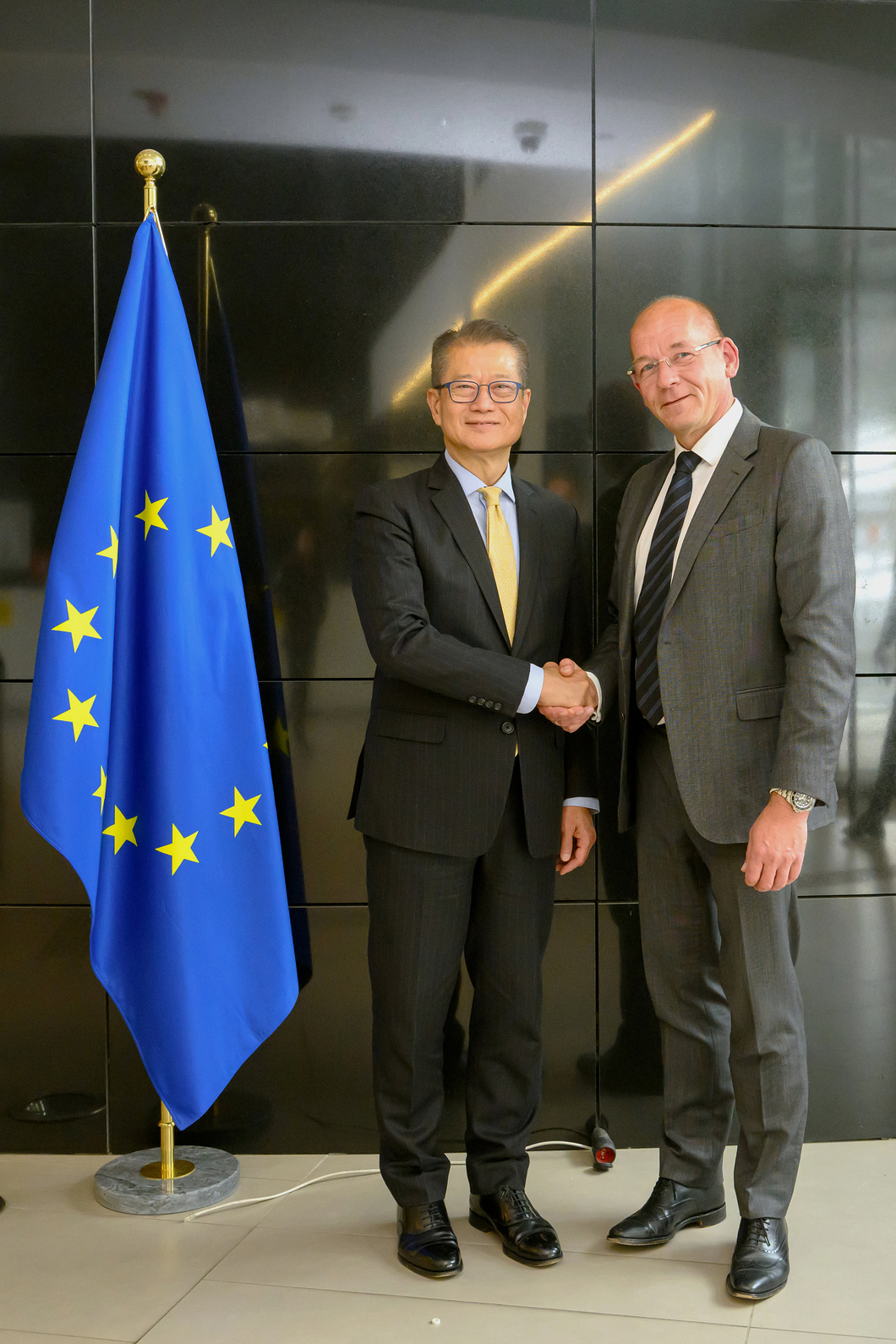
| Meeting with the Hors Classe Adviser inthe Directorate-General for Budget of the European Commission, Mr Siegfried Ruhl, in Brussels, Belgium. |
|
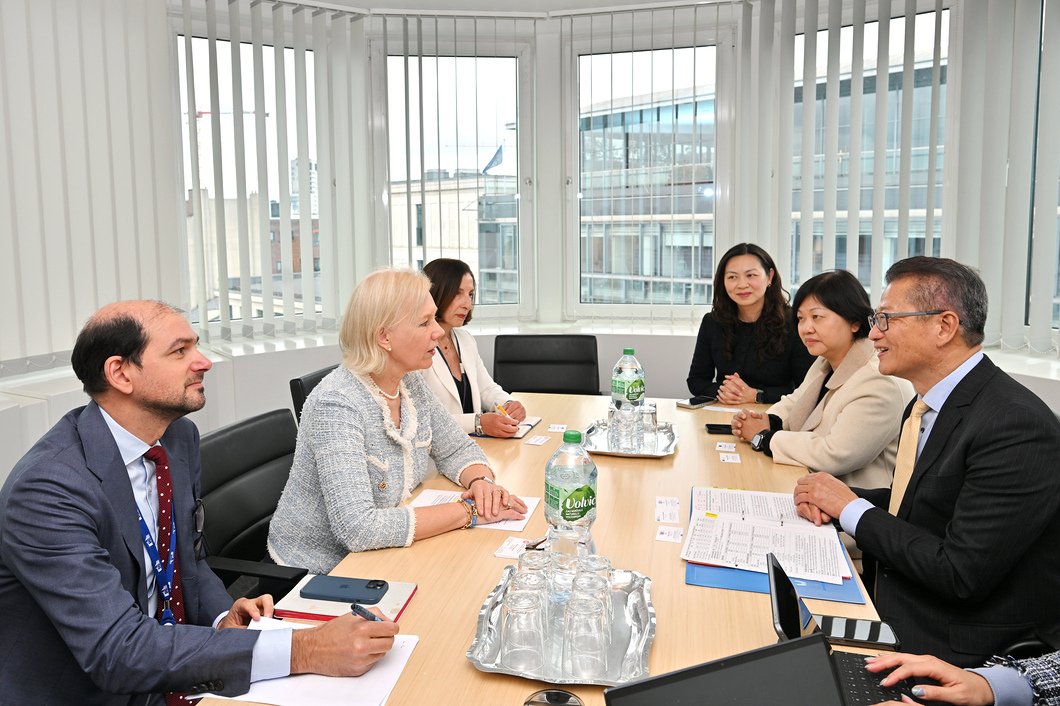
| Meeting with the Deputy Director-General for Financial Stability, Financial Services and Capital Markets Union of the European Commission, Dr Alexandra Jour-Schroeder in Brussels, Belgium. |
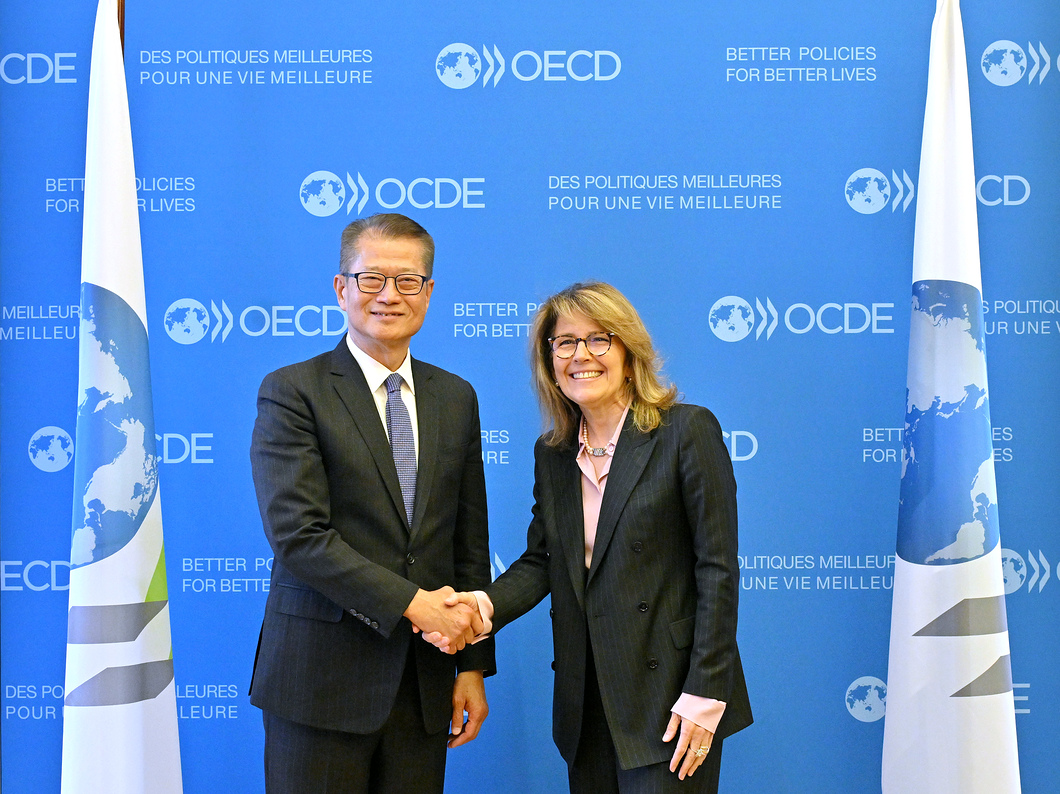
|
| In Paris, Meeting with the Deputy Secretary-General of the Organisation for Economic Co-operation and Development, Ms Fabrizia Lapecorella in Paris, France. |
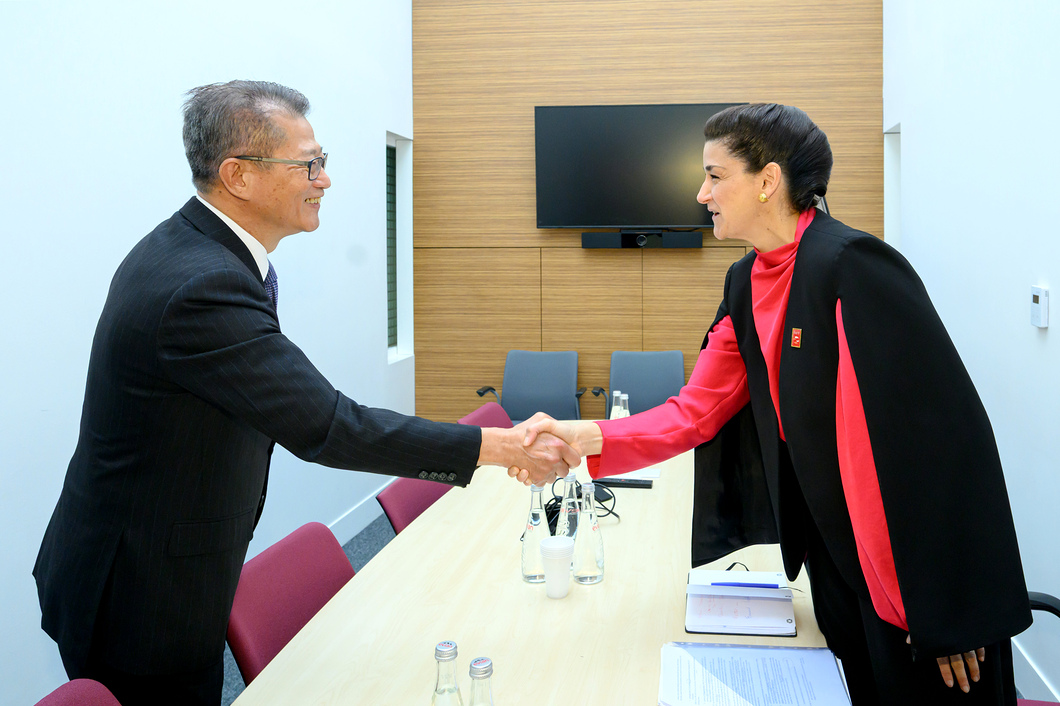
|
| Meeting with the President of the Financial Action Task Force, Ms Elisa de Anda Madrazo. |
Hong Kong and Europe, of course, do not see eye to eye on every issue, and this underscores the importance of maintaining communication and dialogue. Europe is concerned about its trade balance with our country, particularly on the trade deficit in goods. However, trade is fundamentally a process of division of labour based on comparative advantages. It is also a matter of consumer choice. Even if Europe records a trade deficit with China, it should be noted that European companies investing in China export nearly 40% of the goods produced back to Europe. In other words, while the trade surplus is in China, the profits go to European investors. Moreover, Europe still restricts exports to China in certain areas. Beyond trade in goods, Europe has recorded a trade surplus in services with our country for more than a decade. Many European companies are family-owned and perform well in their home markets. But their knowledge and understanding of China and the wider Asia-Pacific market can be further deepened. This region is where opportunities for their future development lie, and Hong Kong is the best entry point for them to seize these opportunities and expand their business. Meanwhile, high-quality Mainland enterprises are accelerating the development of their global industrial and supply chain networks, including in Europe. Hong Kong is well positioned to play a key bridging role in supporting their expansion overseas.
In passing, the International Monetary Fund published an assessment report last week that commended Hong Kong's resilient and stronger-than-expected economic growth. It also reaffirmed Hong Kong's position as an international financial centre. The report highlighted Hong Kong's "super connector" role as a key advantage. It also recognised our policies to advance digital finance, and acknowledged that initiatives such as the development of the Northern Metropolis can strengthen cross-boundary integration, support innovation and promote high value-added services.
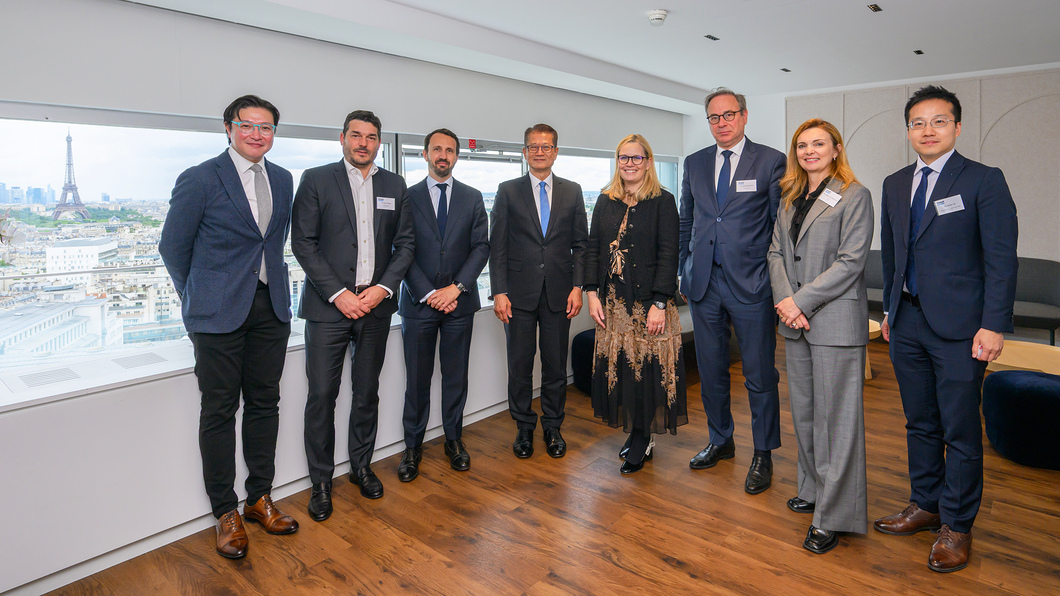
|
| Meeting with key members of the French Asset Management Association in Paris, France. |
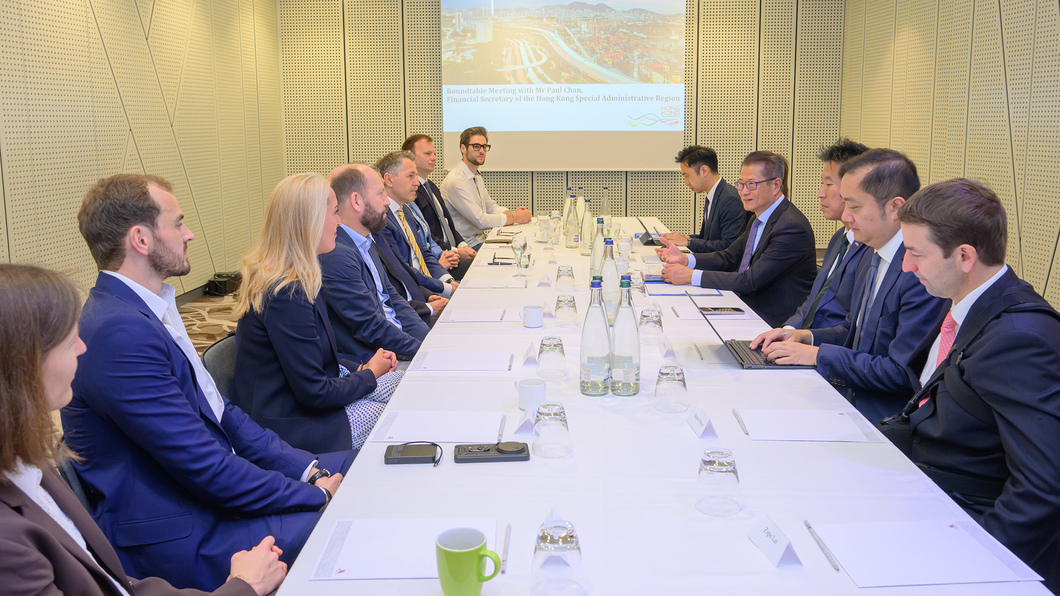
|
| Attending a roundtable meeting with representatives of various private equity and venture capital funds in Zurich, Switzerland. |
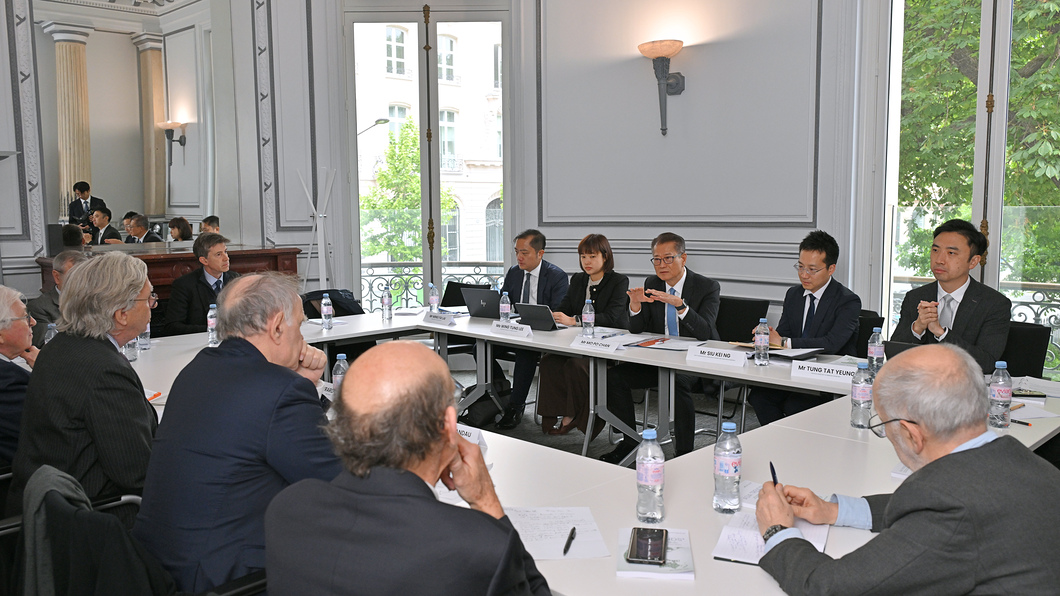
|
| Meeting with board members of a think tank, Asia Centre Paris, in Paris, France. |
Some representatives from the European Union and international organisations whom I met during this visit to Europe had not visited Hong Kong since the pandemic. Through these face-to-face meetings, candid exchanges and briefings, their understanding of the Hong Kong market was deepened and their positive expectation for Hong Kong's future development strengthened. Some previous misconceptions and misunderstandings were also addressed.
There were European representatives who said that they welcomed investment by Mainland enterprises, which could bring capital, technology and local jobs, but at the same time harboured concerns that European companies may face increased competition as a result. I invited them to organise delegations to visit Hong Kong and the GBA. Such visits will help them get a better grasp of the opportunities here and explore flexible models of cooperation, creating opportunities for both sides to foster more stable, long-term and mutually beneficial development.
May 24, 2026