Blog
Advancing Growth in Both Quality and Scale
As Hong Kong enters the third day of the Golden Week holiday, the city remains vibrant, with strong foot traffic and a positive business atmosphere. According to Immigration Department figures, more than 602,000 visitors entered Hong Kong through various control points in the first two days of May, representing a 6% year-on-year increase. Over the past few days, streets, shopping malls and country parks have been bustling with visitors and local residents alike. Many retailers and restaurants expect solid business performance during this Golden Week holiday period.
Over the past year, the local consumption market has shown a clear recovery trend. Businesses have actively upgraded and adapted to changing consumption patterns, while improving service standards and product quality. The Government has also continued to stage mega events to attract more visitors. At the same time, local spending by residents returned to growth in the second quarter of last year, and has strengthened further since the start of this year. Data from a major electronic payment platform in Hong Kong show that residents’ daily consumer spending has increased year-on-year for six consecutive quarters. In the first quarter of this year, retail- and dining-related spending rose by 5.2%, while spending at non-fast-food restaurants increased by nearly 8%.
|
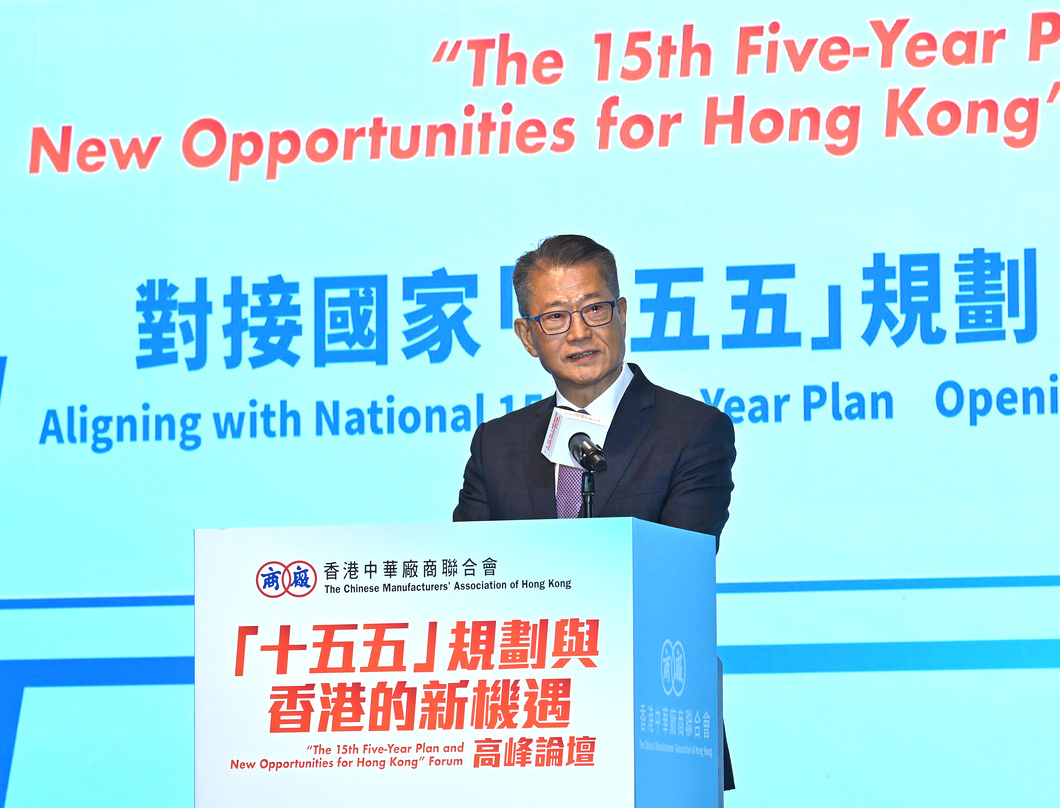
| Speaking at “The 15th Five-Year Plan and New Opportunities for Hong Kong” Forum last week. |
Asset market sentiment has remained positive. Stock market turnover stayed active, while the residential property market continued to improve. In the first quarter of this year, the unemployment rate fell to 3.7%, and the latest figures show that full-time employees’ income rose by more than 3%. Inbound tourism also remained strong, with visitor arrivals up 17% year on year to more than 14.3 million—a new post-pandemic quarterly high. For the full year, arrivals may exceed the original estimate of 53.8 million, lifting inbound tourism-related spending to over HK$240 billion, up 9.5% from last year. Together, these trends should further improve the outlook for the local retail and catering sectors, and continue to support overall economic growth and employment.
With private consumption continuing to improve, and exports and fixed investment remaining strong, the advance estimate for the first-quarter GDP, to be released this week, is expected to grow faster than the revised 4.0% recorded in the fourth quarter of last year. It will be the strongest quarterly expansion in nearly five years.
As one of the region’s major re-exports hubs, Hong Kong has long counted on exports as a key driver of economic growth. In the first quarter of this year, exports remained strong, rising 32% in value terms—the 25th consecutive month of growth and the best quarterly performance in five years. In March alone, export value increased by nearly 36%. Strong global demand for AI-related products and electronic goods has helped to offset, at least in part, the impact of geopolitical tensions on Hong Kong’s exports and economy.
By product category, growth was especially strong in two areas. Exports of “electrical machinery, apparatus and appliances, and electrical parts thereof” rose by more than 40%, driven by demand for integrated circuits; while exports of “telecommunications and sound recording and reproducing apparatus and equipment” increased by over 63%, supported by demand for communications equipment. By market, amid the deep reconfiguration of regional production and supply chains, Hong Kong’s exports to the Mainland and ASEAN grew by nearly 35% and 38% respectively. The Mainland’s industrial chain remains the world’s largest, most comprehensive and most efficient, with advantages that are difficult to replace. Against this backdrop, Hong Kong’s exports to the United States and the European Union also rose by more than 47% and 15% respectively.
|
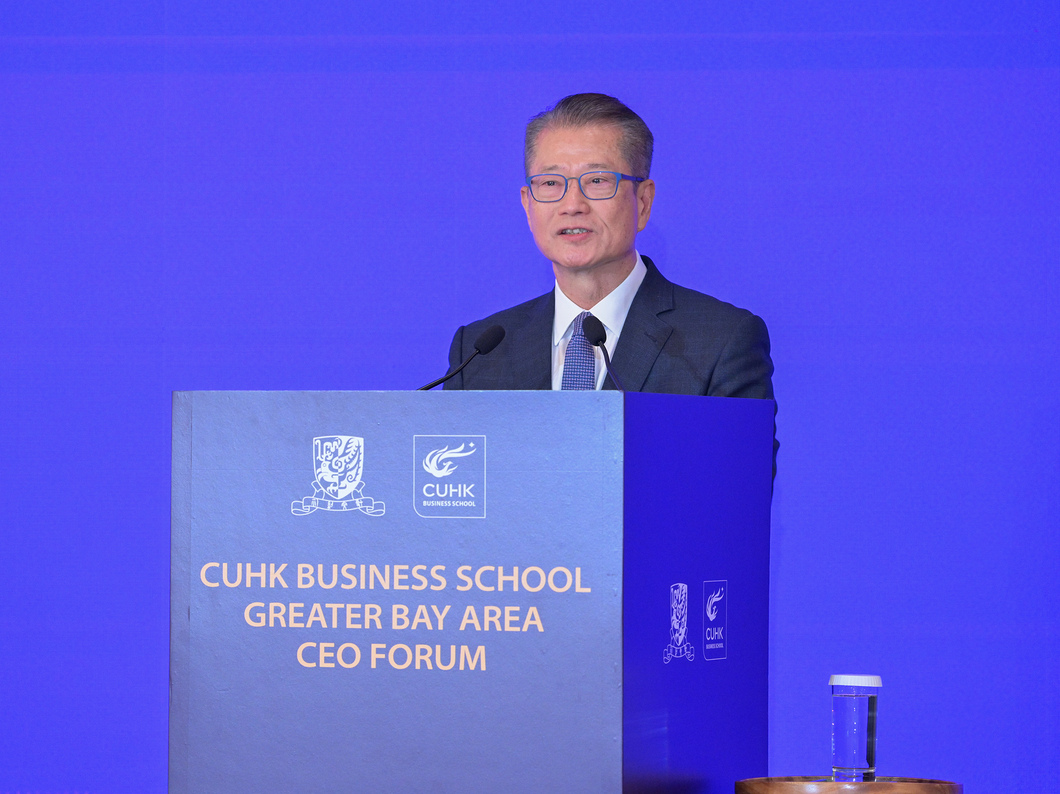
| Speaking at the CUHK Business School Greater Bay Area CEO Forum last week. |
While geopolitical developments have created challenges, Hong Kong, as an international trade centre, continues to gain new growth drivers and fresh opportunities, with both the pace and quality of growth improving. Under the National 15th Five-Year Plan, the country is accelerating the development of a modernised industrial system, deepening the integration of technological and industrial innovation, upgrading industries towards greater intelligence, greenness and integration, and strengthening complementarity and division of labour across regional production and supply chains. By leveraging its distinctive strengths to serve the country’s development needs, Hong Kong is playing an even stronger and more effective role.
We are accelerating efforts to develop Hong Kong into a global centre for high value-added supply chain management. By building a smarter, more data-driven and efficient port, expanding innovative trade financing channels, and strengthening high value-added professional services—including legal, accounting and ESG advisory services—we aim to enhance Hong Kong’s role as an international trade centre. We are also working to attract more Mainland and overseas enterprises to establish international or regional headquarters and treasury centres in Hong Kong, further strengthening the city’s headquarters economy.
|
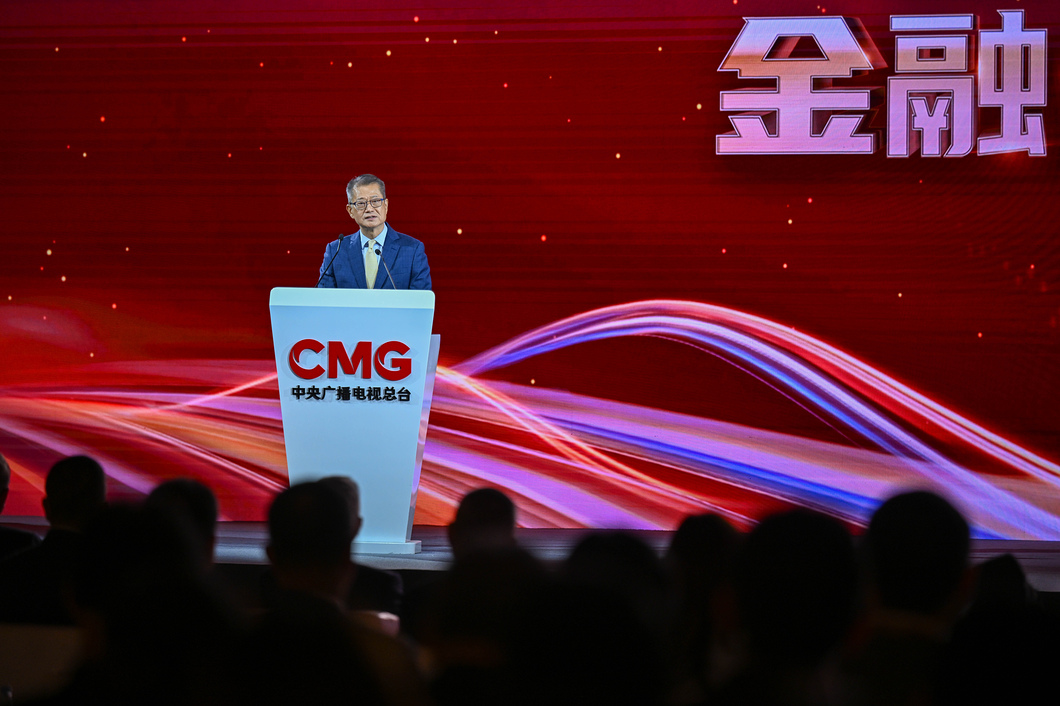
| Speaking at the CCTV Financial Power — Hong Kong Financial Night last week. |
At the same time, we are advancing an “AI+” and “Finance+” development strategy to accelerate industrial upgrading, strengthen economic momentum and resilience, and better prepare Hong Kong for potential headwinds. Geopolitical tensions are weighing on the global economy, with the prolonged conflict in the Middle East adding to the risks. Last month, the International Monetary Fund (IMF) revised its global growth forecast for this year down to 3.1%, 0.2 percentage point lower than its projection at the start of the year and below the 3.4% growth recorded in 2025. The IMF also warned that a prolonged or escalating conflict could have a more serious impact on global growth and inflation.
We are closely monitoring developments in the Middle East and the impact of rising international oil prices on Hong Kong’s key sectors, SMEs, and the wider economy. To ease pressure on industries with high fuel costs, particularly transport, the Government has announced a targeted short-term support package of about HK$2 billion, including diesel and liquefied petroleum gas subsidies, as well as a 50% reduction in government tunnel tolls for commercial vehicles. In addition, to help local SMEs navigate rapidly changing market conditions, we have asked the Hong Kong Monetary Authority and the banking sector to introduce a new round of support measures, including larger dedicated SME funds, credit relief for affected sectors, and more flexible loan repayment arrangements.
Despite a complex and fast-changing external environment, Hong Kong’s economy is advancing with stronger momentum and higher-quality growth. To sustain this progress, we must stay firmly anchored in stability while pursuing development proactively. In particular, we should accelerate the adoption of artificial intelligence across sectors and strengthen talent development, so that digital and smart transformation is more deeply embedded in industries and business operations. By building on its resilience and steady development, Hong Kong will be better placed to withstand global uncertainty and external shocks, and to achieve faster, higher-quality economic growth.
May 3, 2026