Blog
Attracting Strategic Enterprises to Drive the Development of Emerging Industries
Today, the world is undergoing changes of a scale not seen in a century, and the pace is accelerating. Geopolitical dynamics are becoming more complex and fluid, while the global division of labour is steadily evolving toward deeper regional cooperation. At the same time, frontier technologies, particularly artificial intelligence (AI), are fundamentally reshaping production systems, business models and consumption patterns. Under the dual pressures of climate change and energy security, the global transition to a greener economy is also gathering momentum. Against this backdrop, we must see today through the lens of posterity, remain firmly committed to technology and innovation, and accelerate the development of emerging and future industries.
Take AI as an example. From large language models to agentic AI, and from chatbots to embodied intelligent robots, human–machine collaboration is already delivering substantial productivity gains for businesses. A comprehensive push to deepen AI adoption, application and innovation will not only create new industries, but also inject fresh momentum into existing sectors. This will strengthen the core competitiveness across finance (intelligent risk management and compliance), healthcare (drug discovery and clinical solutions), trade (smart supply chains), shipping (smart port and logistics operations) and professional services (AI-assisted analysis). In this year's Budget, we have proposed establishing the Committee on AI+ and Industry Development Strategy. Bringing together academics, experts, enterprises and park companies, the Committee will develop strategic priorities and foster enabling conditions with a view to accelerating industrial upgrading and transformation.
On the green transition, sustainable development must remain at the core. Amid energy-supply uncertainties heightened by geopolitical turbulence, the global demand for greater energy resilience and autonomy has become more pressing. Technologies such as new energy vehicles, high-efficiency energy storage (batteries), smart grids and green hydrogen are not only tools for reducing emissions; they will become the essential foundations for future industrial production and economic activity. Together, they will deliver energy solutions that are more reliable, cost-effective and compatible with environmental stewardship.
|
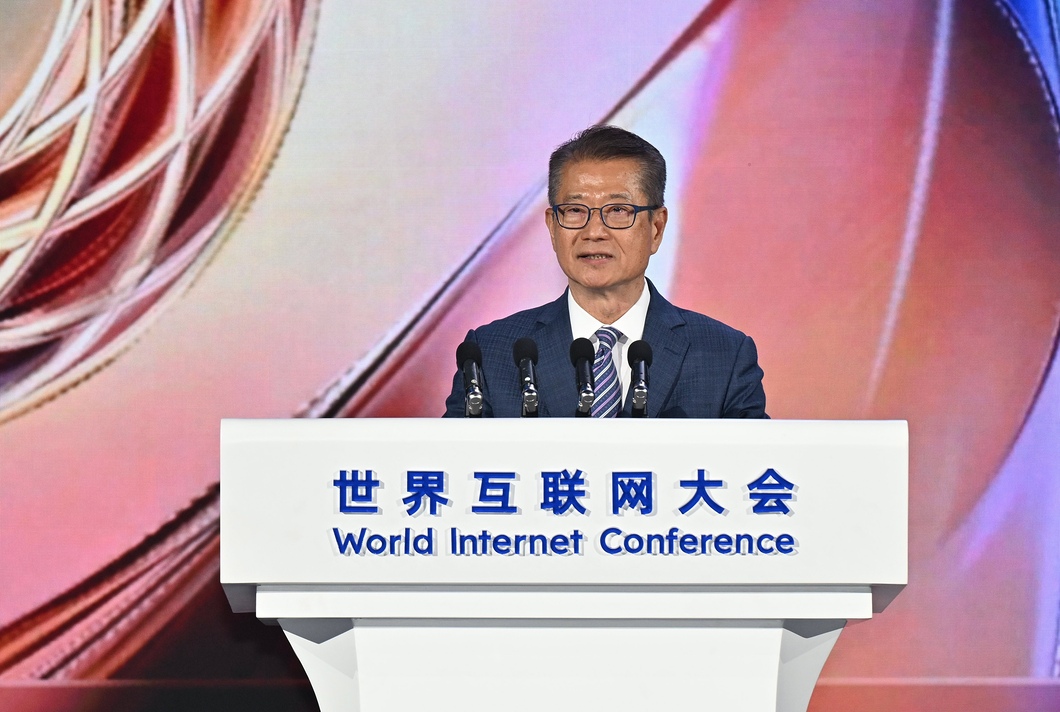
| Speaking at the Main Forum of the 2026 World Internet Conference Asia-Pacific Summit last week. |
|
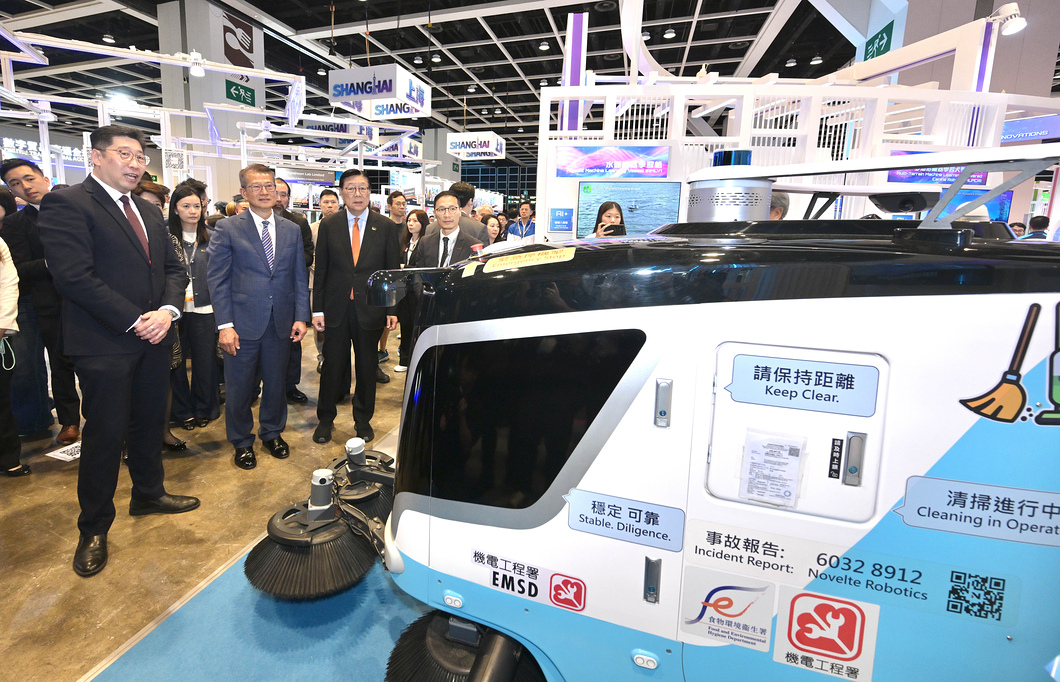
| Attending the fourth InnoEX last week. |
|
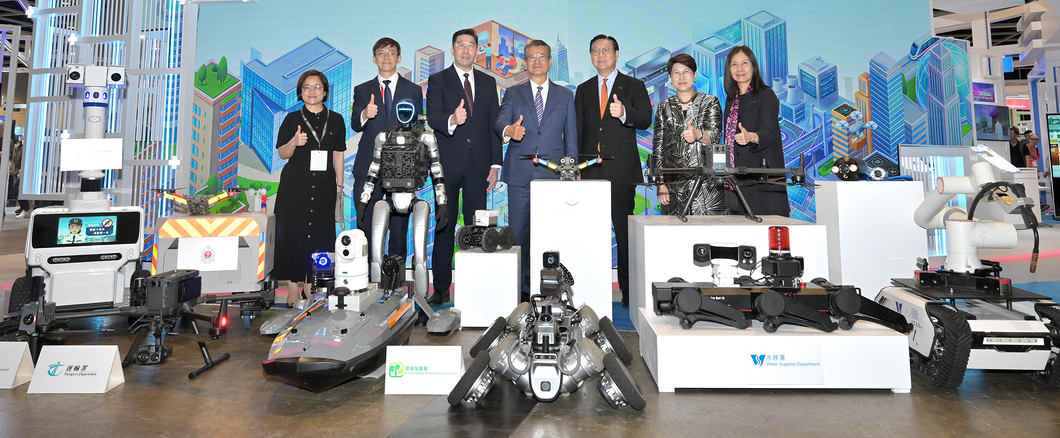
| Attending the fourth InnoEX last week. |
This year marks the opening year of the National 15th Five-Year Plan. As set out in the Plan's Outline, building a modernised industrial system, and accelerating the realisation of high-level technological self-reliance, are among the top priorities. Our country's science and technology innovation capacity now ranks among the world's leaders, and deeper integration between technological and industrial innovation is advancing across the board, accelerating development in all sectors.
Hong Kong is proactively aligning with the National 15th Five-Year Plan. As we deepen our integration into and contribution to the overall national development, we will take root in the Greater Bay Area while remaining connected to the world. We will focus on high value-added industries, fully leveraging the unique strengths of the "one country, two systems" framework. Hong Kong's advantages are clear. Our standards are aligned with international best practices, and key factors of production flow freely. We also offer strong basic research capabilities, outstanding professional services, a deep pool of talent, and a comprehensive chain of financial services. In recent years, these strengths have attracted many strategic enterprises to establish a presence in Hong Kong. This is accelerating the development of a more dynamic innovation ecosystem in the city.
The Office for Attracting Strategic Enterprises (OASES) has successfully attracted over 100 strategic enterprises, with a focus on life and health technology, AI and data science, fintech, advanced manufacturing and new energy, as well as cultural and creative technology. These enterprises come from the Mainland as well as Europe and the United States. This has underscored Hong Kong's robust business and innovation environment, and its appeal as a two-way platform connecting the Mainland and the rest of the world.
Multiple indicators have shown that these enterprises are positioning Hong Kong as an international hub for R&D and operations, and are making steady progress in their development here. For example: (1) more than half of them have already been listed in Hong Kong (52 companies), with another 16 preparing for listing; (2) about 90% (89 companies) have established, or are in the process of establishing, R&D centres; and (3) around three quarters (76 companies) have set up global or regional headquarters in Hong Kong.
Their tangible contributions to Hong Kong's economy are gradually becoming evident. To date, their combined cumulative actual investment has reached HK$22.5 billion, more than 30% above the expected figure for the relevant stage. They have also created over 8,000 jobs. These positions span a range of high value-added fields, including research, AI, healthcare, cybersecurity and professional services. As of March this year, the total commercial and industrial floor area occupied by these strategic enterprises reached 2.6 million square feet, representing a 40% year-on-year increase. This reflects their continued expansion of R&D, production and operational activities in Hong Kong.
|
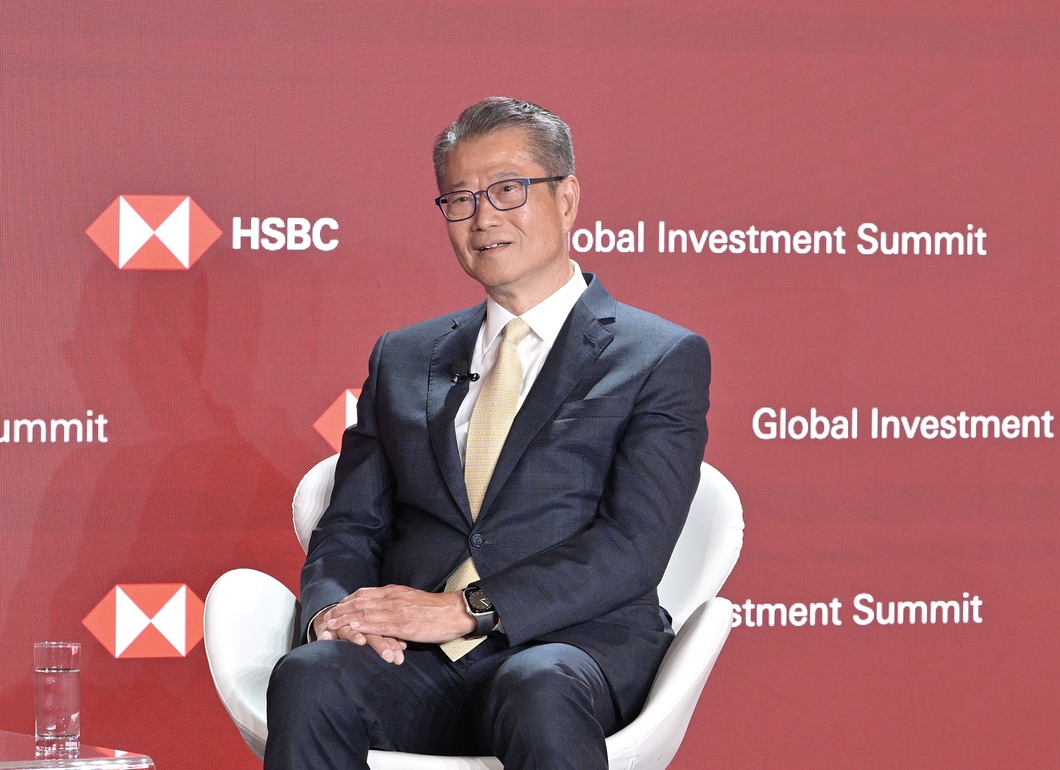
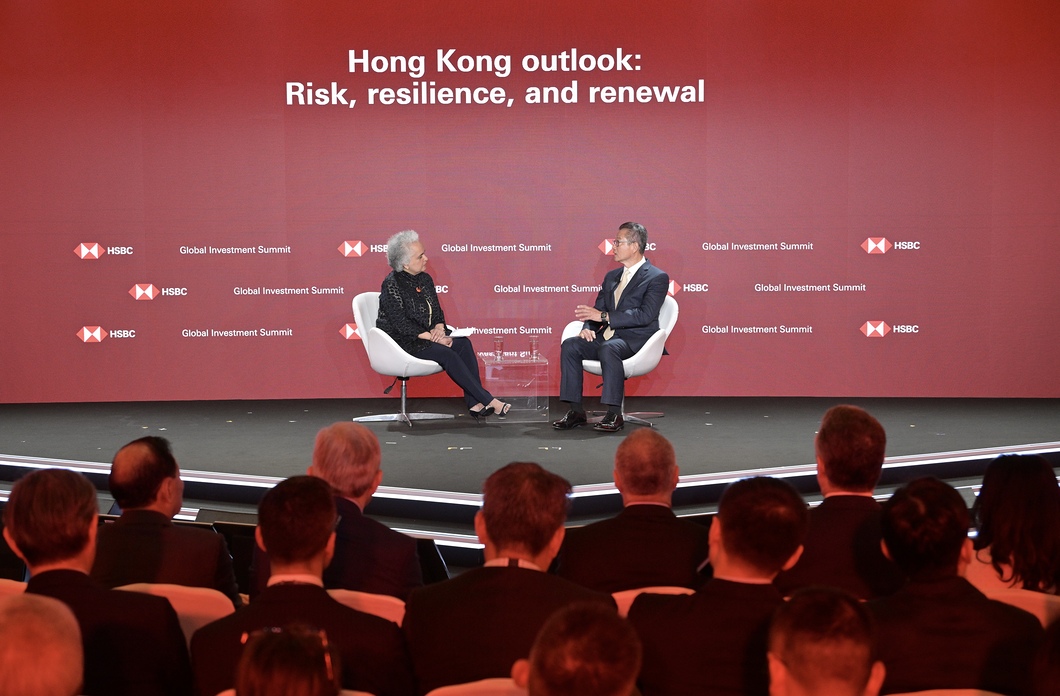
| Attending the HSBC Global Investment Summit 2026 last week. |
|
| Attending the HSBC Global Investment Summit 2026 last week. |
Beyond their direct economic contributions, it is equally important that most of these enterprises have begun collaborating with local universities, research institutions and businesses. This is fostering closer industry–academia–research collaboration in Hong Kong. At the same time, these enterprises are advancing the application of technologies across a wide range of local use cases and stepping up internationalisation efforts. In doing so, they are contributing to technology upgrading across local industries and to smart-city development.
For example, an intelligent driving enterprise has selected Hong Kong as its international R&D centre, obtained a pilot licence under the new local regulatory framework, and completed cross-district autonomous driving tests. A smart logistics enterprise has successfully deployed its technologies at the Hong Kong International Container Terminals and air cargo terminals, enhancing the efficiency and competitiveness of Hong Kong as a logistics hub while demonstrating cutting-edge R&D outcomes to the international community. In addition, a number of enterprises have established R&D centres, laboratories and pilot production lines at the Hong Kong–Shenzhen Innovation and Technology Park in the Northern Metropolis, laying the groundwork for future advanced manufacturing facilities. This will also add higher value-added content to "Made in Hong Kong" and help strengthen the foundation for Hong Kong's new industrialisation.
Tomorrow, we will announce a new batch—the sixth batch—of strategic enterprises. The list will include several companies with market capitalisation of over HK$100 billion, spanning frontier areas such as life and health technology, the low-altitude economy, artificial intelligence, new energy materials, cross-boundary financial infrastructure and fintech. Among them are globally leading life and health technology enterprises that will conduct clinical research in Hong Kong, further strengthening Hong Kong's position in international medical R&D. Several enterprises will also establish R&D centres, treasury centres and regional headquarters in Hong Kong, reinforcing our role as a key hub connecting the Mainland and global markets and further energising the local innovation-and-technology ecosystem.
Looking ahead, we will continue to attract more high-quality enterprises at full speed and provide more targeted policy support to facilitate their development in Hong Kong. We will promote deeper integration across the innovation, industrial and capital chains. Through a dual-track approach—attracting enterprises from outside Hong Kong while strengthening support for local start-ups—Hong Kong will accelerate the development of a more diversified, more resilient and more internationally competitive industrial structure. This will enable Hong Kong to play a more proactive role in the country's high-quality development and inject sustained momentum into our own economy.
April 19, 2026