Blog
Stay Positive and Move Forward with Care
Entering 2026, global market conditions remain highly volatile, driven by escalating geopolitical instability and persistent uncertainty. These dynamics have triggered rapid and unpredictable cross-border capital flows. Even traditionally safe-haven assets have undergone sharp corrections after repeatedly reaching record highs. Gold is a notable example: after rising steadily over the past four years, its price surged by nearly 30% in January, approaching a historic high of US$5,600. However, in recent days, it experienced a significant pullback, at one point falling more than 12% from its peak. Commodities have also rotated as market leaders, contributing to short-term rallies. In the foreign exchange market, the United States (US) dollar index dropped to a near four-year low, while the Japanese yen came under renewed pressure. Even some previously strong US technology stocks have registered notable sell-offs.
Looking back at January, Hong Kong stocks delivered a strong performance. The Hang Seng Index closed at 27,387 points last Friday, marking a monthly gain of nearly 7%. Average daily turnover exceeded HK$272 billion, representing a year-on-year increase of 90%. Despite heightened external volatility, Hong Kong’s financial system remained robust and functioned smoothly, with total bank deposits surpassing HK$19 trillion.
The developments in January have further reinforced market expectations that global financial conditions will remain turbulent this year. In particular, unpredictable geopolitical shifts are likely to influence both the direction and velocity of international capital flows. In the face of inevitable volatility and external market fluctuations, it is essential that we maintain strong buffers within our financial system and allocate sufficient fiscal resources to effectively respond to potential shocks.
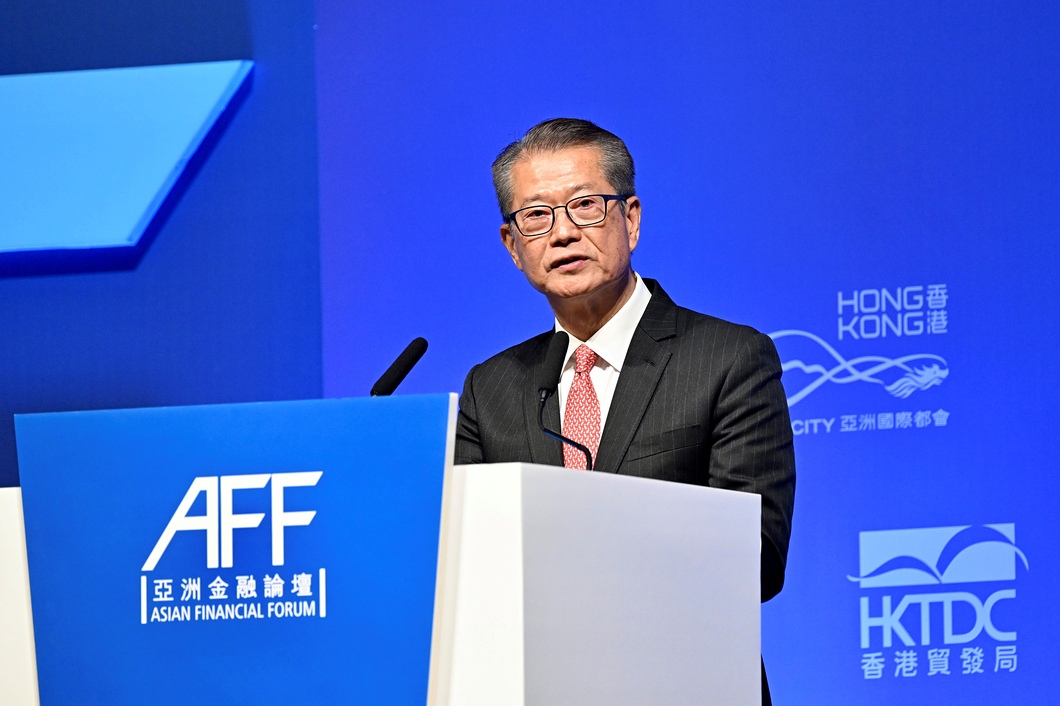
|
| Speaking at the Asian Financial Forum (AFF) Keynote Luncheon last Monday. |
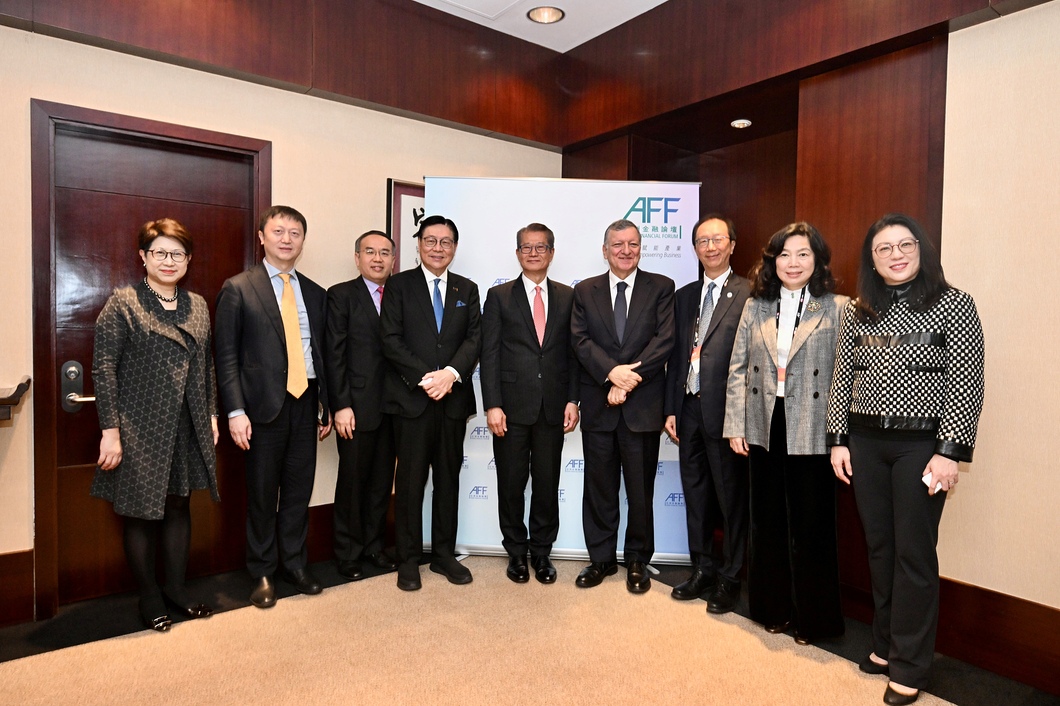
|
| Engaging with guests at the AFF, including one of the keynote speakers, former President of the European Commission and former Prime Minister of Portugal, Dr José Manuel Barroso (fourth right). |
Last week, the Government released its fiscal position for the first nine months of the 2025–26 financial year (April to December), recording a consolidated surplus of HK$43.9 billion. This outcome reflects, in part, seasonal factors—including the peak collection period for profits tax and salaries tax—as well as proceeds from bond issuance. As in previous years, Government revenue is expected to taper off between January and March, while recurrent public expenditure continues at a steady pace.
Our fiscal position is improving, both in the Consolidated Account and the Operating Account which reflects recurrent revenue and expenditure. On the operating front, the strong financial market performance last year—particularly the doubling of average daily turnover in the stock market to around HK$250 billion—has resulted in higher-than-expected stamp duty revenue. Coupled with ongoing fiscal consolidation efforts that have effectively contained the growth of government spending, we now expect the Operating Account to return to surplus within this financial year (2025–26), one year ahead of the original schedule. For the Capital Account, the Government will continue to scale up infrastructure investment, including in strategic initiatives such as the Northern Metropolis. As such, bond issuance will remain necessary to support such commitments.
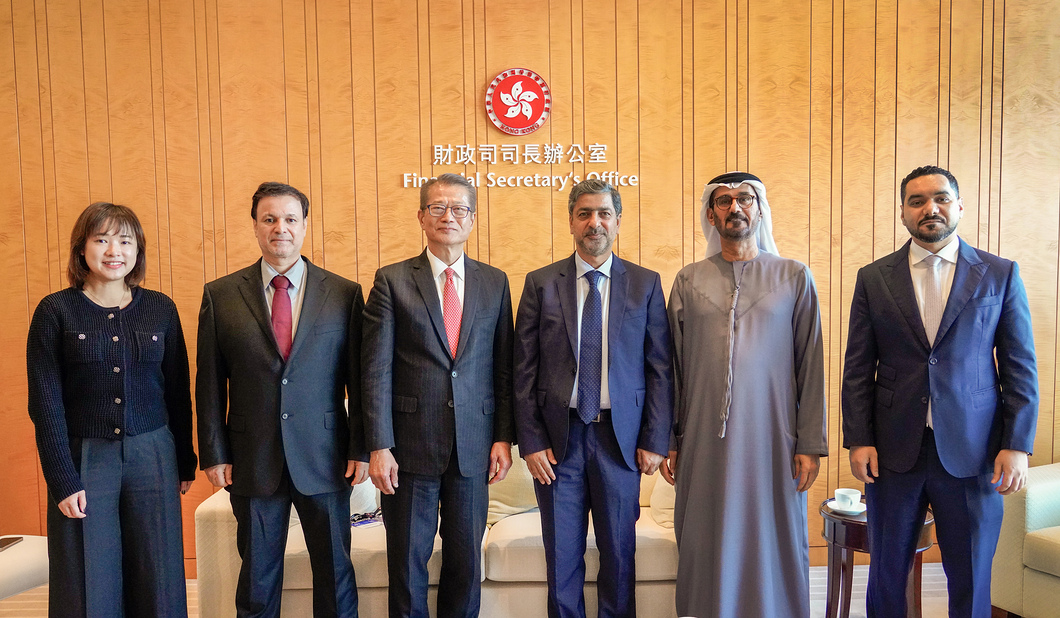
|
| Meeting with the Undersecretary of the Ministry of Finance of the United Arab Emirates (UAE), Mr Younis Haji Al Khoori (third from right), and the UAE Ambassador to China, Mr Hussain bin Ibrahim Al Hammadi (second from right), when the AFF was held. |
That said, even with an improving fiscal position, we must continue to manage public resources with prudence, ensuring that the growth of public expenditure does not exceed the growth of revenue. During the Budget consultation, representatives from various sectors and members of the public across different segments of the society have expressed calls for enhanced support to address their needs. At the same time, in light of the profound challenges and opportunities presented by technological transformation—particularly in areas such as artificial intelligence—the market expects the Government to scale up investment, accelerate the development of high value-added industries, and create more quality job opportunities. These efforts are essential to driving economic growth and ensuring its benefits are more broadly and equitably shared across the community.
The aspiration to build a vibrant economy and advance development is widely shared across the society. Growing the economic pie will equip us with more resources to address a broad range of social needs more effectively. With the staunch support of our country and the concerted efforts of the Government and the community, Hong Kong’s economy grew by 3.5% in 2025, outperforming the initial forecast. Overall investment also picked up notably, registering a year-on-year increase of 10.9% in the fourth quarter, marking the fourth consecutive quarter of positive growth and resulting in an increase of 4.5% for the year as a whole.
Boosted by a series of mega events and a rebound in asset markets, private consumption increased by 1.6% last year, reversing the decline recorded in the previous year. The value of retail sales for December, scheduled for release this week, is also expected to show continued growth, with the pace of expansion slightly accelerating compared to the preceding month.
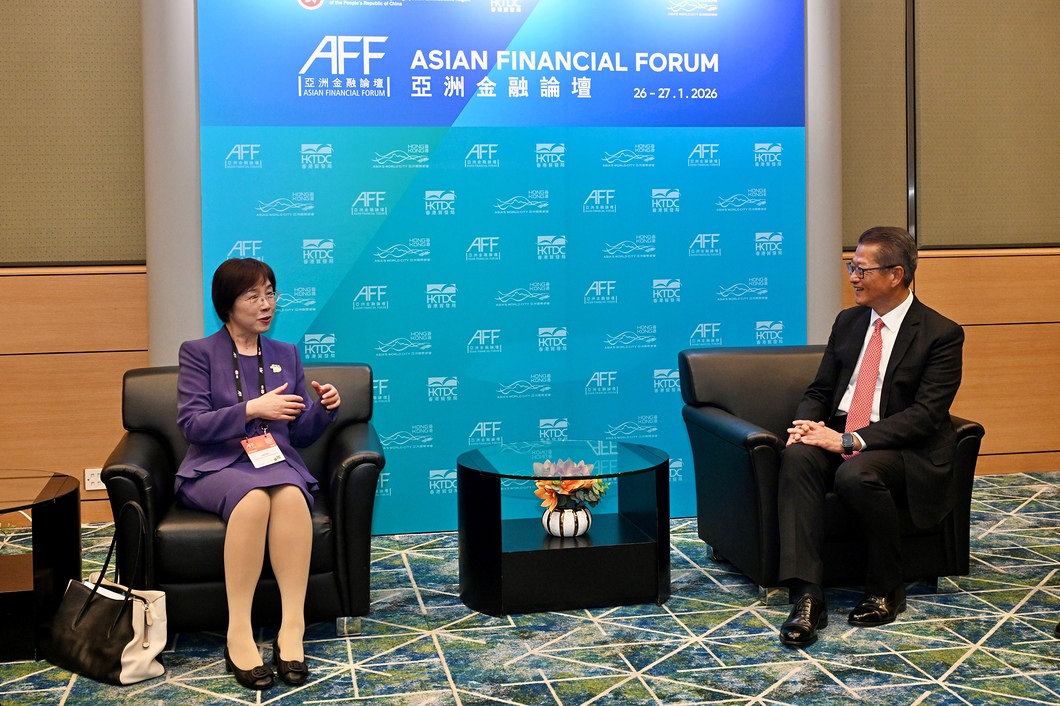
|
| Meeting with the President and Chair of the Board of Directors of the Asian Infrastructure Investment Bank, Ms Zou Jiayi (left), at the AFF. |
|
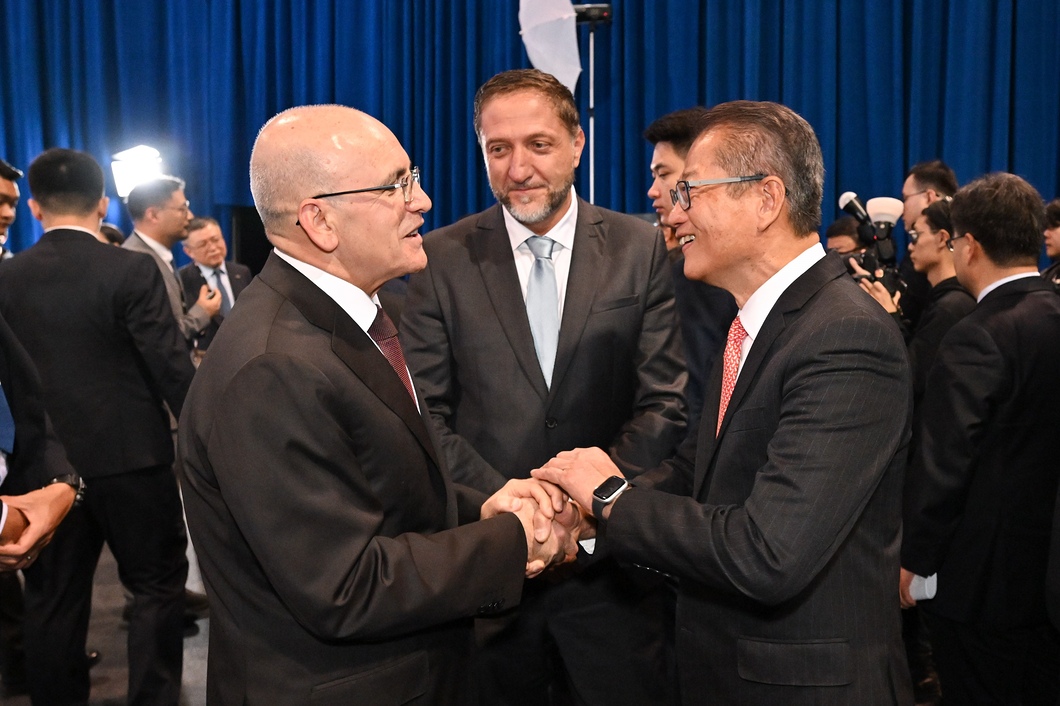
| Engaging with the Minister of Treasury and Finance of Türkiye, Mr Mehmet Şimşek (left), and the Deputy Prime Minister and Minister of Finance of Slovenia, Mr Klemen Boštjančič (centre), at the AFF. |
|
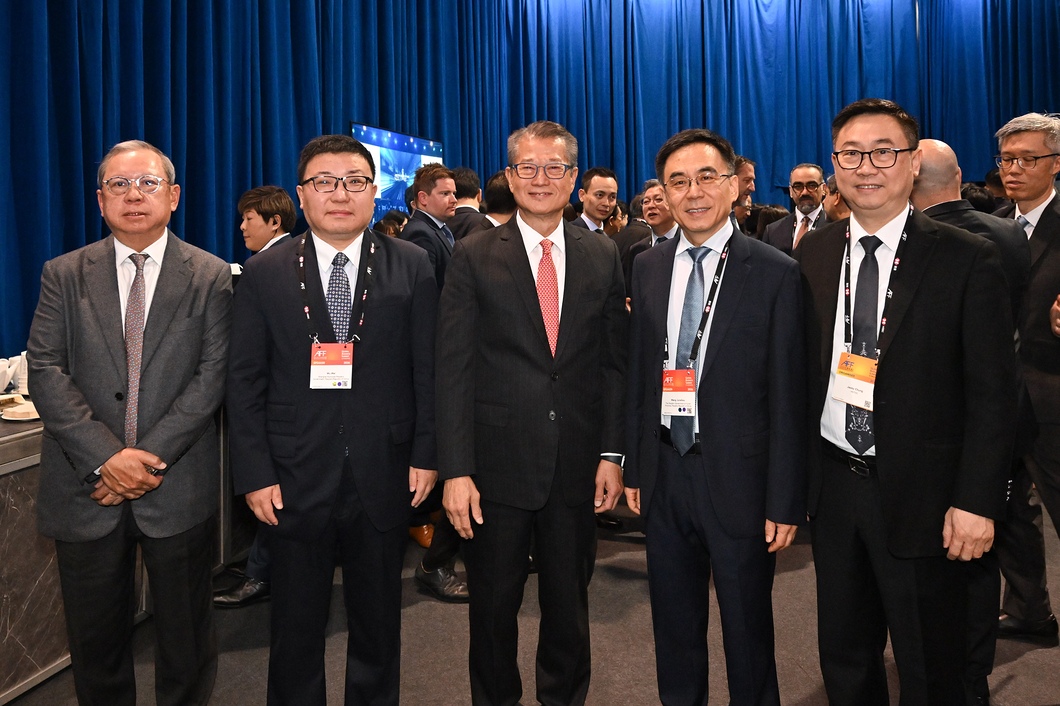
| Engaging with guests at the Global Business Summit, including the Vice Mayor of Shanghai, Mr Wu Wei (second from left), and the Vice Governor of Hunan Province, Mr Wang Junshou (second from right). |
Confidence among overseas enterprises and investors in Hong Kong continues to strengthen. Last year, the number of companies in Hong Kong with parent companies in the Chinese Mainland and overseas increased by more than 10%, surpassing 11,000. The start-up ecosystem also expanded, with the number of start-ups rising by over 10% to exceed 5,200. According to recent surveys conducted by foreign chambers of commerce, a majority of member companies expressed optimism about Hong Kong’s business outlook, with the proportion holding positive expectations reaching a recent high. During the 19th Asian Financial Forum last week, I met with political and business leaders from Europe, the US and the Middle East, as well as representatives from the Mainland and multilateral organisations. Across the board, they shared positive views on Hong Kong’s outlook and recognised the emergence of new opportunities in our market.
As the global political and economic landscape continues to evolve rapidly, risks and volatility in the year ahead are expected to remain significant. We will press ahead with efforts to align with the country’s 15th Five-Year Plan and accelerate our integration into, and contribution to, the nation’s overall development. To this end, we must leverage finance to power technological innovation and support the upgrading of traditional industries, promote deeper integration between innovation and industrial development, and enhance the training for the workforce—particularly in skills development and technology application. These efforts will help raise the quality and expand the scale of Hong Kong’s economic growth.
February 1, 2026