Blog
Seizing Development Opportunities amid a Complex Global Landscape
Tonight, I will depart for Davos, Switzerland, to attend the Annual Meeting of the World Economic Forum. This year’s Meeting will bring together around 3,000 political and business leaders, as well as representatives from think tanks, non-governmental organisations and academia from over 100 countries and regions to discuss the challenges currently facing the international community. During the Meeting, I will engage with political and business leaders from around the world to exchange views on the global economy, deliver public speeches and participate in thematic discussions. I will also take the opportunity to promote the new opportunities that Hong Kong will embrace under the national 15th Five-Year Plan.
The theme of this year’s Meeting is “A Spirit of Dialogue”, which resonates deeply with the current international climate. Since the beginning of 2026, we have witnessed a troubling rise in unilateralism, protectionism and hegemonism, with some countries even flagrantly infringing on the sovereignty of others to pursue their own economic interests, severely undermining international norms. These actions have seriously eroded mutual trust, and will inevitably have far-reaching implications for the global economy and trade landscape. How to rebuild co-operation through dialogue is an urgent task that political and business leaders worldwide must address immediately. The Meeting will also focus on the paradigm shifts brought by innovative technologies such as artificial intelligence (AI), and how to better invest in people and enhance the skill levels of the workforce.
|
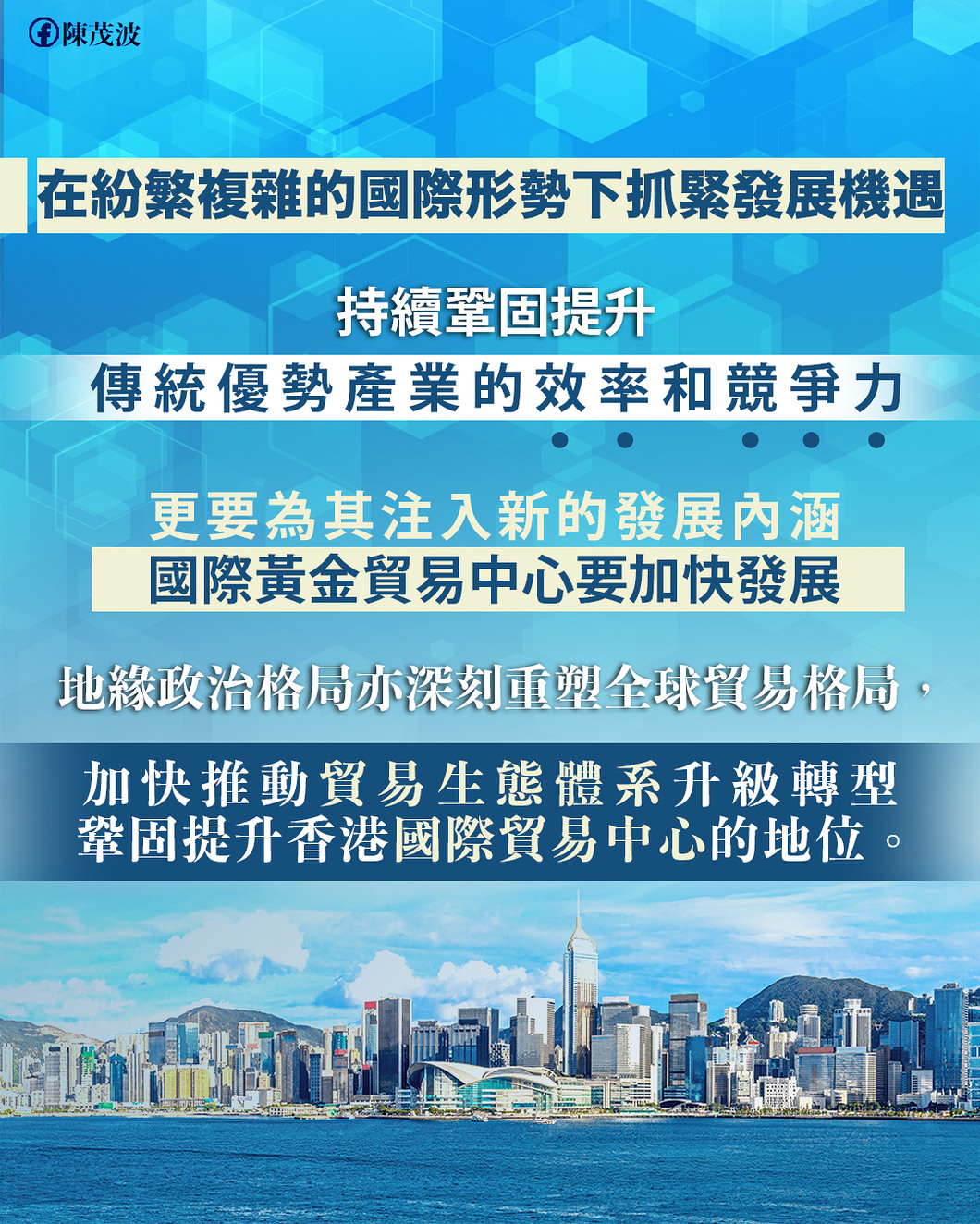
Amid the rapidly evolving international landscape, Hong Kong’s unique roles as a “super connector” and a “super value-adder” under the “one country, two systems” arrangement have become even more prominent, particularly in the context of a fast-shifting global economic and trade environment. While we continue to strengthen and enhance the efficiency and competitiveness of our traditional pillar industries, it is equally important to foster new drivers of growth. A prime example is the accelerated development of an international gold trading centre.
In recent years, international investors have shown a growing appetite for diversified asset allocations beyond US dollar-denominated holdings. As a result, gold has seen its role further solidified—as a central bank reserve asset, an investment vehicle and a hedge against risk. In 2025, gold prices surged by over 60%, marking the largest annual increase since 1979. By the third quarter of last year, the total value of global gold demand had risen 44% year-on-year, reaching US$146 billion. At the same time, there is strong global demand, particularly in Asia, for more diversified and reliable platforms for gold storage, trading, clearing and even pricing.
With the concerted efforts of the HKSAR Government and industry stakeholders, Hong Kong’s spot gold trading market has become significantly more active. As of last November, the average daily turnover of 99 gold on the Hong Kong Gold Exchange more than doubled year-on-year, reaching HK$2.9 billion. However, spot over-the-counter (OTC) gold transactions in Hong Kong currently require both counterparties to handle the clearing by themselves, which presents clear inefficiencies. To address this, we are expediting the establishment of a central clearing system for gold as a key financial infrastructure. This initiative aims to enhance the reliability and efficiency of gold trading and physical delivery in Hong Kong, lower transaction costs and boost market liquidity. It is our goal to commence trial run within this year, and we will invite the Shanghai Gold Exchange to participate in this important development.
At the upcoming 19th Asian Financial Forum next week, we will sign a memorandum of cooperation with the Shanghai Gold Exchange and announce our latest plans to take forward the establishment of a central gold clearing system—laying the foundation for mutual market access with the Mainland in the future.
The geopolitical landscape is not only changing global asset allocation strategies, but also fundamentally reshaping global trade patterns, restructuring industrial and supply chains, fostering new trade partnerships, and driving the emergence of innovative economic models. Hong Kong must accelerate the upgrading and transformation of its entire trade ecosystem to reinforce and enhance its position as an international trade centre.
While supporting Mainland enterprises in accelerating their pace of “going global”, we are also fast-tracking the digitalisation of Hong Kong’s logistics infrastructure and trade ecosystem. By leveraging innovative technologies and consolidating relevant data in a holistic manner, we aim to enhance the efficiency and management of trade logistics. This will also make it easier for enterprises to secure financing, enabling them to flexibly adjust their business strategies and effectively seize emerging business opportunities.
We are driving progress on multiple fronts. In the area of smart logistics, a major government-led digital infrastructure—the Port Community System—was officially rolled out last week, with participation from over 2,300 companies. Leveraging artificial intelligence and blockchain technology, the system provides one-stop, round-the-clock, real-time cargo tracking, significantly improving transparency and efficiency across Hong Kong’s logistics chain. The availability of more comprehensive and accessible data also opens up new opportunities for innovation in trade finance.
Under the leadership of the HKSAR Government, the Hong Kong Monetary Authority (HKMA), in collaboration with multiple government departments, is actively advancing Project CargoX. By effectively leveraging cargo and trade data and streamlining trade finance processes, the initiative aims to support SMEs in accessing trade financing more easily. This week, we will release the latest CargoX roadmap, built around three strategic pillars: data, infrastructure and connectivity. The roadmap will put forward 20 concrete recommendations to enhance Hong Kong’s digital trade finance ecosystem—paving the way for a more digitalised, efficient and competitive environment.
|
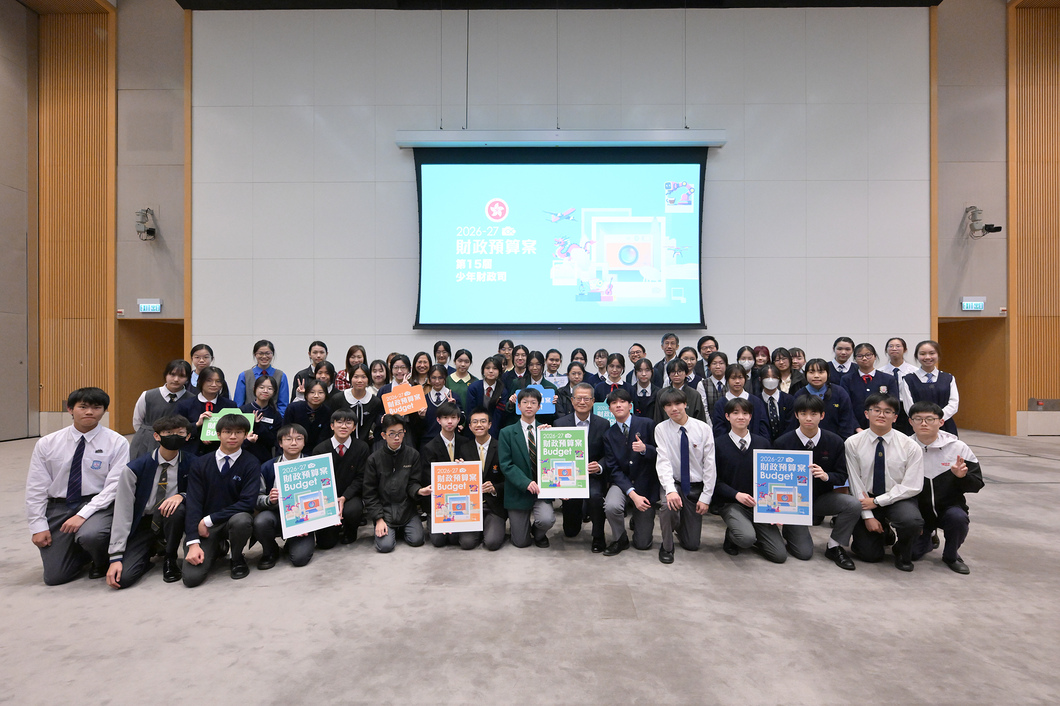
| Last week, I met with a group of secondary school students, listening to their views on the upcoming Budget. |
|
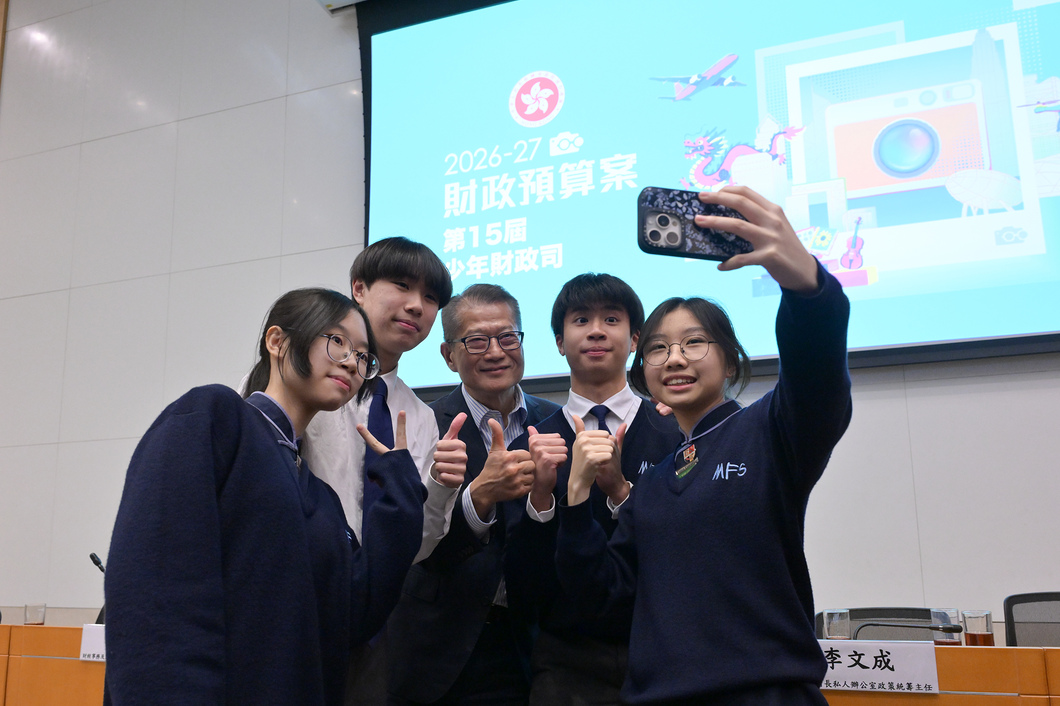
| Last week, I met with a group of secondary school students, listening to their views on the upcoming Budget. |
No matter how the international geopolitical landscape evolves, Hong Kong will remain committed to free and open policies, drawing on our collective strengths and unique advantages. We will continue to enhance the development of our traditional pillar industries through practical and targeted measures. Public consultation on the upcoming Budget is now underway, with a focus on key areas such as empowering the growth of various industries, creating more diverse and high-quality employment opportunities, strengthening public services, and improving people’s livelihoods. In evaluating different proposals, we must take a balanced and holistic approach, carefully considering a range of factors—including the external political and economic environment, the challenges of local economic transformation, the development needs of the community in the short, medium and long term, as well as the importance of managing public expenditure prudently.
January 18, 2026