Blog
From New York to Washington
I have just concluded my visit to New York and Washington, D.C. in the United States (US). While in Washington, D.C., I attended the Annual Meetings of the International Monetary Fund (IMF) and the World Bank Group (WBG) as a member of the Chinese delegation. I also met with representatives from various local think tanks to gain deeper insights into the views of global political and business leaders, experts and academics on a range of pressing international issues. In New York, I engaged with representatives from major local business chambers, financial institutions and think tanks to brief them on Hong Kong’s latest developments and competitive advantages, as well as to better understand their views and concerns. These efforts help strengthen the foundation for further co-operation with the US in trade, commerce and finance.
Attending the Annual Meetings of the International Monetary Fund and the World Bank Group in Washington, D.C. last week.
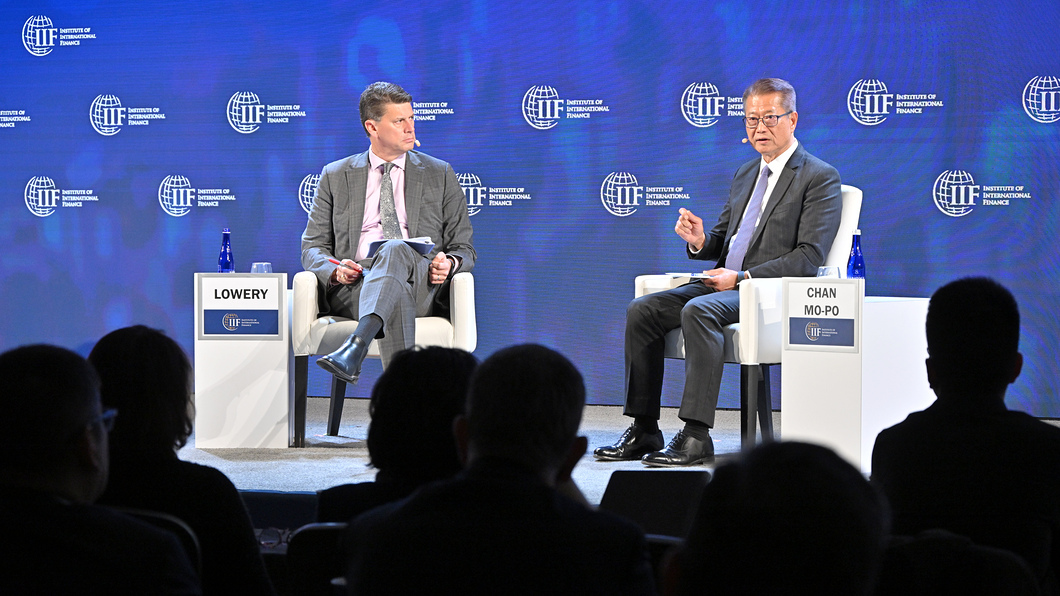
|
| Participating in an in-conversation session organised by the Institute of International Finance during the Annual Meetings. |
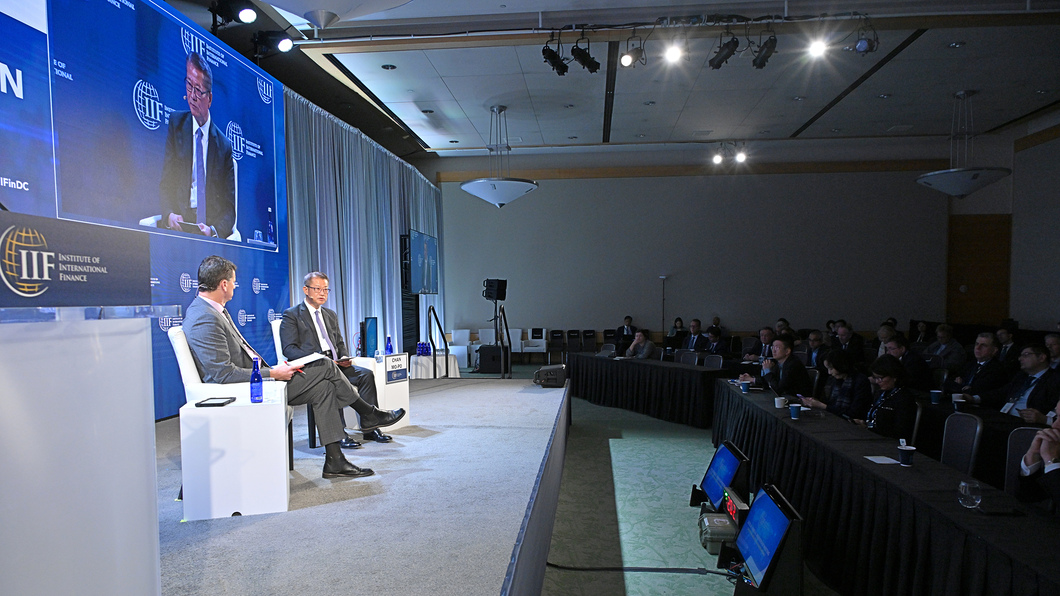
|
| Participating in an in-conversation session organised by the Institute of International Finance during the Annual Meetings. |
At this year's IMF and WBG Annual Meetings, there were prevalent concerns about the global economic outlook. Amid persistent geopolitical tensions and escalating tariff disputes, the global economy remains highly uncertain. The IMF has revised its global growth forecast for this year to 3.2%, down 0.1 percentage point from last year, and anticipates further slowdown to 3.1% in 2026. Across the world, there is hope that current tensions in international trade can be eased to create a more stable environment for growth.
Another key topic at the Annual Meetings was the rising debt pressure faced by many economies. With interest rates remaining high, some advanced and emerging economies with already high debt levels are facing an increasing debt servicing burden. This has raised mounting concerns over the long-term sustainability of their public finances. Coupled with slowing economic growth, various governments are facing tightened fiscal space, which may limit their ability to increase public spending and improve livelihoods.
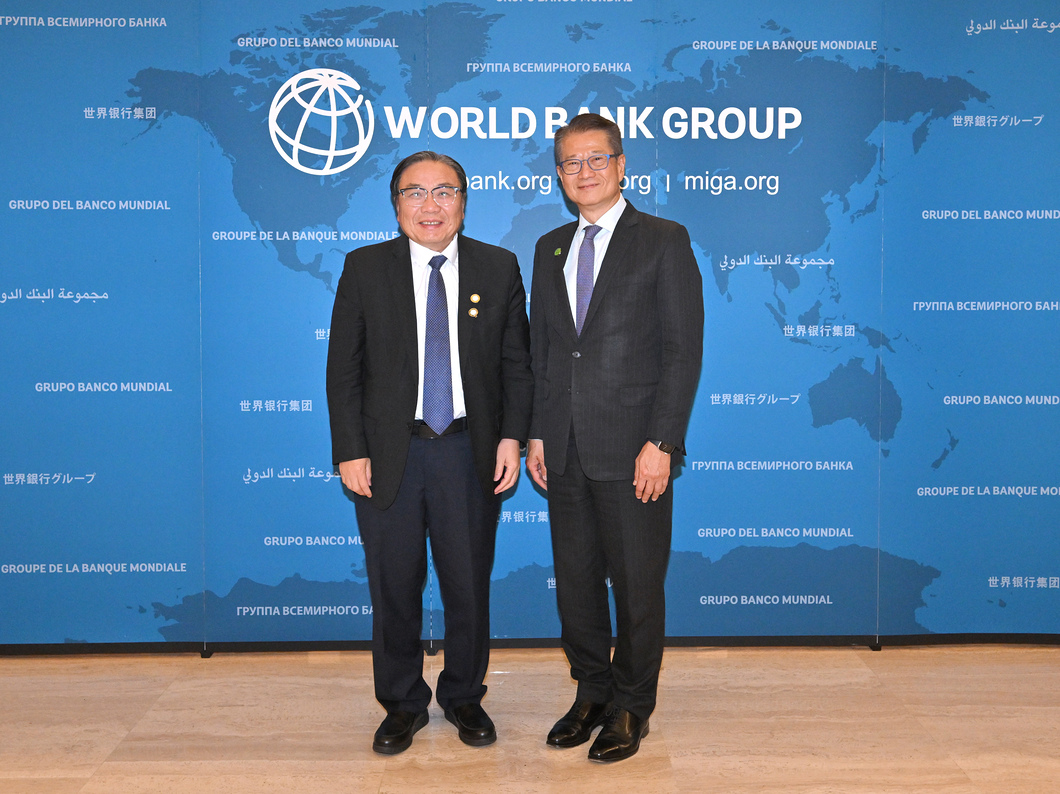
|
| Calling on Managing Director and Chief Administrative Officer of the World Bank Group, Mr Zhang Wencai. |
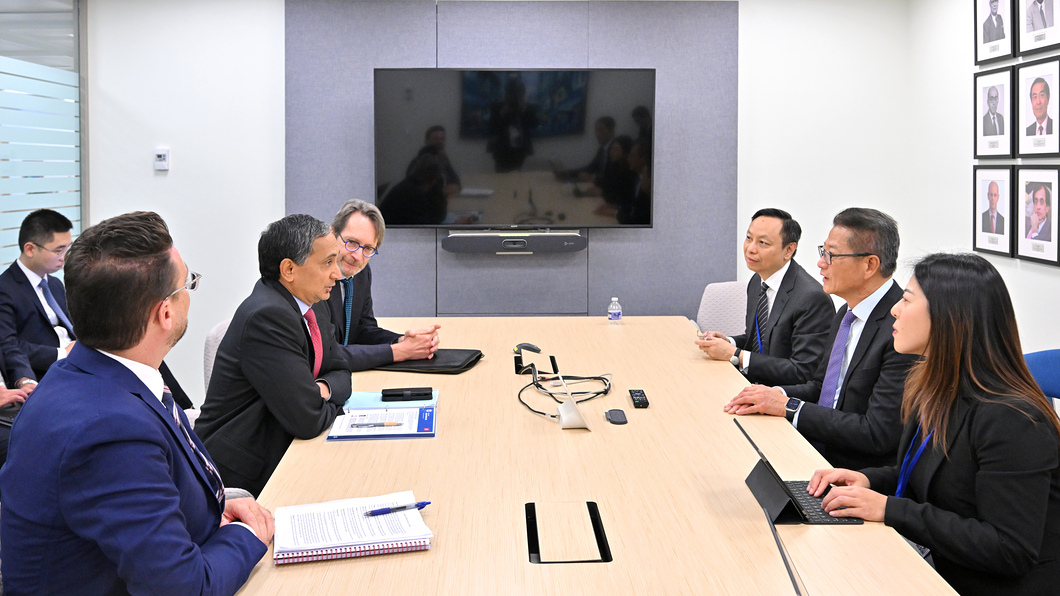
|
| Meeting with Director of the Asia and Pacific Department of the International Monetary Fund, Mr Krishna Srinivasan (second left). |
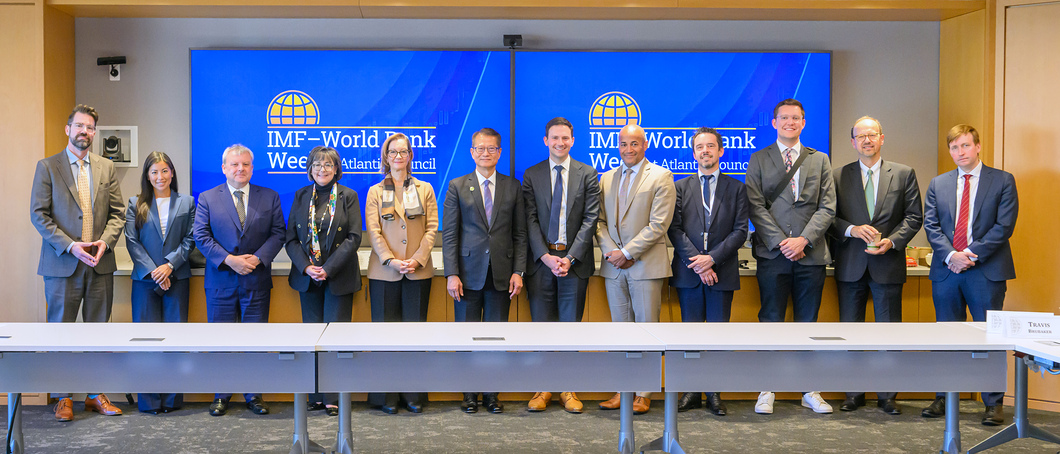
|
| Attending a roundtable discussion hosted by the US think tank Atlantic Council in Washington, D.C. |
Despite the challenges, new opportunities are also emerging. In response to trade tensions, the global economy has shown resilience. At the same time, global supply and value chains are being restructured, and regional cooperation is gaining momentum. For instance, as the IMF has noted, many Asian economies are adjusting their economic structures, boosting domestic demand, and enhancing regional trade linkages to mitigate the impacts of external shocks. In the medium to long term, regional economic integration is expected to boost the region’s GDP by 1.4%. In fact, Asia is projected to remain the largest contributor to global growth this year and next, at around 60%.
As for digital assets, which have been rapidly emerging in recent years, there is a growing recognition among economies that the influence of these assets is expanding expeditiously. The underlying blockchain technology has also been applied in numerous real-life scenarios, particularly in enhancing regional trade and addressing the efficiency issue and pain points of cross-border settlements. While digital assets such as stablecoins hold great business potential, there is a consensus that international collaboration should be strengthened to manage the risks posed by these innovations to the stability of financial systems.
Whether at the IMF and WBG meetings or in my exchanges with US business leaders and think tank representatives, there was generally a shared view that maintaining stable China-US relations was not only beneficial to the development of both countries, but also vital to the future of the global economy. There are high hopes for continued constructive engagement between the two countries.
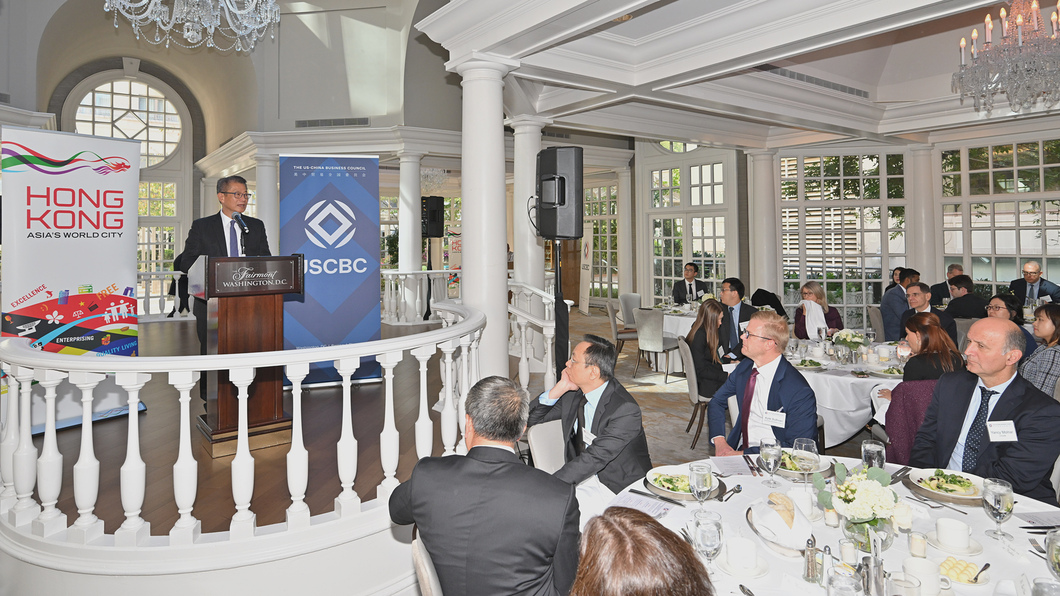
|
| Attending a business luncheon in Washington co-hosted by the US-China Business Council and the Hong Kong Economic and Trade Office in Washington (WETO). |
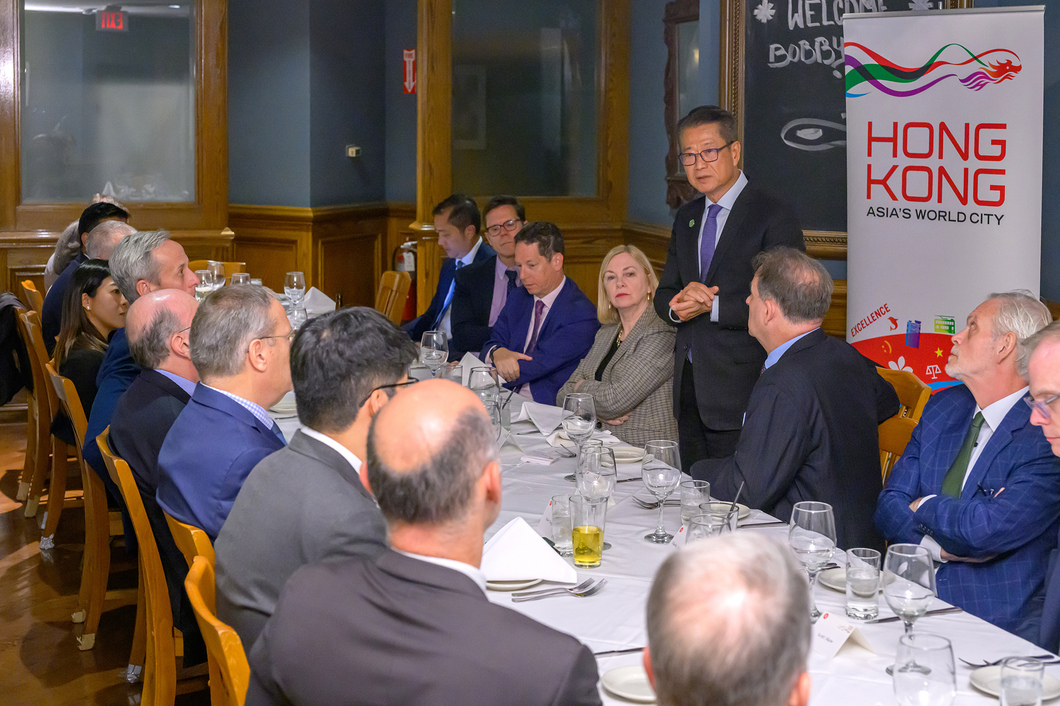
|
| Attending a dinner in Washington hosted by the WETO to exchange views with local business leaders and think tank representatives. |
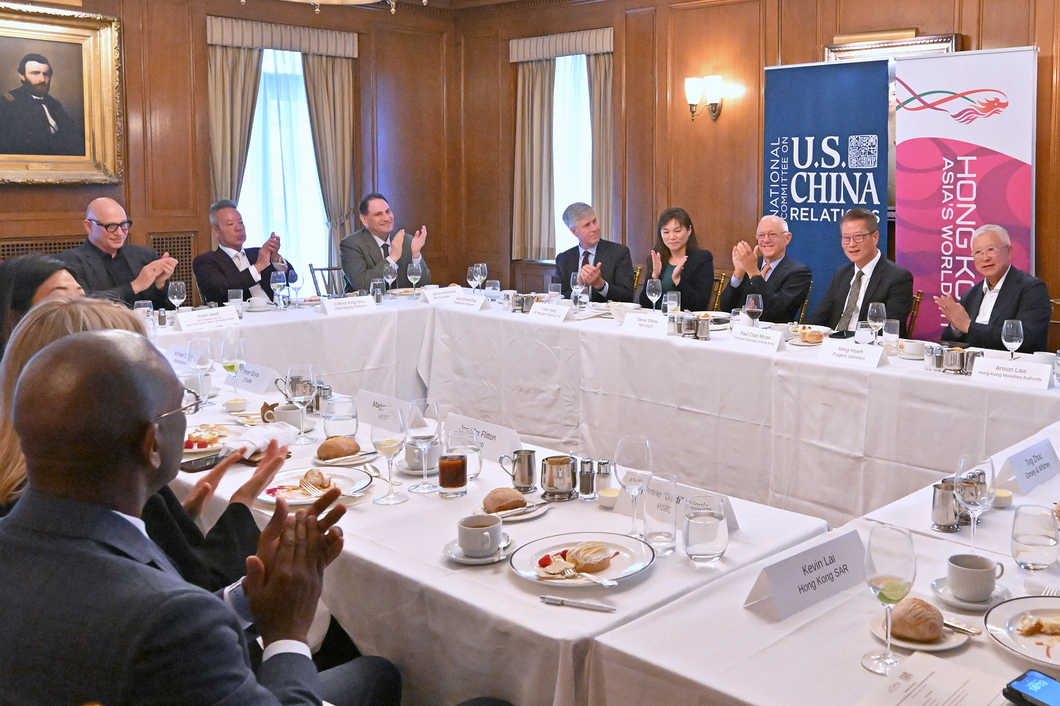
|
| Attending a luncheon in New York co-hosted by the National Committee on US-China Relations and the Hong Kong Economic and Trade Office in New York. |
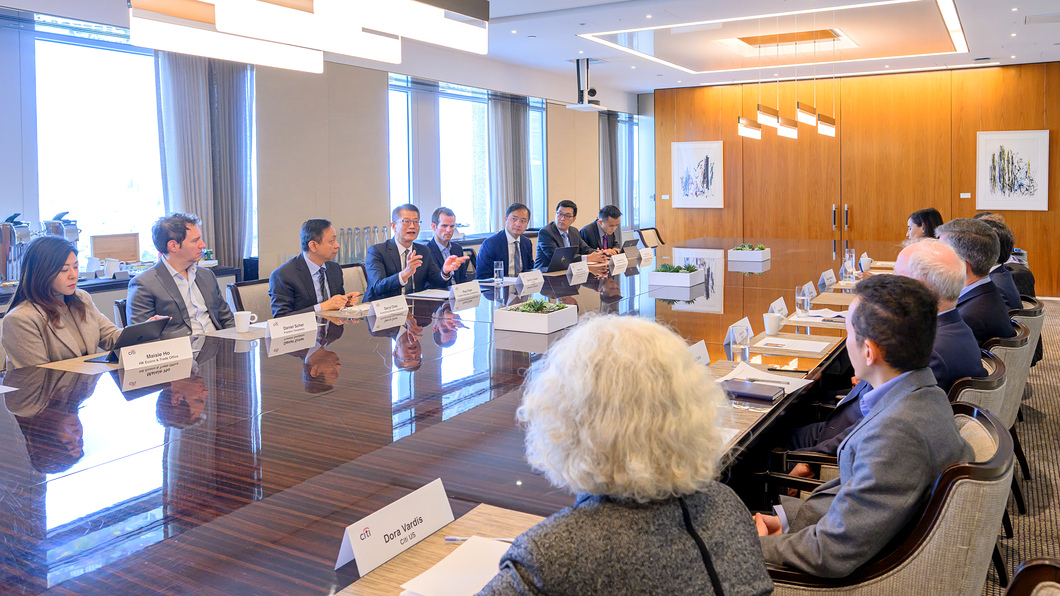
|
| Participating in a roundtable discussion with US fund managers in New York. |
In the near future, the global economy is expected to advance amid twists and turns. New forms of economic globalisation are being explored and regional economic integration is gaining momentum. History shows that no matter how the world evolves, it remains certain that mutual respect and win-win co-operation are the principles for achieving successful development. Even in disagreement, we must keep striving for common ground through communication, dialogue and mutual understanding.
With the unique advantages under the "one country, two systems" framework, Hong Kong plays the role of a "super connector" and "super value-adder" in connecting China and the rest of the world. Given the current international landscape, we must take the opportunity, be bold to make breakthroughs and embrace innovation. By strengthening co-operation through forging new networks and connections, we can make greater contributions to regional and global connectivity and prosperity.
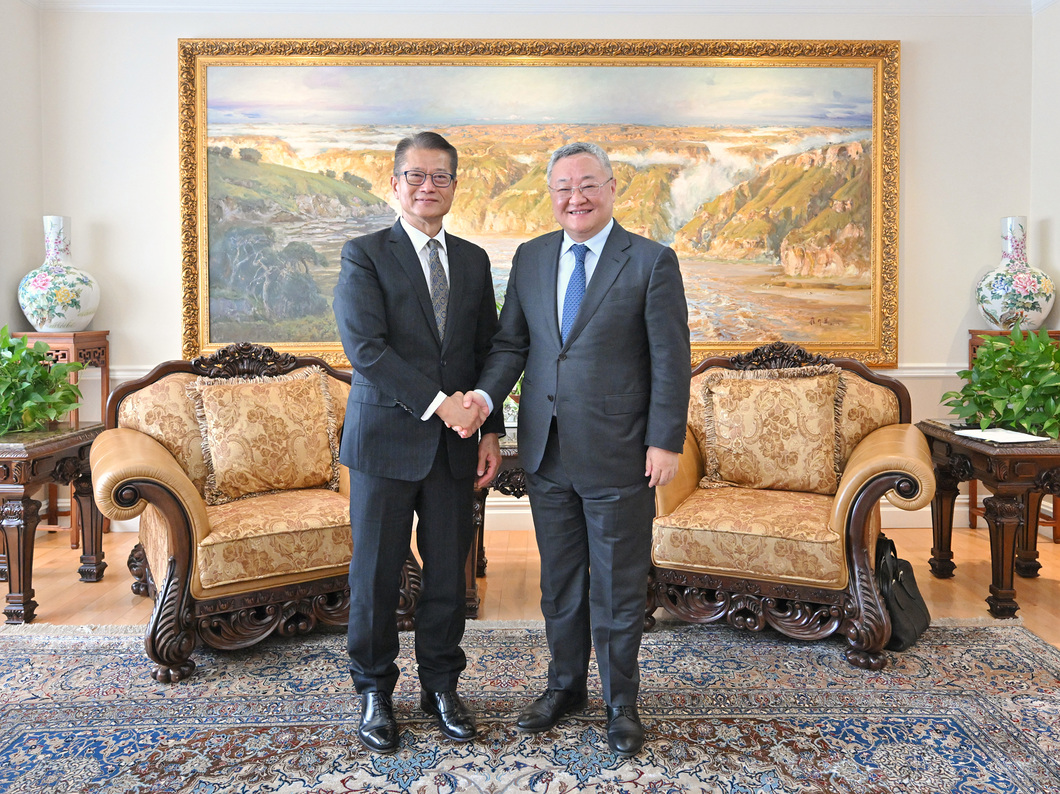
|
| Paying a courtesy call on China's Permanent Representative to the United Nations, Ambassador Fu Cong in New York. |
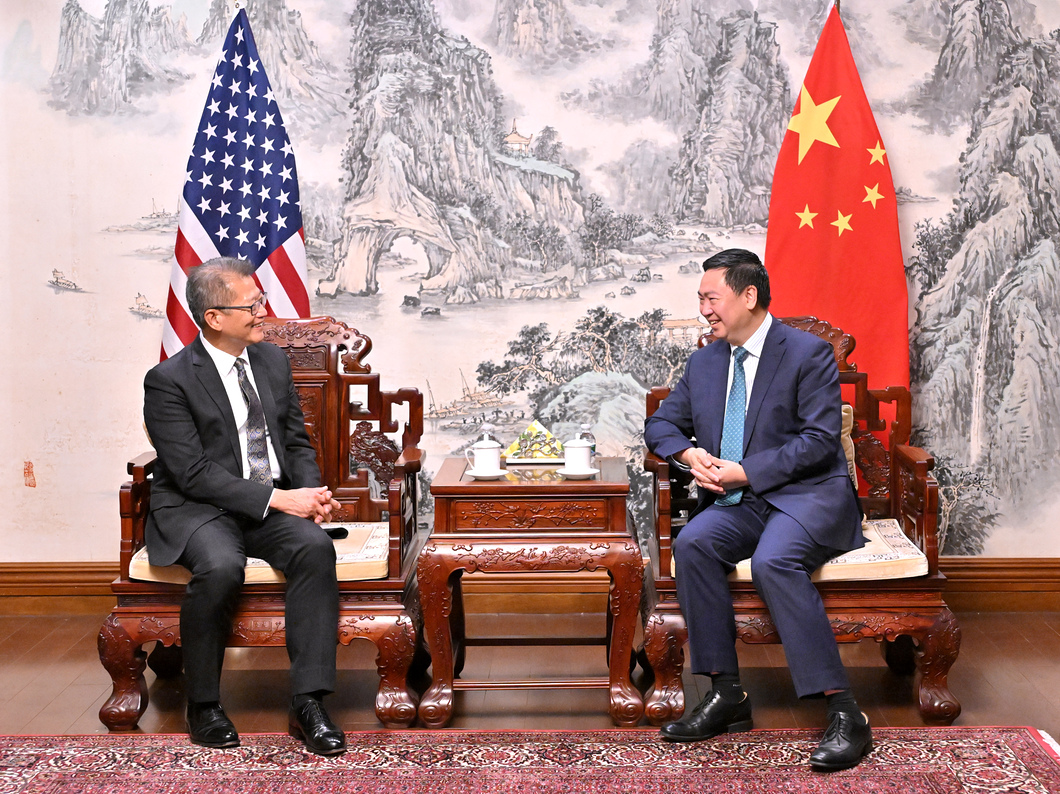
|
| Meeting with the Consul-General of China in New York, Ambassador Chen Li. |
At various luncheons and roundtables with the business community, I briefed participants on Hong Kong's latest economic situation and future development directions. The areas which I focused on included our efforts to promote financial and innovation and technology (I&T) development, support regional integration of industrial and supply chains, attract enterprises and talent, accelerate the development of the Northern Metropolis, and foster industrial collaboration in the Guangdong-Hong Kong-Macao Greater Bay Area.
During the exchanges, many local business representatives noted the rapid advancements made by Chinese Mainland enterprises in various I&T fields this year. This has prompted them to reassess our country's I&T capabilities. Biomedical science has emerged as a major area of focus for expanding co-operation, given that human health is a universal issue that transcends national borders and geopolitics. Many also expressed a desire to use Hong Kong – with an institutional framework and market environment with which they are familiar – as a springboard for entering the Chinese Mainland and wider Asian markets, and exploring new opportunities.
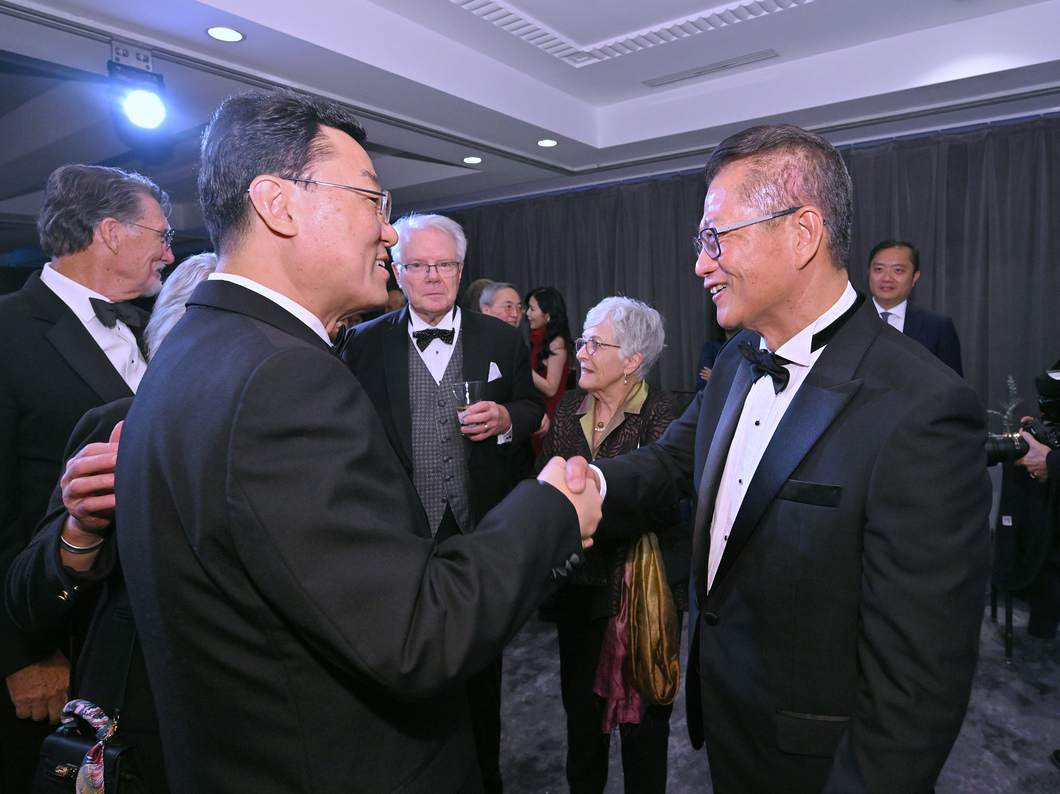
|
| Interacting with China's Ambassador to the US, Mr Xie Feng (left), at the National Committee on US-China Relations Annual Gala Dinner in New York. |
|
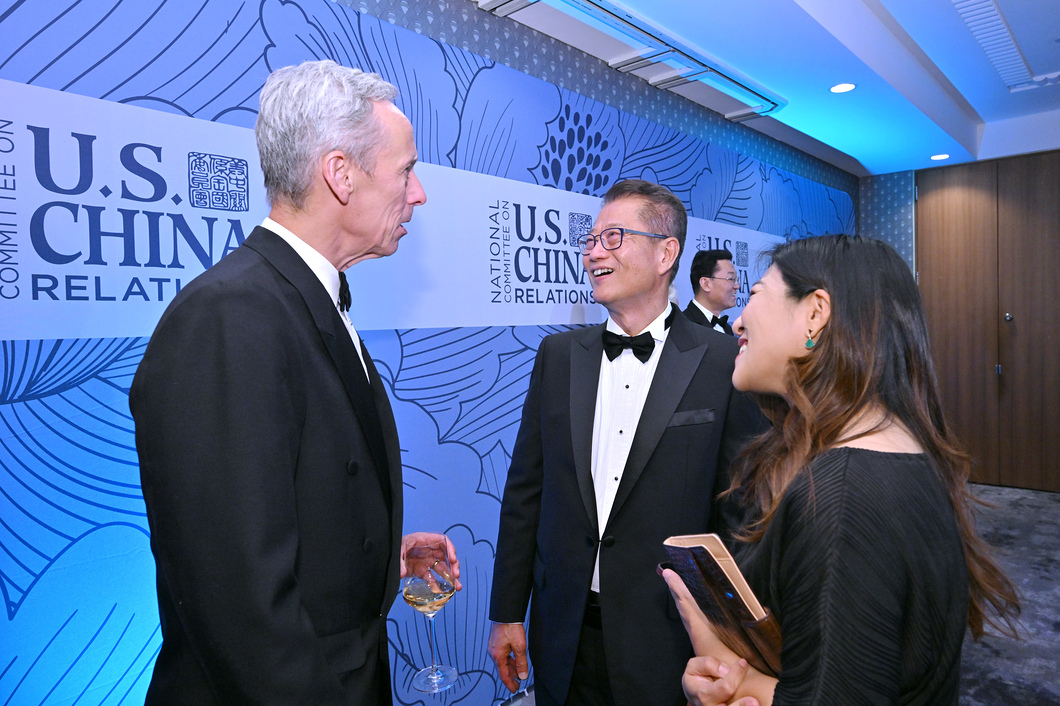
| Speaking with guests at the National Committee on US-China Relations Annual Gala Dinner. |
|
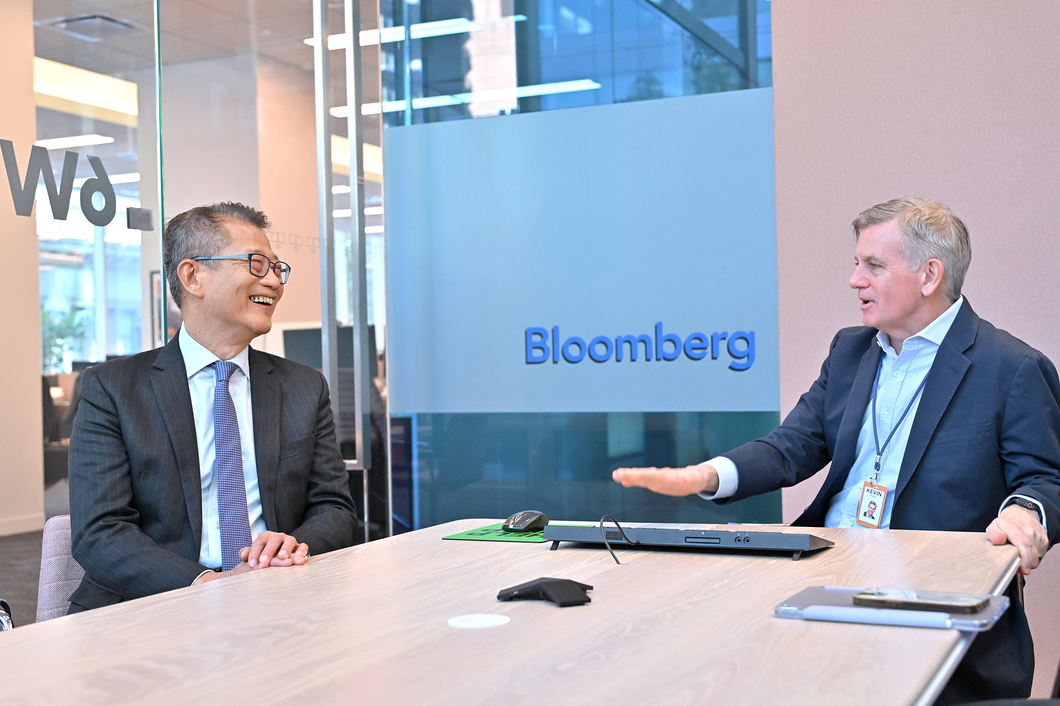
| Meeting with Global Head of External Relations of Bloomberg LP, Mr Kevin Sheekey. |
In recent years, Hong Kong has made solid progress in finance and I&T development, and in attracting businesses and talent. The city has also achieved encouraging results in various international rankings. This trip allowed me to present these developments personally to the local business and think tank communities, enabling them to better understand Hong Kong’s situation and opportunities, and paving the way for more mutually beneficial co-operation.
October 19, 2025