Blog
Strengthening Ties with Traditional Markets
Many international organisations convene their annual meetings in the fourth quarter of each year, providing a platform for representatives from different regions and economies to exchange views and insights on current developments in international finance and trade as well as macroeconomic issues. Many delegates also take the opportunity to engage in bilateral and multilateral meetings, through which they foster better mutual understanding and explore new avenues for co-operation.
This week, the Annual Meetings of the International Monetary Fund and the World Bank Group will be held in Washington, D.C. I will attend the meetings as a member of the Chinese delegation. The event brings together officials responsible for finance and economic affairs, representatives from central banks, leaders of businesses and non-governmental organisations, as well as academics from around the world to discuss a wide range of pressing global issues. These include the latest developments and outlook for the global economy, finance, international trade, global supply chains, climate change and digital transformation.
|
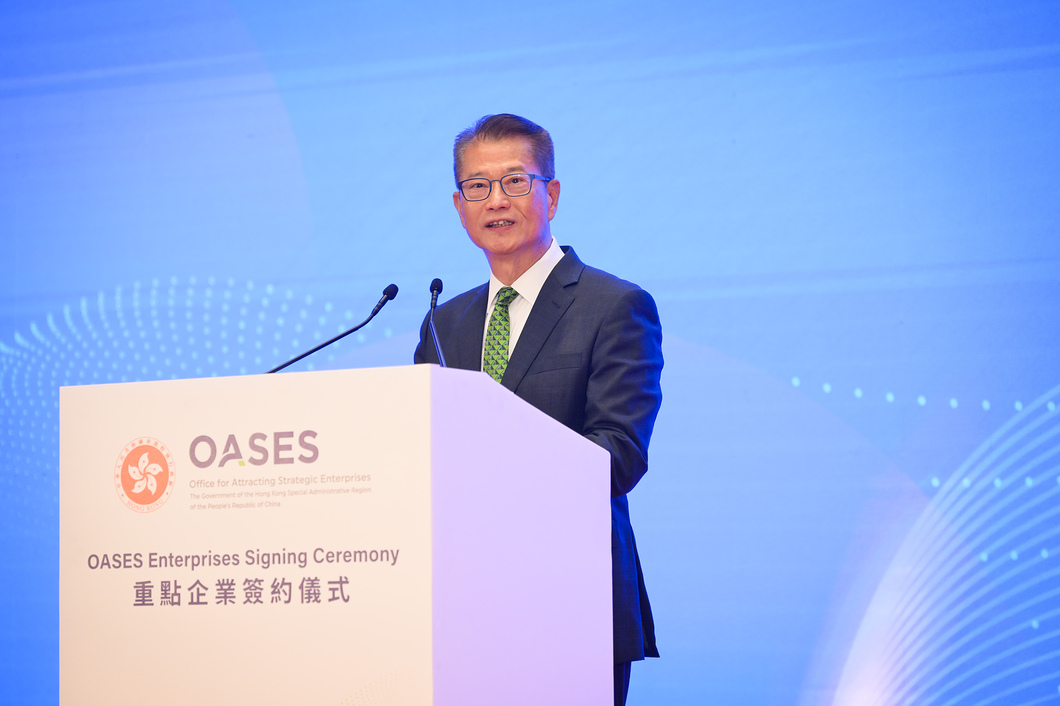
| Attending and speaking at the signing ceremony for the fifth batch of strategic enterprises last week. |
While the global economic and market outlook faces a range of uncertainties each year, growing geopolitical tensions, protectionism, unilateralism, tariff disputes and financial market volatility in major economies have heightened concerns about the risks facing international markets in the year ahead. Although global financial markets have generally performed well this year, record-high gold prices and significant fluctuations in digital asset values reflect a trend toward diversification away from USD-denominated assets as a means of mitigating risk.
Despite persistent geopolitical and economic uncertainties in the international environment, we remain convinced that candid communication and exchange help dispel misunderstandings, enhance mutual understanding and build trust among economies.
During my stay in the US, I will also meet with local financial institutions, representatives of investment funds, major chambers of commerce, academics and think tanks. In addition to exchanging views on current trends and developments in international finance and trade, I will brief them on Hong Kong’s latest developments and competitive advantages — particularly the potential of the Northern Metropolis and the thriving opportunities presented by the Guangdong-Hong Kong-Macao Greater Bay Area (GBA) — while addressing topics of interest to them.
Despite global uncertainties, Hong Kong will, as always, uphold its status as a free port under the “one country, two systems” arrangement. We remain committed to maintaining a simple and low tax regime, and to implementing open, stable and predictable economic and trade policies. We welcome foreign investors — including those from the US — to invest in and grow their businesses in Hong Kong, sharing in the opportunities the city offers. Hong Kong’s unique strengths — its connectivity with the Chinese Mainland and the world, a high degree of internationalisation, and the convergence of global capital, institutions, and talent — are particularly pronounced in the current climate. The city offers a familiar, business-friendly environment that aligns seamlessly with international best practices.
According to the World Investment Report 2025 released by the United Nations Conference on Trade and Development, Hong Kong recorded US$126 billion in foreign direct investment inflows last year, rising to the third place globally. In the same year, the number of Hong Kong companies with parent companies based overseas or in the Chinese Mainland reached nearly 10,000 – a historic high. Among them, nearly 1,400 had their parent companies based in the US, marking a 9% increase from the previous year.
US government data also show that in the second quarter of this year, US exports of services to Hong Kong rose by more than 15% year-on-year, reflecting the significant growth of American financial and professional services in Hong Kong.
In fact, Hong Kong’s financial markets have been vibrant this year, with active initial public offering (IPO) activities. The stock market has risen by around 30% year-to-date, offering investors substantial returns. Participation by international investors in Hong Kong’s equity, bond, foreign exchange and wealth management markets has increased notably. In particular, both the amount and proportion of cornerstone investments by foreign investors in IPOs have reached a five-year high.
At the same time, the dynamic development of the Guangdong-Hong Kong-Macao Greater Bay Area (GBA) presents opportunities that are not to be missed by global investors. Wealth management is a prime example. As one of the wealthiest regions in the country, residents in the GBA have shown strong interest in diversified asset allocation — serving as a key driver for Hong Kong’s development into the world’s largest cross-boundary wealth management centre. We are pleased to see many overseas financial institutions in the asset and wealth management sector expanding their teams — and even increasing their office space severalfold — in Hong Kong this year, reflecting their strong confidence in the city’s business prospects.
|
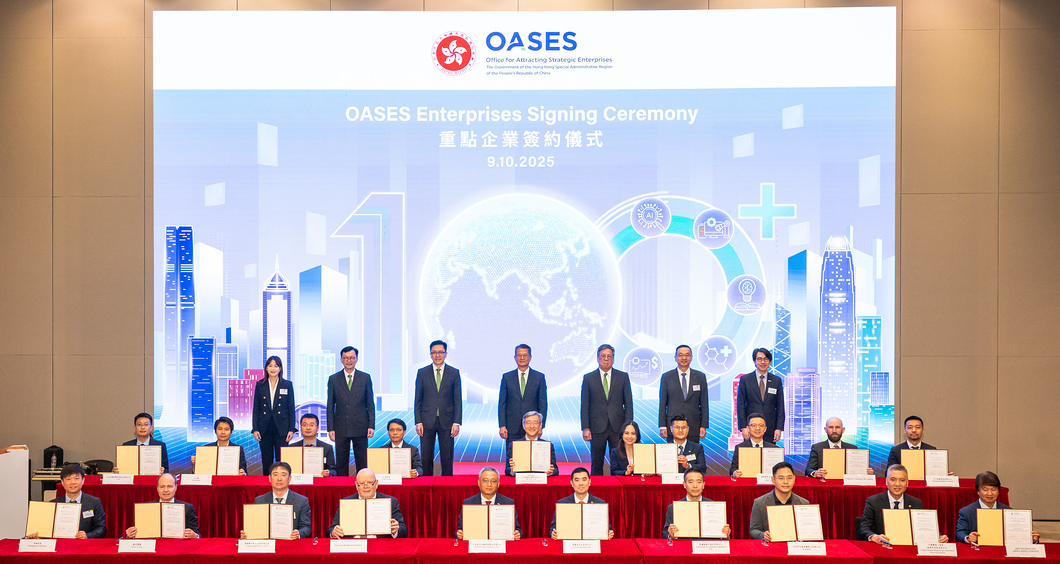
| Attending the signing ceremony for the fifth batch of strategic enterprises last week. |
Furthermore, the innovation and technology (I&T) industry in the GBA is booming. With enhanced collaboration among cities in the region, their comparative advantages can be further leveraged, boosting the momentum of industries such as artificial intelligence, biomedical sciences and new energy. This presents significant appeal to overseas I&T enterprises. For example, in the field of biomedicine, companies can accelerate the research and market launch of new drugs through clinical trial institutions established in the Hetao Co-operation Zone, which spans both Shenzhen and Hong Kong. We will continue to promote initiatives in the Hetao Co-operation Zone to facilitate the flow of people, capital, materials and data — thereby supporting greater innovation and R&D activity.
Last week, we announced the fifth batch of strategic enterprises landing in Hong Kong, marking a milestone as the number of such enterprises attracted by the Office for Attracting Strategic Enterprises surpassed 100. Over the years, the number of overseas enterprises setting up operations in Hong Kong has been steadily increasing. In this batch alone, nearly 40% are overseas firms — including three of the world’s top ten pharmaceutical companies and leading players in artificial intelligence. Their decision to establish or expand operations in Hong Kong reflects strong confidence in the city’s access to capital, talent, a vibrant I&T and manufacturing ecosystem, and a market conducive to rapid scaling.
Openness, cooperation, mutual learning and win-win collaboration have long been the cornerstones of global economic prosperity and stability. This shared belief continues to guide the path forward for many. We will continue to deepen our strong ties with traditional markets, while actively exploring emerging ones and broadening our network of partners — fostering development through diversified and multi-level exchanges and collaboration.
October 12, 2025