Blog
Commemorating the Victory in the Chinese People’s War of Resistance
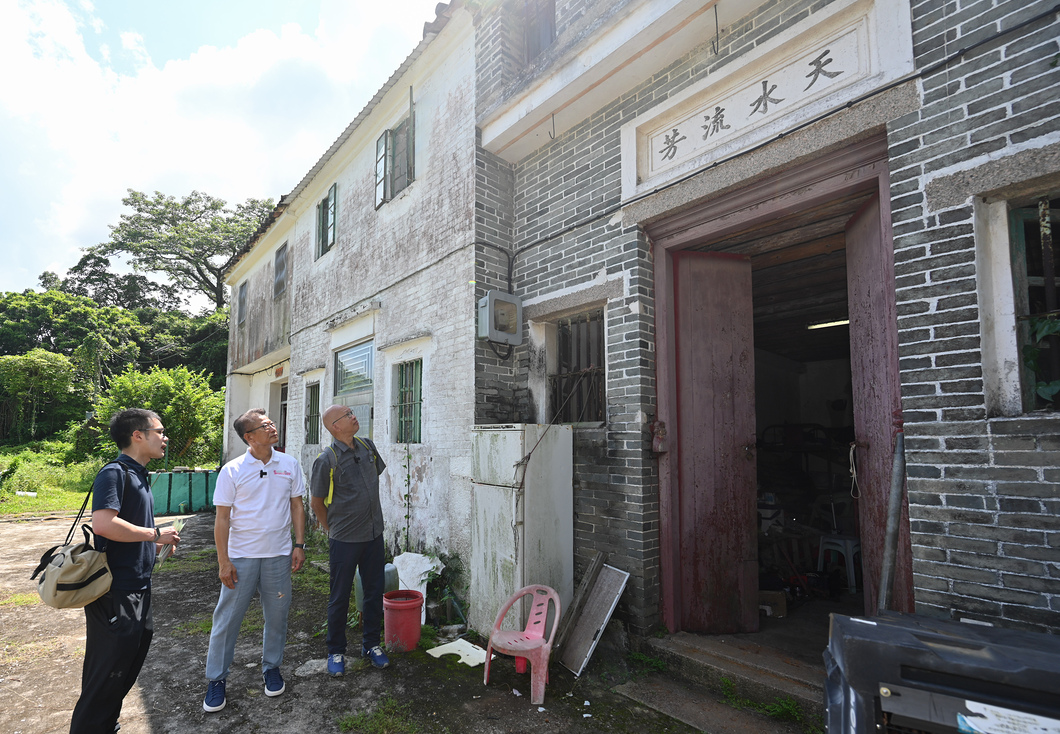
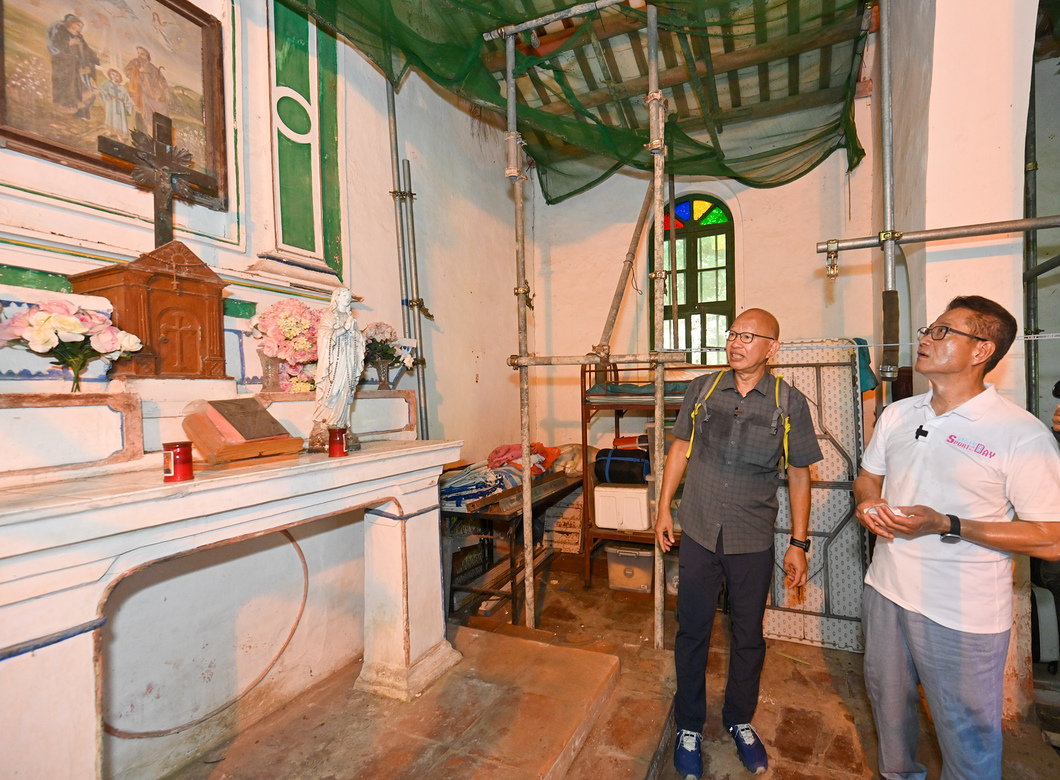
Yesterday, I joined my colleagues in visiting two very special places - the Holy Family Chapel and the adjoining “Tin Shui Lau Fong” mansion in Sai Kung. These two historic sites of the Chinese People’s War of Resistance, both classified as Grade 2 historic buildings, bear witness to Hong Kong’s tragic yet profound experience during the resistance against Japanese invasion. They embody not only the bravery and determination of defending our homeland, but also tell of Hong Kong’s indelible contributions and sacrifices in the Chinese People’s War of Resistance Against Japanese Aggression and the World Anti-Fascist War.
|
| Visiting the “Tin Shui Lau Fong” mansion in Sai Kung, one of the historic sites of the War of Resistance. |
|
| Visiting the Holy Family Chapel in Sai Kung, another historic site of the War of Resistance. |
During the War of Resistance, Hong Kong residents joined forces with compatriots across the country to fight gallantly against the Japanese army without any hesitation or fear for their own safety. Anti-Japanese salvation groups and patriots, such as the Hong Kong-Kowloon Brigade of the Dongjiang Column, took on varying roles including front-line operations, intelligence collection and logistical support. The Holy Family Chapel served as one of the Brigade’s regular bases at that time. The adjoining grey-brick mansion bears a plaque above its main entrance inscribed with four Chinese characters “Tin Shui Lau Fong”. The buildings had significant strategic values as they were remotely located, surrounded on three sides by mountains and accessible by water routes to South China. This made the site an operation base for the Brigade, a liaison point for intelligence exchanges between our forces and the international anti-Japanese front, as well as a co-operation site for the relocation of prisoners-of-war.
To commemorate the heroic resistance of the Dongjiang Column against Japanese invaders in Hong Kong, the HKSAR Government has compiled information on over 40 local historic sites of the War of Resistance. Restoration and environmental maintenance works, alongside with installation of information boards or commemorative plaques have also been carried out at many of the locations. These sites are not merely historical sites of the War of Resistance, but also vivid, living textbooks that bring history to life. They remind us that during the War of Resistance, countless compatriots fought in unity against the enemy, advancing one after another, defending our homeland with their blood and lives, and fighting for the dignity and survival of the nation. They also remind us that the destiny of Hong Kong has always been closely linked with that of our country.
By remembering history and honouring the martyrs, we understand more deeply that peace is hard-won, and must be safeguarded and cherished with greater devotion.
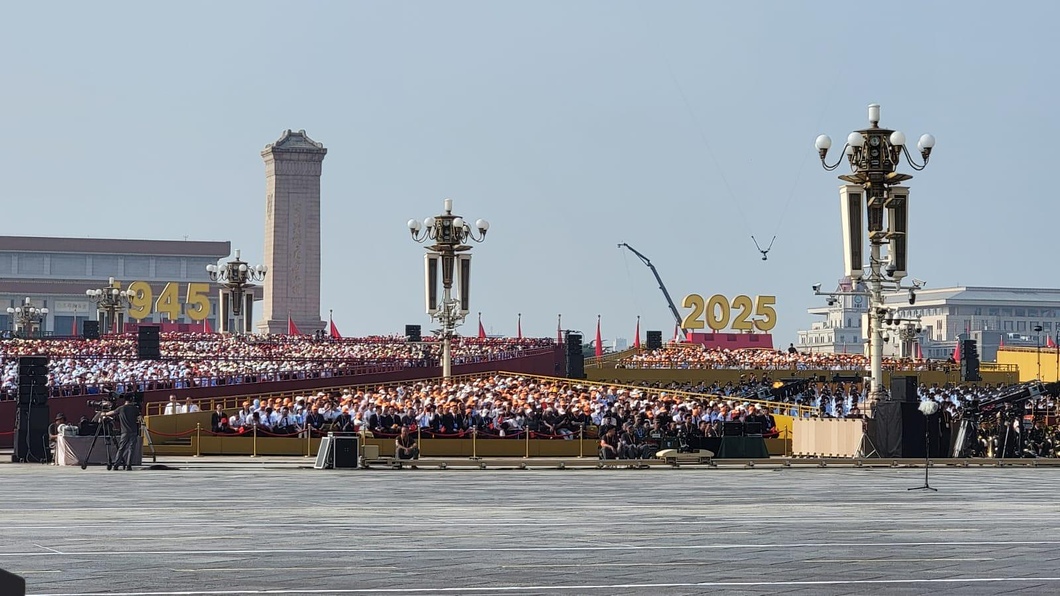
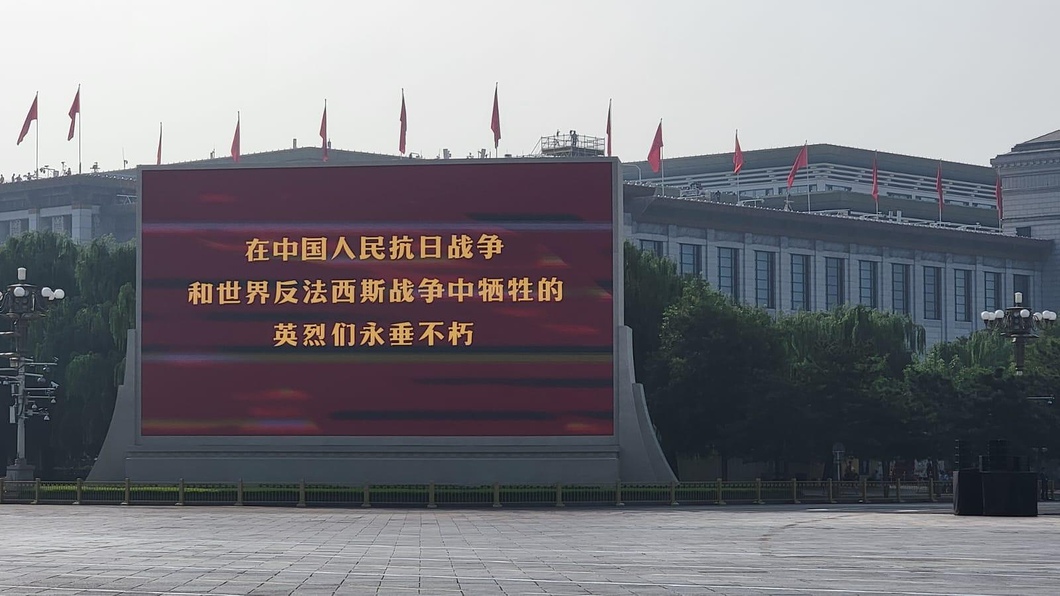
The Chinese nation has never feared violence, and it is part of our traditional wisdom that “stopping a war is the true military accomplishment”. The Grand Gathering Commemorating the 80th Anniversary of the Victory in the Chinese People’s War of Resistance Against Japanese Aggression and the World Anti-Fascist War, held in Beijing last Wednesday, served as a clear demonstration of safeguarding peace with strength. In his important speech at the Grand Gathering, President Xi Jinping emphasised that the destiny of mankind is interconnected. He stressed that only when all nations and peoples treat each other as equals and live in harmony can common security be safeguarded, the roots of war be eliminated, and historical tragedies be prevented from recurring. This speech serves as a timely wake-up call in the current international landscape.
|
| The Grand Gathering Commemorating the 80th Anniversary of the Victory in the Chinese People’s War of Resistance Against Japanese Aggression and the World Anti-Fascist War held in Beijing last Wednesday. |
|
| The Grand Gathering Commemorating the 80th Anniversary of the Victory in the Chinese People’s War of Resistance Against Japanese Aggression and the World Anti-Fascist War held in Beijing last Wednesday. |
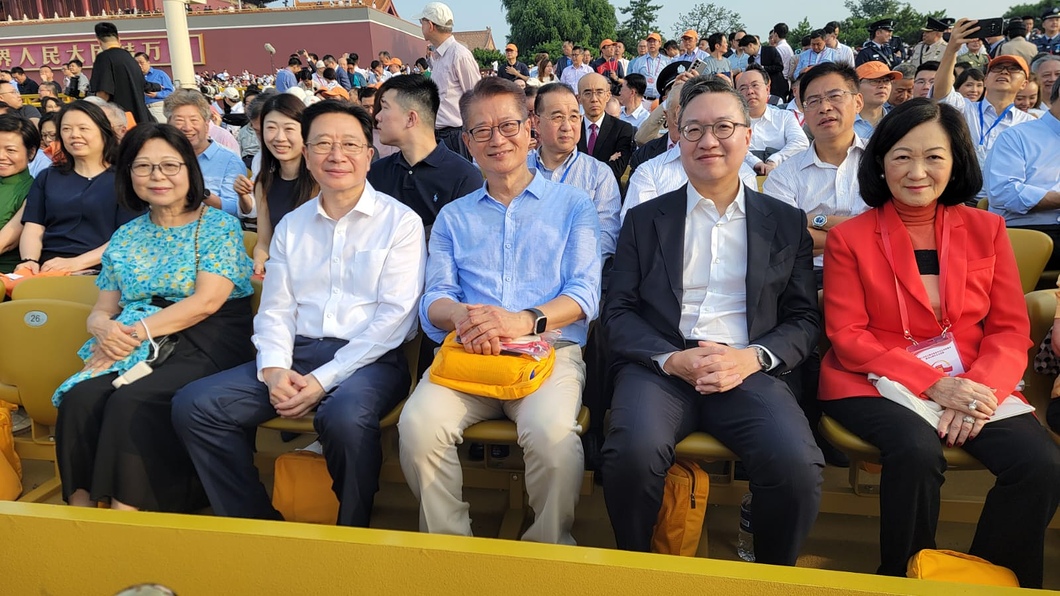
|
| Attending the grand gathering together with members of the Hong Kong delegation. |
The world today is marked by frequent geopolitical conflicts and rampant unilateralism and hegemonism. While protectionism is causing significant impact on the global economy, the shadow of tariff wars lingers on. Global development and governance are facing greater challenges than ever. Against this backdrop, President Xi Jinping has successively put forward the Global Development Initiative, the Global Security Initiative, the Global Civilisation Initiative, and the Global Governance Initiative. While each of these initiatives has its own focus, they all run in parallel and share common ground, namely upholding mutual respect, equal participation, mutual benefit and win-win co-operation, as well as practising genuine multilateralism through extensive consultation and joint contribution for shared benefits, thereby building a community with a shared future for mankind.
Take the Belt and Road Initiative as an example. Since it was proposed in 2013, it has become one of the largest and most extensive international economic cooperation platforms in the world, bringing tangible benefits to Belt and Road countries and regions. China has signed more than 230 cooperation documents on the Belt and Road Initiative with over 150 countries and more than 30 international organisations, supporting and promoting thousands of projects and creating hundreds of thousands of jobs. The World Bank forecasts that by 2030, Belt and Road-related investment is expected to lift 7.6 million people in participating countries out of extreme poverty and 32 million people out of moderate poverty.
Hong Kong has been contributing actively to the Belt and Road Initiative. In finance, for example, over the past two years we have established cross-listing of exchange products with the financial markets in the Middle East, promoting two-way capital flows. Last week, a development bank from a Central Asian country made an inaugural issue of Renminbi dim sum bonds in Hong Kong. Last year, over US$80 billion of green and sustainable debt was issued in Hong Kong, with green bonds accounting for 45% of the regional total in Asia. At the same time, we are promoting transition financing to help the region achieve green transformation. Since 2021, we have also issued seven catastrophe bonds totalling around US$800 million, helping relevant countries in Asia and the Americas mitigate the losses caused by natural disasters. In addition, by securitising infrastructure loans, we have supported relevant regions in attracting more capital to accelerate infrastructure development.
To further enhance Hong Kong’s role in the Belt and Road Initiative, the HKSAR Government and the Hong Kong Trade Development Council will jointly host the 10th Belt and Road Summit at the Hong Kong Convention and Exhibition Centre in Wan Chai this Wednesday and Thursday. The Summit will bring together more than 90 senior officials and business leaders from 18 Belt and Road countries and regions to conduct in-depth exchanges on cooperation and vast business opportunities in areas such as investment and financing, innovation and technology, infrastructure, shipping and logistics and professional services.
“Might may rule the moment, but right prevails forever.” Moving towards a fairer, more reasonable and mutually beneficial pattern of global governance, and jointly building a more sustainable world, are the shared aspirations of people worldwide and the irresistible trend of history. By fully leveraging our role and function as both “super-connector” and “super value-adder” between the Mainland and the international community, Hong Kong can contribute more deeply, injecting new momentum and opening up new opportunities for our own development while actively supporting the national development strategies.
September 7, 2025