Blog
Leading Global Innovation Clusters
Over the years, the HKSAR Government has placed innovation and technology (I&T) at the core of its development strategy. We have been systematically advancing both the software and hardware infrastructure through a coordinated four-pronged approach focusing on education, technology, talent and investment. This development model is clear in direction, with targeted policies and utilisation of resources. It has delivered remarkable results in recent years, gradually establishing Hong Kong as an international innovation hub that synergises strengths in finance, I&T and intellectual property (IP). A good illustration of this progress is the two events that the World Intellectual Property Organisation (WIPO) will hold in Hong Kong tomorrow.
Let me briefly introduce the two WIPO events taking place tomorrow. In the morning, the HKSAR Government will sign a Memorandum of Understanding with WIPO, enabling the Judiciary of HKSAR to share its leading IP judgments on the "WIPO Lex-Judgments" database. This database currently contains some 2,200 judgments from over 40 jurisdictions, serving as a key reference for the legal profession, IP owners, the I&T community, academics and research institutions, while also fostering global co-operation in IP. By contributing to this platform, Hong Kong will help stakeholders gain a clearer understanding of its IP legal protection regime, thereby strengthening their confidence in using Hong Kong as a base for R&D and related investments.
In the afternoon, WIPO will release the Global Innovation Index Ranking of World’s Top 100 Innovation Clusters. Formerly known as the “Science and Technology Clusters” ranking, it evaluates the innovation capacity of urban clusters around the world with two main metrics: the number of patent applications and scientific articles. This year, venture capital deals have been introduced as a new assessment metric, reflecting the vibrancy of I&T investment activities in a region and their role in driving technological advancement. The “Shenzhen-Hong Kong-Guangzhou” cluster has held the second position for five consecutive years. With Hong Kong and our fellow Greater Bay Area (GBA) cities continuing to increase investment in I&T and enhance collaboration, I am confident that our results this year will be even more impressive.
|
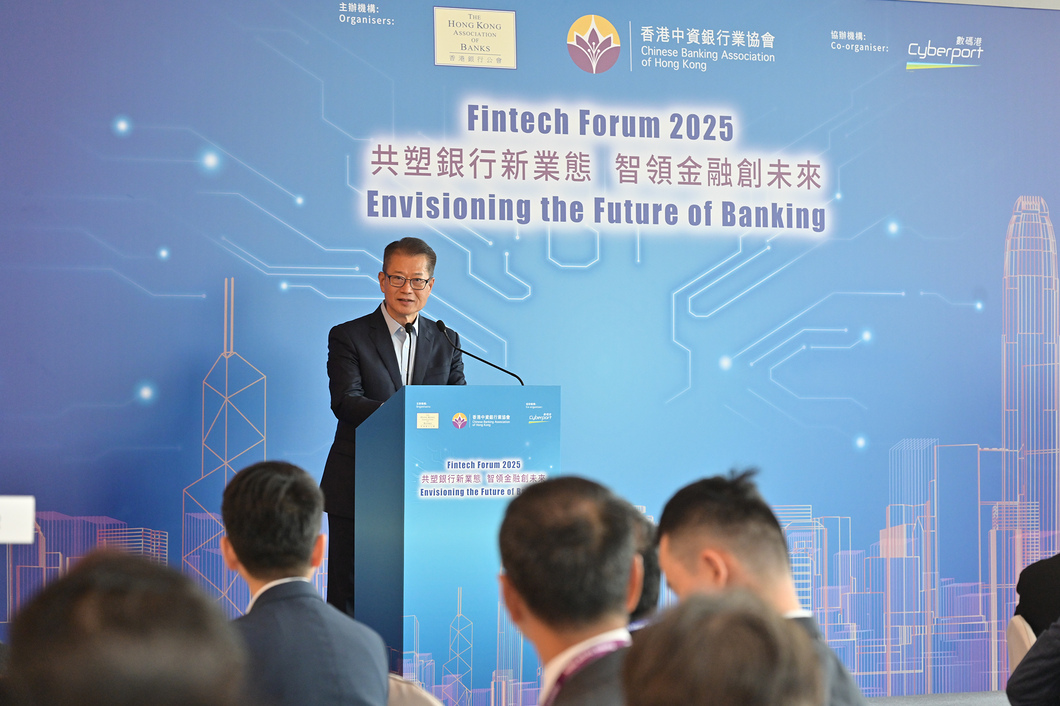
| Last week, I delivered remarks at the “2025 Fintech Forum” jointly organised by the Hong Kong Association of Banks and the Hong Kong Chinese Banks Association. |
The two WIPO events carry profound symbolic and substantive significance. The GBA’s top-tier position in the innovation cluster rankings, on the one hand, highlight the quantitative outcomes of its I&T advancement: the volume of patent applications, research publications and venture capital deals objectively demonstrate the region’s robust innovation capacity. On the other hand, these metrics also reflect the qualitative excellence of GBA: its outstanding higher education and R&D capabilities, concentration of international talent, and strong capital market support for talent and projects. As for the sharing of IP judgments, it enables Hong Kong’s high-standard, internationally aligned IP protection regime under the common law system to serve as reference for global markets on a broader scale.
It is fair to say that, after years of dedicated effort, Hong Kong has not only become a hub for the output and accelerated growth of I&T, but also a highly efficient platform for global innovation resources to create value – enabling the translation of technologies, facilitating tech-related transactions, and ensuring the protection of investments. In fact, IP is increasingly evolving into a high-value industry on a global scale. Beyond safeguarding the R&D investments and value created by inventors and tech companies through patent applications, professional valuation further allows IP rights to be traded or used as collateral for financing. As a promising emerging industry, IP also exemplifies the synergistic development between I&T and finance.
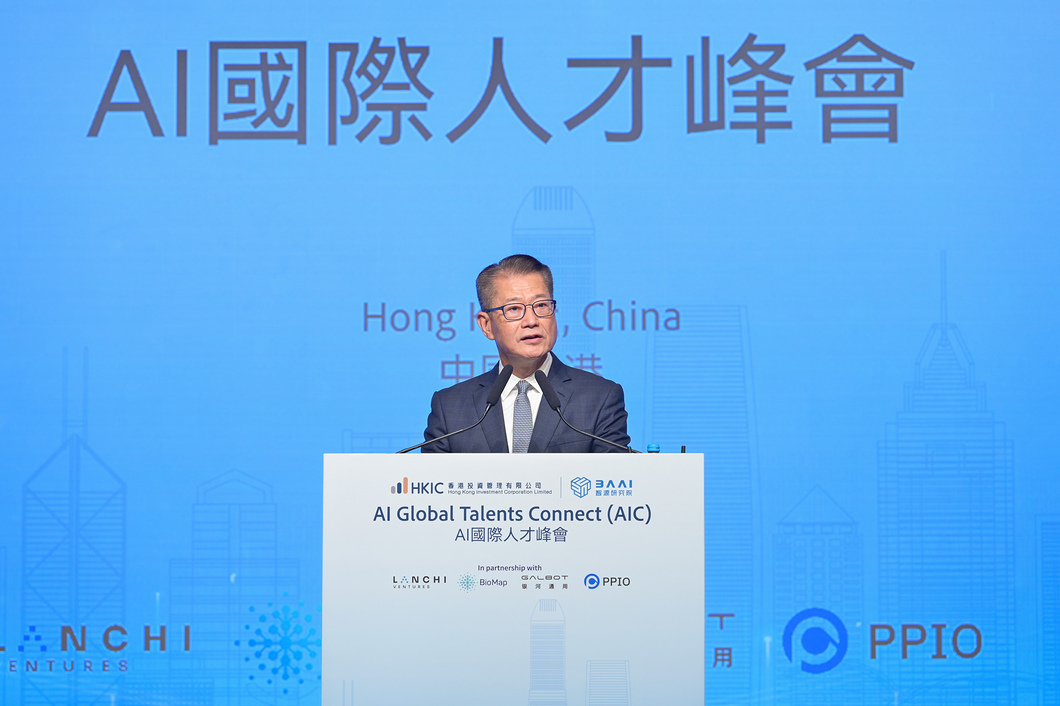
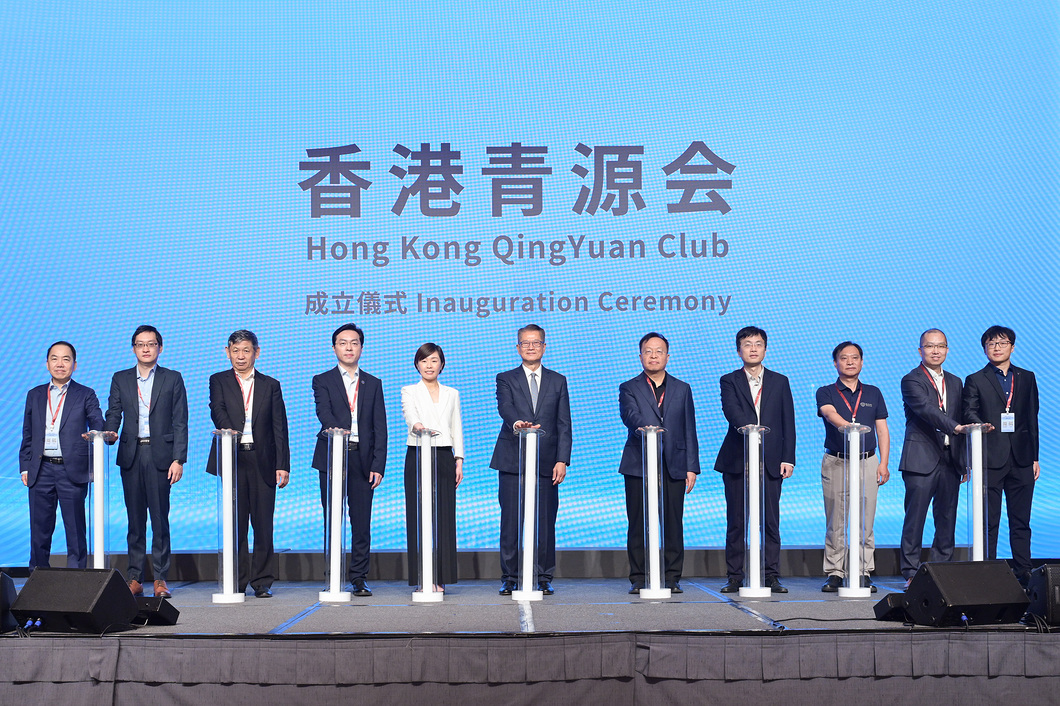
Building on strong institutional strengths and a robust value-creation system, Hong Kong’s I&T development is also reflected in the growing convergence of talent, capital and enterprises. In terms of talent, Hong Kong’s free, open and highly internationalised environment, complemented by high-quality education and living amenities, continues to attract more and more of the world’s top scientific research talent. For example, the inaugural “AI Global Talents Connect”, hosted by the Hong Kong Investment Corporation Limited (HKIC) last week, brought together over 350 experts, scholars and industry representatives in artificial intelligence (AI) from around the world. At the event, I also witnessed the official launch of the Hong Kong Qingyuan Club, which marks the formation of a network of elite young AI scholars based in Hong Kong with global reach.
|
| Last week, I delivered remarks at the “AI Global Talents Connect” co-hosted by the HKIC and Beijing Academy of Artificial Intelligence. |
|
| At the “AI Global Talents Connect”, I witnessed the official launch of the “Hong Kong QingYuan Club”. |
Hong Kong has also made significant strides in leveraging investment as a key driver of growth. A case in point is the HKIC which functions as patient capital: for every $1 it invests, it has successfully attracted over $5 from long-term capital in the market for investment. This has further invigorated the venture capital and private equity ecosystem in the city. In addition, various thematic funds established by the government are also playing a catalytic role in developing strategic sectors.
On attracting tech enterprises, the number of start-ups in Hong Kong reached a record high of 4,700 last year, up 10% year-on-year. Among them, around 20 unicorns have been nurtured by the Hong Kong Science and Technology Parks Corporation (HKSTP) and Cyberport. These figures reflect the dynamism of Hong Kong’s I&T ecosystem. Multiple government bodies and organisations – including the Innovation, Technology and Industry Bureau, the Commerce and Economic Development Bureau, the Office for Attracting Strategic Enterprises, Invest Hong Kong, HKSTP and Cyberport – have been proactively reaching out through diverse initiatives and channels to attract innovative companies to establish a presence in Hong Kong. These efforts are continuously drawing new enterprises, generating significant investment and creating numerous high-end jobs.
Looking ahead, Hong Kong will further leverage the unique advantages of the “one country, two systems” framework, deepen collaboration with fellow GBA cities, enhance its function as an international innovation hub, and exert greater influence in the global innovation chain. This will enable Hong Kong to make greater contributions to building our country as a science and technology powerhouse.
August 31, 2025